Wednesday, August 23, 2017

Explore export opportunities with WSDA's International Marketing Program

Hannah Street
Communications

WSDA's International Marketing Program often helps Washington-based businesses explore their export options. In September, the program will host a series of company consultations with international representatives from China, Japan, Korea, and Vietnam.

From Sept. 18-22, representatives gathered in Spokane, the Tri-Cities, and Seattle will provide one-on-one meeting opportunities.

"These meetings will help exporters and potential exporters learn about opportunities and requirements for exporting to Asia, Washington's largest export market," International Marketing Program manager Rianne Perry said.


Washington State apples


Navigating foreign markets can be a challenge, but expertise from knowledgeable representatives can help companies that are interested in expanding into foreign trade.

The representatives at these consultations can help a business operator understand distribution chains and import requirements, identify product opportunities and buyers, and develop export or marketing plans.

Although there is no charge to attend a consultation, space is limited. Anyone interested in joining a meeting should complete an application. Additional details are provided on the International Marketing Program's event flyer. You can also contact WSDA trade specialist Julie Johnson at jjohnson@agr.wa.gov or 360-902-1940.


International Marketing Program staff and international
representatives tour a fruit packing facility in 2016.

Friday, August 18, 2017

International trade visit puts Washington fruit front and center

Communications

Among its many trade support services, WSDA’s International Marketing Program facilitates trips for international buyers and Washington state producers. These trips, referred to as trade missions, put representatives from both sides of the trade relationship together so one can learn more about the crops and markets of the other. 

A recent “inbound” trade mission welcomed representatives from Southeast Asia, Mexico and Central America. WSDA trade specialists Rebecca Weber and Julie Johnson organized this large group that represented international markets interested in the fresh produce Washington offers. 

Apples and boxes travel on conveyor belts through the Stemilt packaging facility.
The delegates, representing import, retail, distribution and wholesale industries, expressed interest in looking for fruit suppliers, which made the Washington state portion of their trip an ideal opportunity.

In Yakima, the Washington State Fruit Commission delivered a briefing before the buyers participated in one-on-one meetings with 15 different Washington-based companies. Connecting buyers to suppliers is one of the primary functions of the international marketing program.

"These meetings created an opportunity for buyers to meet with known suppliers or build relationships with new ones," trade specialist Julie Johnson said.

In Wenatchee, the Washington Apple Commission also provided a market briefing to buyers, setting the tone for the day's tours of fruit packaging facilities and an orchard.

A day of Washington fruit

At Stemilt Growers, the large group of delegates was split into smaller tour groups organized by language. Two new international marketing team members, Zachary Garza and Elisa Daun, were a valuable addition to the trip. Both trade experts, they have additional multilingual skills; Zachary is a fluent Spanish speaker, and Elisa is fluent in Mandarin. 

The tour guide gathered attendees around him and discussed current and future apple trends, with an emphasis on Cosmic Crisp. Group members asked about the new variety’s color and size, and whether and when they’d be packaged and sold. 

The guide described Cosmic Crisp’s bright color and lustre, adding that it was an ideal size for packing and shipping.


Workers sort through cherries at the Domex Superfruit Growers packaging facility.
The group then made its way to Domex Superfresh Growers, where general manager Ron Gonsalves led the group into a hallway where the packaging process could be seen. “See all this? This is new,” he said, gesturing toward the room of machines and workers. Half of the facility was lost in a fire two years ago. 

But that day, in the middle of an industry-wide cherry processing peak, an unknowing observer couldn’t have guessed at the facility’s loss. Stainless steel machines hummed and workers combed through piles of cherries, separating leaves from fruit. 

Domex Superfresh Growers is one of the largest cherry lines in the state. At the peak of cherry season, it packs up to 2,000 bins per day, and workers pack in shifts 7 days per week to keep up.

A worker at Domex Superfruit Growers separates leaves from the cherries.

At the next stop, McDougall and Sons’ Legacy Orchard presented visitors with rows of ambrosia apple trees. Scott McDougall talked with the group about varieties and orchard operations. Learning about the goals and challenges fruit growers have gave visitors more context for how fresh fruit gets from the tree in Washington to their shelves and tables abroad. 

Washington was not the buyers' only destination; before turning in for the evening, the group would trek to Seattle before an early flight to California. 

An ambrosia apple at McDougall & Sons' Legacy Orchard.
“We hope that by the time they return home,” said Julie, “they have more knowledge about Washington agriculture and are eager for trade opportunities in the future.”

Tuesday, August 8, 2017

Swine health recommendations for pig exhibitors

Dr. Minden Buswell and Dr. Dana Dobbs
WSDA Veterinarians

Showing pigs at fairs is a time-honored farming tradition, but it puts pigs in close contact with each other and people. They’re also in a new environment with unfamiliar animals and around potentially disease spreading equipment, like brushes and boots. These factors can increase the risk of disease for the pigs.

Some diseases can transmit between humans and pigs, not just from animal to animal. One example is Influenza A, or “Swine Flu,” which has been a problem at fairs in recent years.

Pigs shown at the 2015 Washington State Fair.
Another illness, Seneca Valley Virus (SVV) has recently been on the rise. Also called Senecavirus A, it’s an unfamiliar disease that presents symptoms similar to foot-and-mouth-disease (FMD). The only way to tell the difference is through veterinary diagnostic tests, so alert your veterinarian if you find blisters around the snout, mouth or hooves, or notice general symptoms of illness like fever, lethargy and loss of appetite.

Before the exhibition or show

To keep your pigs healthy and limit the spread of disease, make sure you are meeting exhibition health requirements. In addition, it is a good idea take some swine health precautions.
  • Make a biosecurity plan well before you head to an exhibition.
    • A biosecurity plan involves preparing for shows, understanding disease risk factors and signs of illness, managing pig health and cleanliness while at an exhibition, and caring for your pig afterward.
  • Have your paperwork with you at the fair. 
    • Files should include up-to-date health certificates, including your name, contact information, farm address and premise identification number (PIN). 
    • The health certificate should also provide updated information about each pig, such as individual identification in the form of a unique number on the PIN tag, and a physical description.
  • Keep your veterinarian’s phone number in your barn with your pig’s papers and in your cell phone. 
  • Use an individual, readable identification method for each pig.
    • Individual identification is a helpful way to identify a pig in the event of a health issue or validation of ownership. 
At the exhibition or show

At a fair, exhibition, or sale, be sure to assess your pigs’ health on a daily basis. Here are some other recommendations:
  • Look for common signs of illness - fever (a rectal temperature higher than 102.5), loss of appetite, lethargy, coughing, nasal discharge, diarrhea, and difficulty breathing (also called “thumping”) are all signs something may be amiss.
  • Keep the area clean by washing, disinfecting and drying equipment.
    • Do not share equipment (such as buckets, brushes, restraint devices, etc.) with other exhibitors.
  • Wash your hands or at least use hand sanitizer after handling animals and before going to other animal exhibits.
  • Change barn clothes after handling animals, especially before going to other animal exhibits.
  • Report any health issues to the exhibit manager and show veterinarian immediately.
After the exhibition/show

When pigs are brought home after the fair, disease risk can be high. Pigs from different farms are brought together and comingled with each other. Just like people can spread illness by comingling with others in a public space, pigs from varying locations and health statuses can spread illness to each other. It’s a good idea to isolate returning pigs.
  • Upon returning home, establish an isolation plan with your veterinarian. An isolation period should last between seven and 30 days.
    • The isolation area should be clearly designated and far away from other pigs which have not been to an exhibit.
  • Perform chores for isolated pigs at the end of the day, after you’ve worked with other pigs.
  • Keep clothes, tools and equipment separate for each location.
    • You can also use disposable coveralls and boots.
  • Clean and wash your trailer before using it to haul other animals.
Signage at the 2015 Washington State Fair.
Healthy, happy pigs are an important part of the showing experience, and create a valuable learning experience for those unfamiliar with agriculture and animal husbandry. Keep your pig’s area clean, watch for disease symptoms, and know who to contact if you suspect a health issue.

For more information, visit www.swinehealth.org/fact-sheets, or view www.pork.org/showpigs for additional biosecurity resources.

To learn more about Seneca Valley Virus, please refer to this fact sheet

Thursday, July 27, 2017

WSDA accepting proposals for specialty crop grants

Leisa Schumaker
Specialty Crop Block Grant Program


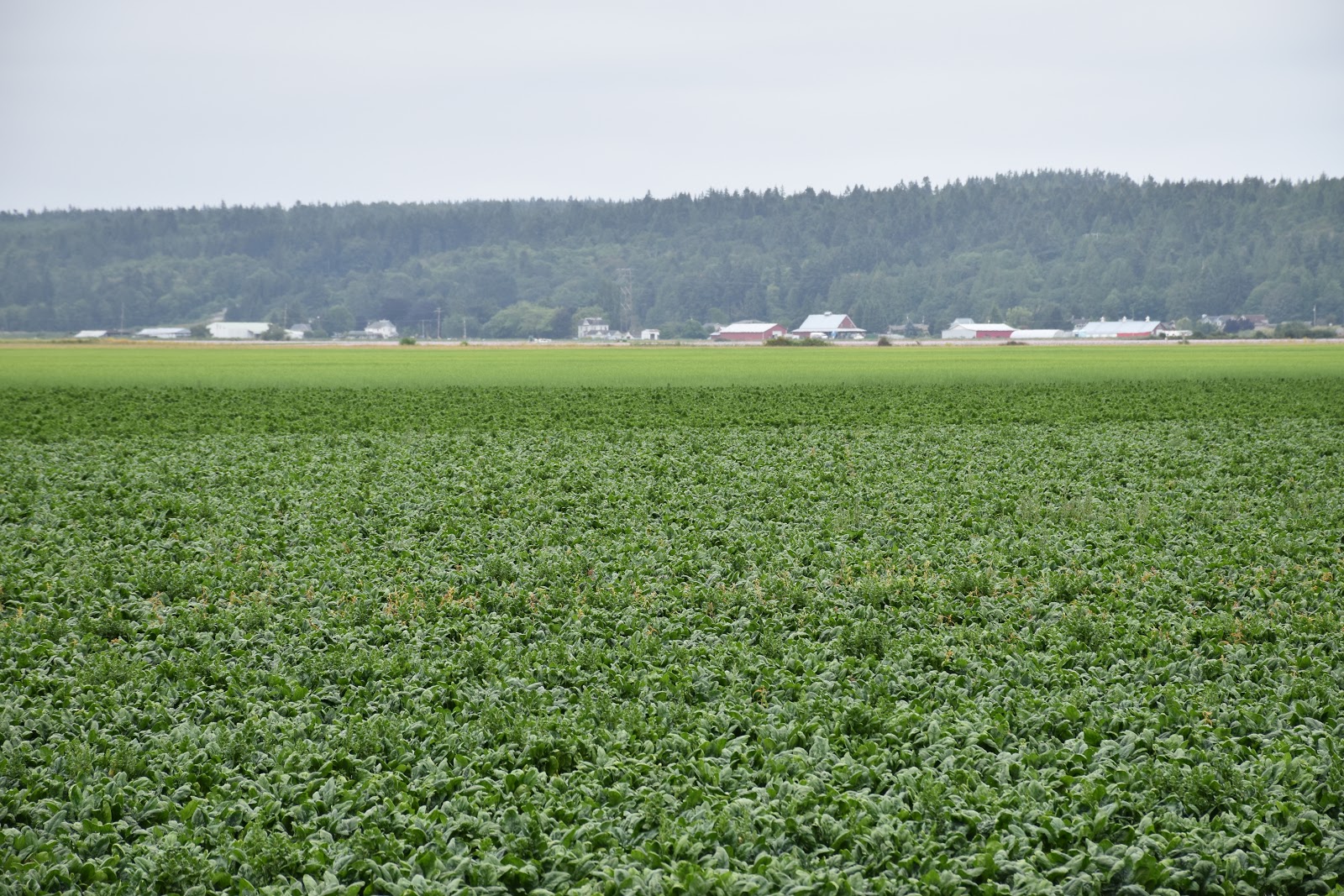
Skagit Valley field of spinach, considered a specialty crop.
A couple years ago, LINC Foods of Spokane teamed up with specialty crop partners in Idaho and Montana to compete for funds available through the U.S. Department of Agriculture’s Specialty Crop Multi-State Program.

As the lead for partners from Washington, Idaho and Montana, LINC Foods received a $300,000 grant focusing on food safety. LINC is a worker and farmer-owned cooperative business that calls itself “a one-stop shop for local, sustainable food.”

The competition was tough. Out of 11 proposals that WSDA reviewed and forwarded on to the USDA, LINC’s was the only one awarded a grant. USDA only awarded funds to four multi-state projects across the U.S.

This year, WSDA is one of some 20 states that will again act as the “administrator” of selected multi-state projects under current USDA Agricultural Marketing Service (AMS) competition for new projects.

States competing for $7 million 

Specialty crop programs are funded through the 2014 Farm Bill. This round, some $7 million in federal funds are available to boost the specialty crop industry.  Specialty crops include fruits, vegetables, tree nuts and nursery crops. Washington ranks second nationally for producing specialty crops.

We hope to have one or more of Washington’s applications be selected in this current round. Projects can address regional or national-level specialty crop issues, and deal with food safety, plant pests and disease, research, or projects addressing common issues specific to specialty crops, such as marketing and promotion.

Sept. 25 proposal deadline to WSDA

Proposals are due by 2 p.m., Sept. 25, and should be emailed to WSDA at SCMP@agr.wa.gov.

We’d be glad to discuss the grant process. Contact me via email or by calling 360-902-2091.

A few details 
  • Review USDA’s 2017 Request for Applications to be aware of requirements.
  • Grant amounts range from $250,000 to $1 million.
  • Proposals must have at least two partners with substantive involvement in the project. Partners must be located in different states.
  • Submit applications to a participating state department of agriculture such as WSDA.
  • Specialty crop producer groups, associations, organizations, tribal governments, universities, nonprofits, and other stakeholder groups are encouraged to apply.
  • Projects can take up to three years for completion, but must start in 2017.


Tuesday, July 18, 2017

Washington Grown films local mushroom farm process


Hannah Street
Communications


On a sunny Monday morning, a white van pulled into the driveway of Sno-Valley Mushrooms, a family-owned farm nestled in the countryside of Duvall, Washington. Tomas Guzman, Kara Rowe and Kristi Gorenson emerged, taking in the picturesque surroundings and making introductions as they set up their camera equipment.

(From left to right) Kara Rowe, Kristi Gorenson, a Sno-Valley
employee,and Tomas Guzman prepare to film a
scene packing mushrooms.
The three Washington Grown crew members were at the farm to film an installment for its fifth season. The show, which tours various agricultural sites and provides recipe how-to’s, is part of an agricultural promotion initiative supported by the Washington Farmers and Ranchers (WFR).

Washington Grown has been airing since 2013, but already boasts several accolades. Kristi received a Northwest Chapter Emmy nomination in 2015, and the show received both a Silver and Bronze Telly Award. In addition, Washington Grown received an Emmy for its episode on sweet corn.


The team first completed a walk-through, coordinating their shooting plan and familiarizing themselves with the farm’s workflow.

“This is where the ‘shroom magic happens,” owner Will Lockmiller joked.

The crew met the workers bagging the nutrient-infused sawdust compound for Shiitake, Tree Oyster, and Lion’s Mane varieties, to name a few.

Sno-Valley depicts a classic shooting venue for Washington Grown. The program highlights Washington-based agriculture operations. In the past, it has aired episodes featuring Taylor Shellfish, Grace Harbor Farms, Mountain View Berries, and more. Operated by friends and co-owners Rowan Ledbetter and Will, Sno-Valley Mushrooms sells at local farmers markets and counts local retailers, food producers, restaurants, and independent chefs as clientele. They offer their mushrooms year-round and sell grow-your-own mushroom kits in addition to carefully-packed boxes of fungi ready to prepare.


Left: mushrooms are ready for the farmer's market. Right: mushrooms grow in bags in the farm's lab facility.

After head camera operator Tomas readied his equipment, producer Kara put a mic on host Kristi. Will and Rowan were also mic’d during the shoot, both of them guiding Kristi through different parts of their facility.

The Washington Grown crew had a lot of ground to cover and not much time to do so; the call sheet only allowed two hours for filming at this location. The Sno-Valley Mushroom shoot was one of two video shoots that day, not to mention one of many that would take place during the week.

But the day’s tightly-packed itinerary was not overestimated; the crew was on-schedule throughout the morning, and moved through scenes at a steady clip. Tomas zoomed around the farm with his camera, directing the owners as needed. Kristi guided the interviews, asking questions and letting the owners talk excitedly about their business model and mushroom-growing expertise.

Tomas directs Will and Kristi as they discuss the mushroom
growth process.
Kara mic’d interviewees as necessary and had a list of points to cover. She referred to it once, but between the owner’s engaged descriptions and Kristi’s questions, everything was covered. “She’s really a pro at this,” Kara said, tucking the list back into her pocket.

Shortly after noon and right on schedule, Tomas got one last shot of Kristi, Rowan, Will, and two of Will’s children, who piled onto a tractor and said goodbye to the audience. The camera and sound equipment was loaded back into the van, and the crew was off to their next location.


Will's son, Rowan, helped supervise the Washington Grown
crew during their shoot.
Visit Washington Grown’s website for more information, including recipes and the station schedules when you  can and how to watch the show.