Friday, June 28, 2019

WSDA hosts a national Pesticide Inspector Regulatory Training

Gary Buckner and Tim W. Schultz
Pesticide Management Division

Pesticide inspectors from around the country met in Kennewick
this May for a national conference hosted by WSDA.
Pesticide inspectors from all around the United States convened in Kennewick this May for a national Pesticide Inspector Regulatory Training (PIRT) conference on pesticide drift issues.

WSDA’s Pesticide Management Division Compliance Program hosted the event in conjunction with Washington State University (WSU) Pesticide Education and with funding from the U.S. Environmental Protection Agency (EPA).

Forty-one state and tribal pesticide inspectors, 10 EPA staff, and 11 WSDA Pesticide Compliance field staff attended the four-day conference to hone their knowledge and skills about a wide range of pesticide issues, including labeling, drift, and human health concerns.

The training featured presentations from Washington State Department of Health, EPA, WSU, North Dakota State University, Arkansas State Plant Board, Colorado Department of Agriculture, University of California Davis, Illinois Fertilizer and Chemical Association, Agrimetrix Research and Training, and WinField United.

Drift happens


Demonstration of new application method for vineyards.
Pesticide drift unfortunately can occur in certain situations. How the pesticide inspector approaches the situation, understands the technology, evaluates the environmental conditions and gathers the pertinent information are key to understanding what has happened. Gathering this information helps guide the appropriate response.

The courses provided an opportunity for inspectors to learn, discuss and expand their knowledge and skills when dealing with drift related issues.

Topics covered

The conference included presentations from four inspectors sharing specific drift cases from their respective states. Participants discovered that many states share the same drift issues.

Other topics covered during the conference included:
  • Human health exposure concerns
  • Pesticide label language
  • Herbicide volatility
  • Inversions
  • Herbicide symptoms
  • Dicamba drift issues in the Midwest
  • Drift control
  • Evidence collection 
  • Adjuvants 

In the field

Tools of the trade for aerial applicators. 
Outside the conference room, attendees spent one day in the field. The morning visit featured a trip to WSU’s Prosser Irrigated Agriculture Research Extension Center (IAREC) for a look at nozzle technology, equipment issues, and new pesticide application technology in vineyards.

In the afternoon, attendees traveled to a local airfield to discuss aerial pesticide application and drift issues with three pilots who do aerial applications.

Worth the effort

Those of us at WSDA and WSU who organized the event were pleased to see the many positive course reviews from attendees. They made the 10-months of planning well worth the effort.

For tips on preventing pesticide drift see this WSDA Ag Briefs article.

Tuesday, June 25, 2019

An ancient fish for a revolutionary new fish farm

Laura Butler
Washington State Aquaculture Coordinator

Thousands of juvenile black cod fish swirl in a tank at NOAA's research
facility at Manchester. 
In a collaboration that exemplifies the Northwest’s fusion of cultures, innovation, and entrepreneurial
spirit, the Olympic Peninsula’s Jamestown S’Klallam tribe is working with the National Oceanic and Atmospheric Administration (NOAA) researchers, Washington Sea Grant, and the University of Washington to develop a revolutionary new fish farm.

The remarkable if unlikely star of the whole venture? A lugubrious native fish the S’Klallam people have prized for more than a millennium, the black cod.

Kurt Grinnell, the tribe’s Aquaculture Program manager, met us at the NOAA research facility at Manchester to give us an early look at the project he believes will make a big splash for his community and our state’s finfish farming industry.

Kurt Grinnell has high hopes for farming black cod.
Grinnell said one of the reasons black cod (also known as sablefish) has so much potential for aquaculture is its great taste – and its natural vigor helps, too.

“It’s a real robust fish,” Grinnell said. ”As far as farming goes, it can handle low oxygen levels and algal blooms, and it grows fast. We have an all-female population here, so we can grow it in about 18 to 24 months.”

In addition, black cod has a strong cultural significance to the tribe, he said.
"Ever since we’ve been here, we’ve been eating them,"
                                               Kurt Grinnell – Jamestown S’Klallam Tribal Member

“The S’Klallams have always caught sablefish right there in the Strait of Juan de Fuca, so as a tribe, we’ve always eaten them,” Grinnell said. “It’s always been a native local fish for us going back thousands of years.”

Today, high-end chefs around the world, and especially in the Pacific Rim, prepare black cod with all manner of culinary magic. The flesh has a flakey texture and high oil content that makes it versatile, forgiving, and flavorful. You might see it in dishes such as “Miso Glazed Cod” – a recipe that literally made a name for an internationally renowned restaurant.

Grinnell says the ancient people were more unassuming.

“As far as the way we were preparing it, I would say it was probably cooked right over a fire, boiled or smoked.  In those remote areas, that’s what we had. We could boil water or could start a fire,” Grinnell said.

Economically, we think it’s going to be a viable fish for the market, we know it’s popular enough that people will buy it. It will definitely help the tribe in that way. It will pay for programs and things like that. But it’s culturally significant too,” Grinnell said.

Cutting-edge science

Also on hand was Rick Goetz, who leads the Program in Marine Fish and Shellfish Biology at the Northwest Fisheries Science Center’s Manchester Research Station.

Standing next to one of eight large tanks – the large dark fish circling behind him -- Goetz explained how he acquired his brood stock.

“We’ll go out with a charter fisherman who does quasi-longlining,” Goetz said. “He puts about a mile out. We do about 900 hooks and catch 70 fish. It’s important for us to get them alive, in good condition so we can bring them back and put them in the tanks.”

Black cod brood stock respond quickly to cold water tanks. 
Remarkably, these fish, which can be found up to 2,000 feet below the sea’s surface, can be transferred to shallow tanks on shore.

“They don’t have a swim bladder, the organ that maintains neutral buoyancy,” Goetz said. “That helps them.”

This quality also makes them good candidates for farming.

“They are remarkable fish. You bring them back, you put them in the tanks. They are feeding the next day,” Goetz said. “It’s one of the things that makes them easy to propagate. Whenever you have situations with your brood stock that makes it easy to get large numbers of eggs, that really helps the aquaculture operation.”

Growth spurts

Rick Goetz talks with Washington Grown
co-host Tomas Guzman while filming
an upcoming episode.
The speed at which black cod can be brought to mature sizes is also a plus.

Goetz said juvenile fish double their weight every ten days, and that’s only with cold water and proper feeding – no growth hormones or genetic engineering.

The Jamestown S’Klallam Tribe is in the process of getting permits to raise the black cod in net pens near Sequim as early as this fall, but that may not be easy.


Washington Grown co-host Tomas Guzman gets up close with
the talent. 
“Permitting is tough because you have people on both sides of the issue,” Grinnell said. “I think people remember aquaculture pens from 50 years ago. And honestly, it’s come a long ways since then…And from a tribal point of view, we look at it as food security. We want to eat fish and with the issues we are having now, we’re going to have to grow fish to keep our children seven generations ahead eating fish.”


Just look at the facts

“We are working with the state aquaculture coordinator and multiple state agencies,” Grinnell added. ”We’re doing our best to get out there to the general public to let them know that finfish aquaculture does not have the environmental impact that they think it does. We are trying to get the facts out, using best practices and the best science out there.”

For more information about aquaculture in Washington, contact me by e-mail or at 360-902-1842.

Friday, June 21, 2019

At WSU, the future of bread lies in the past

Karla Salp
Communications

Walking into the Washington State University Bread Lab evokes feelings of both the comfortable familiar and wonder of the strange and unusual.

Baking bread, of course

PhD Student, Robin Morgan from Italy,
sets out loaves to cool. 
As one might expect when walking into a bread lab, you are greeted by the intoxicating smell of fresh-baked bread – whether being whipped up in the professional kitchen by PhD students or in the on-site King Arthur Flour Baking School.

On a visit to the lab while Washington Grown was shooting a piece for their television show, the crew experienced three types of bread. First, the baking school was packed with attendees from the public learning how to make a traditional French baguette. In the bread lab’s kitchen, PhD student Laura Valli from Estonia shared a fresh-baked rye spice bread. And trials of an “approachable loaf” came hot out of the oven.

Creating an “approachable loaf” is one of the current Bread Lab projects. The goal: to create an affordable, nutrient-dense whole-wheat loaf of bread with simple ingredients that Americans will enjoy. The object is to offer an alternative to the standard white loaves sold in most grocery stores which, while popular and well-known, are nutritionally inferior.

"Approachable loaf" trial

Keeping the past alive, literally

"Miracle" wheat variety
But baking the best bread starts with breeding the best grain. As you enter the Bread Lab, one of the things you notice even at the entrance are the displays of various types of wheat – many of which most people have never seen.

Take for example the “Miracle” variety of wheat, which has been around for centuries, but is scarcely known now. Rather than the single-branched head of wheat on a stalk, this variety is multi-branched. Gracing the hallway are mounted wheat varieties developed by WSU. And in a back room of the lab, over 1,000 varieties of wheat and hundreds of other varieties of grain are stored and maintained for breeding purposes.

This “wall of wheat” provides the genetic material used in traditional breeding programs to evaluate existing grain varieties and breed new ones that will benefit farmers, processors, and consumers. Varieties are grown and evaluated for qualities such as flavor, color, baking quality, disease resistance, and nutrition.

Reinvigorating a local grain culture

Wheat variety trial fields. Photo credit: WSU Bread Lab
With an emphasis on developing publicly available grain varieties that thrive in Washington’s climate, the WSU Bread Lab is helping to reestablish a unique culture around local grains. From small grain growers to mills to baking or even brewing, the program is restoring a grain-centered culture that faded from American memory once milling became a larger industry and white flour became the norm.

The WSU Bread Lab is creating not only healthier bread but reviving a craft-grain culture that has nearly been lost in the United States. We'll drink - and eat - to that. 

After touring the WSU Bread Lab, fresh-baked bread,
local strawberries, and cheese seem like the perfect dinner.


Tuesday, June 18, 2019

Wanted: Livestock Identification Advisory Committee nominations

Jodi Jones
Animal Services

Brand Program Manager Robbie Parke talks with Danny
DeFranco, Washington State Cattlemen's Association
Executive Vice President. 
WSDA is seeking nominations for its Livestock Identification Advisory Committee.

Earlier this month, we took an opportunity to provide information about legislative updates to our Livestock Inspection Program and get the call out for nominations to the newly expanded advisory committee when we met with industry representatives at a meeting in Ellensburg.

In April, lawmakers passed Senate Bill 5959, a new law intended to modernize the program and restore it to financial solvency.

It also expanded the advisory board from six to 12 members. The law requires WSDA’s director to appoint two Livestock Identification Advisory Committee members from each of six industry groups including beef producers, public livestock market owners, horse producers, dairy producers, cattle feeders, and slaughter facility owners. No more than two committee members may reside in the same county.

Most of the bill’s new provisions go into effect on July 28, but there is still some confusion in the livestock community about the details.

"I’m just glad that you are doing this,” said Sen. Judy Warnick, prime sponsor of SB 5959. “I’ve been hearing so many misstatements and misinformation out there, and we put so much work into [the bill], so we have to do whatever it takes to make it happen and dispel some of the misinformation that has been bandied about.”

Warnick said the top two rumors she’s been hearing are:

  • It’s going to cost $20 per head to register your cows. 
  • Dairy farmers are going to have to brand all their cows. 

Both are false.

However, it is true that cattle identification fees are changing.

  • Inspection fees for identified cattle will be $1.21 per head.
  • Inspection fees for unidentified cattle will be $4 per head.
  • Inspection fees for horses are $3.85 per head.
  • Audit fees for certified feedlots is 28 cents per head. 
  • A $20 call-out fee replaces the time and mileage fee and will be collected for all inspections.


And, dairy farmers do not have to brand their cows. They can identify them with electronic official individual identification for $1.21 a head or leave them unbranded/unidentified at the $4 per-cow rate.

A recent WSDA Ag Briefs article outlines all of the new rates.

Animal Services Acting Assistant Director Jodi Jones reviewed the timeline for implementing the proposed rules. She explained that most of the new fees go into effect July 28.  The use of the Electronic Cattle Transaction Reporting (ECTR) program and subsequent licensing fees and the certified veterinarian and field livestock inspector certification fees will require rule changes that will take several months to complete.

The ECTR system will accept credit cards and electronic checks when it becomes available as early as October. However, payment of fees with credit cards in the field will not be possible until a few legal and technical issues are resolved.

The law also expands the field of people authorized to do brand inspections. Trained certified veterinarians or field livestock inspectors dispersed throughout the state will be able to conduct brand inspections. Those certified by the department to conduct brand inspections will be required to collect and remit the fees outlined in the bill to WSDA.

A few Washington brands on the side-
walk outside the Cattlemen's Association.
Inspection training for certified veterinarians and field livestock inspectors will be scheduled in the coming months.

“We don’t want to have any conflicts of interest with those authorized to do brand inspections,” Jones said. “We plan to put some language in the [proposed rules] to make sure we have a sound asset protection program.”

For more information about the Livestock Inspection Program, contact Jodi Jones at (360) 902-1889 or Robbie Parke at (360) 902-1836.


Monday, June 17, 2019

Beetle Blitz Week: Have you seen this pest?

Chris Looney
Entomology Program

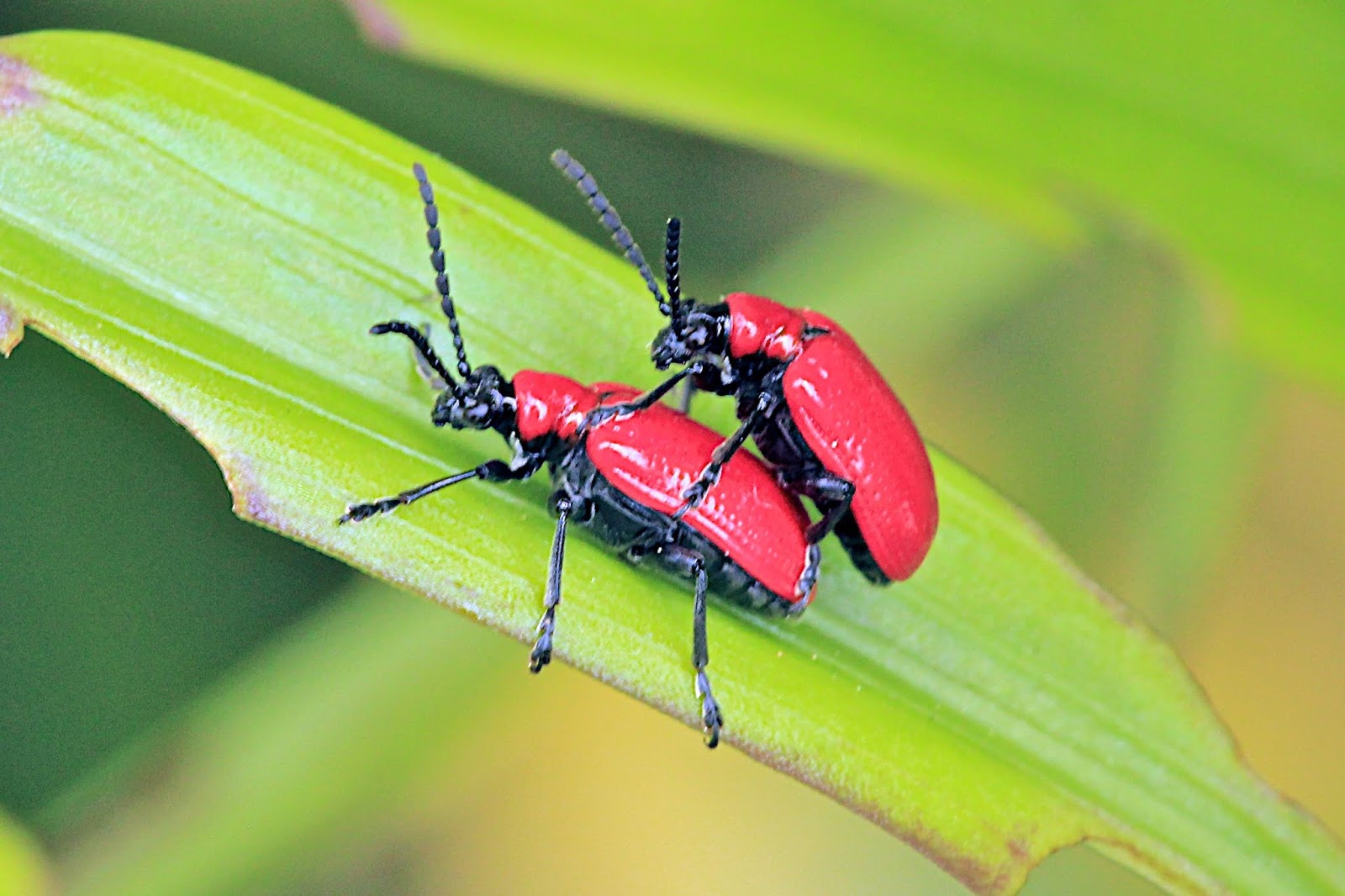
Pest detectives are needed this week as WSDA conducts a "Beetle Blitz" week June 17 - 23 to find and map the spread of a relatively new and highly destructive pest - the Lily Leaf Beetle.

If you see a lily - wherever you are - take a close look at it. You might find a lily leaf beetle in a garden, park, hiking area, or even landscaping throughout the community.

Local residents first discovered and have been critical in helping track the spread of this pest so far, and you can continue to help during this Beetle Blitz week.

Here's what to look for:

Adults


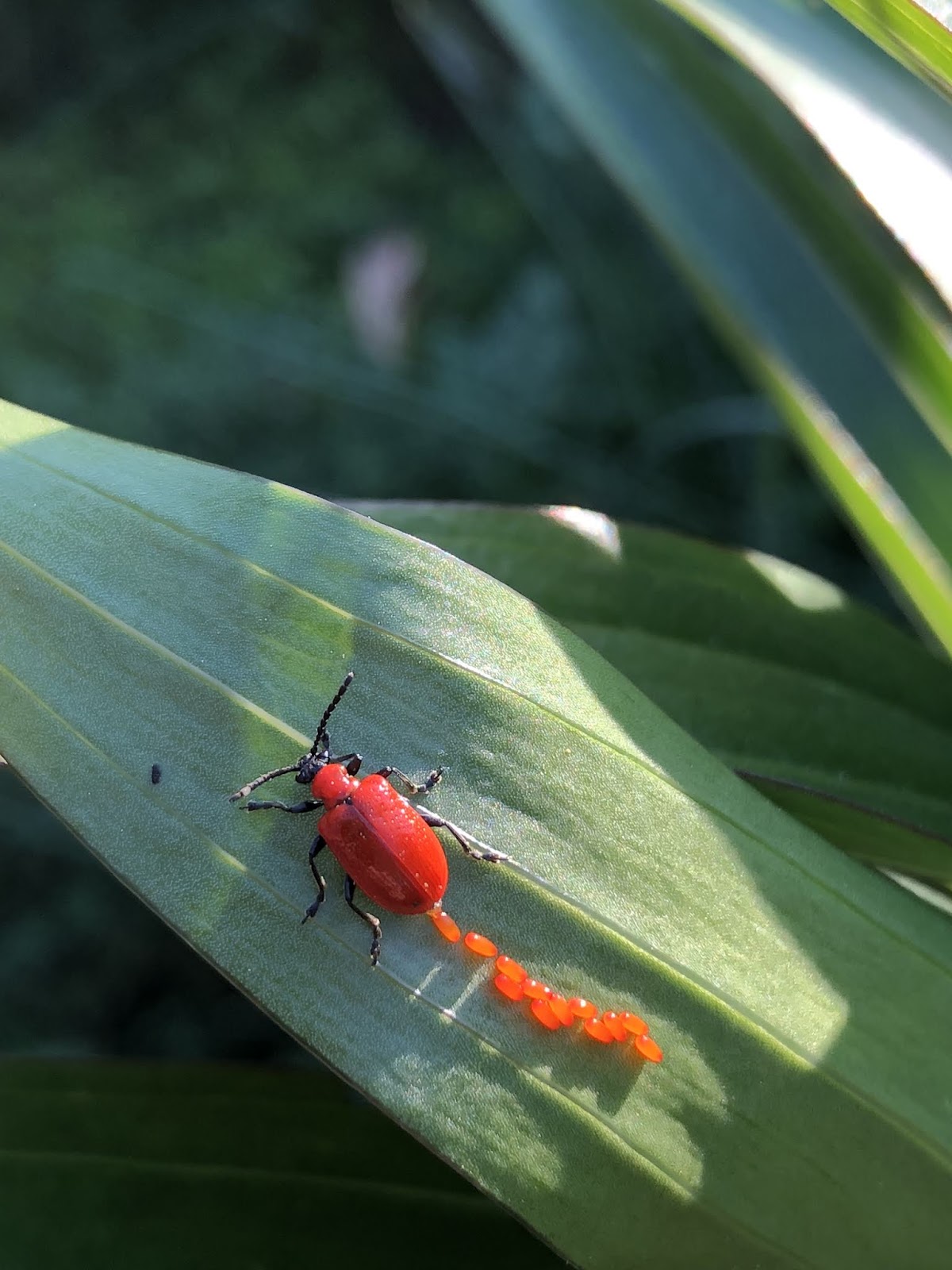
Adults are easiest to spot as they are bright red, even though they are relatively small.


Eggs


Eggs are usually on the underside of leaves and are normally an orangish color.


Larvae


Larvae are brownish blobs also usually found on the underside of leaves.


Reporting


If you find any life stage of the Lily Leaf Beetle, here's what to do:
  1. Take a clear photo of the beetle, eggs, or larva. Cell phones are great for this!
  2. Go to the lily leaf beetle reporting form online.
  3. Submit the photo, and include the date you saw the lily leaf beetle (or eggs/larvae) and general location information using the online reporting form. That's it!
If you can't access the online submission form, you can send the photos, location information, and date you saw the pest to mfreeman@agr.wa.gov. Once the week is over, WSDA entomologists will compile all of the emailed sightings and those submitted directly to the website, creating the most complete map of this invader to date. 

Want more info about the Lily Leaf Beetle? Here is a short video about it: