|
One of our partners in the field taking soil samples.
|
Healthy soil is the key to success in farming. With healthy soil, farms are more successful, our environment is cleaner, and Washington can keep growing nutritious food for generations to come. With more than 300 different crops in the state, healthy soil looks different from place to place and from crop to crop. The Washington State Department of Agriculture’s
Natural Resources Assessment Section (NRAS) partnered with
Washington State University (WSU) to launch a baseline assessment of soil health across Washington. This research will help us better understand the role of soil health in our diverse agricultural landscape.
The beginning of the Washington Soil Health Initiative
In the fall of 2019, the U.S. Department of Agriculture (UDSA) awarded a $500,000 specialty crop block grant to NRAS that funded a soil health survey project in partnership with WSU. Then in the spring of 2020, the state Legislature passed Substitute Senate Bill 6306 that created the Washington Soil Health Initiative, which provided $200,000 of additional funding to NRAS for more soil health research and outreach.
Partnerships are key
The Soil Health Initiative aims to identify and promote soil health stewardship practices that are grounded in sound science and promote economic prosperity for farmers.
 |
Soil sampling kits
prepared to send off. |
This soil health research brings together many partners including NRAS, WSU,
Washington State Conservation Commission, the non-profit Soil Health Institute, 11 conservation districts throughout Central and Eastern Washington, three soil health laboratories, and all of the participating farmers.
NRAS and WSU work with the conservation districts to find farmers who are willing to provide management histories and volunteer their fields for soil sampling. Once fields are identified, soil samples are collected and sent to SoilTest Farm Consultants, Inc., Dr. Deirdre Griffin LaHue’s lab at the WSU Northwestern Washington Research and Extension Center, or the Soil Health Lab at Oregon State University.
The original project: Focus on specialty crops
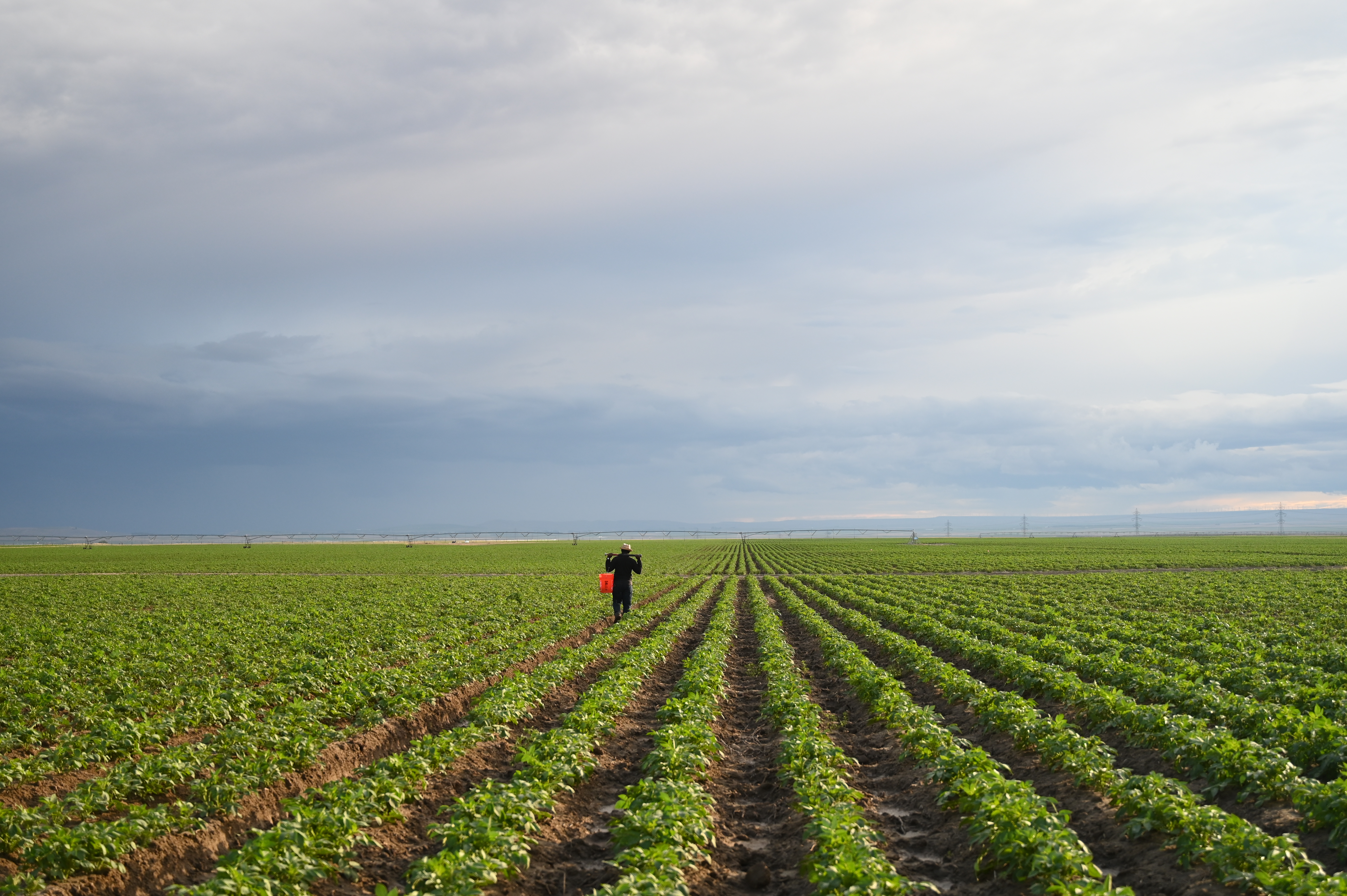
The project that was funded by the specialty crop block grant began in fall 2019 and continues through summer 2022. The goal is to understand the current soil health status and key soil challenges of major specialty crops in Washington. Specialty crops of interest include potato, wine grape, sweet corn, onion, tree fruit, hops, and pulses.
The project uses a survey approach by sampling sites with similar soil types that farmers identify as their “best” and “worst” fields. Farmers choose these fields based on their perception of yield, disease pressure, and the need for additional soil amendments such as fertilizer or lime. Samples taken from these sites are tested for a variety of chemical, physical, and biological soil health indicators, which collectively provide a snapshot of overall soil health. Farmers also provide data about their farming practices through a management survey, so that soil health status can be linked with management practices across soil types, crops, and regions.
Project expansion: More crops are included
 |
A close look at the process of soil sampling.
|
The Soil Health Initiative provided funding to expand upon the grant project to achieve a broader soil health monitoring program that includes more than just the major specialty crops. With this project expansion, NRAS and WSU can collect soil samples from all crop and grazing lands that currently have or plan to implement conservation management practices. By comparing soil sample results from similar locations that have or have not implemented conservation practices, NRAS and WSU can learn more about which practices are best at improving soil health for the many different crops across Washington.
Additionally, NRAS and WSU are working with the Soil Health Institute to sample from uncultivated sites such as native grasslands or rangeland. Data from these samples will be compared with those from conventionally farmed soil samples of similar soil types to understand how native and perennial grassland soil health differs from that of cultivated soils.
Outcomes: More data, outreach, and improved soil health
Participating farmers will receive a personalized soil health report with data and an interpretation of the results. NRAS, WSU, and conservation districts will share the findings from these projects with the agricultural community and the public.
The Soil Health Initiative brings together stakeholders interested in practices that improve soil health without compromising farmers’ success. The outcomes from these projects are baseline soil health data specific to Washington, better tools to monitor and manage soil health, increased adoption of soil health stewardship practices, and continued engagement from stakeholders and participating farmers.
Each outcome contributes to improved agricultural viability, farm profitability, nutrition, and environmental function across Washington. If you are interested in participating or have questions, please email our soil scientist for the project, Dani Gelardi, or call 360-791-3903. You can also visit agr.wa.gov/agscience to learn more about NRAS and the Soil Health Initiative.