
Karla Salp
Communications
 |
| First WSDA-trapped Japanese beetle of 2023 |
We conducted our second beetle treatment this spring and
WSDA trappers have placed hundreds of traps in and near previous beetle
detection sites that we’ll be checking regularly until the fall.
We’re doing everything we can to protect schools, parks,
gardens, and farms from this invasive pest, but there are many ways that you
can help.
- Report Japanese beetle sightings. If you spot a
Japanese beetle (or several,) snap a photo and report them online or by emailing pestprogram@agr.wa.gov.
- Place your own traps. You can join
the trapping effort by placing your own traps. Traps can be obtained at
local farm and garden centers as well as online. If you do trap, please either
count and report your trap catches online (with a photo of your catch!) or drop
off traps with beetles in them at the following locations:
- Valley Wide Cooperative (Grandview)
- Riders True Value (Grandview)
- Wapato City Hall (Wapato) - Treat your property. If you notice beetles on your
property, you may want to apply an effective treatment for adults (WSDA’s
treatment earlier in the year was for grubs.) Washington State University has
provided guidance to homeowners in English
and Spanish
on the best products for Japanese beetles (not all products listed for Japanese
beetles have been proven effective.) If you choose to treat your property,
follow the label instructions on using the product exactly.
- Don’t move plants. If you live in or near an area where Japanese beetle has been found, do not move plants. Sharing plants from your yard with a friend or neighbor could spread the beetle from your yard to theirs. Don’t purchase plants from inside the quarantine area and take them home if you are outside the quarantine area. You could bring Japanese beetle into your yard.
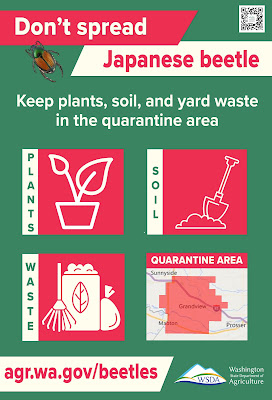
- Keep yard waste and soil in the quarantine area. Yard
waste and soil could also transport beetles. Moving plants, yard waste, or soil
out of the quarantine area is prohibited if you live in the quarantine area.
Instead, WSDA has established a yard
waste drop-off site at 875 Bridgeview Rd. Grandview, WA.
- Spread the word, not the beetles. Learn more about Japanese beetles and encourage your friends and neighbors to help detect and eradicate this pest. On our Japanese beetle webpage, you can learn more about the beetle, how you can help, join our Washington Japanese Beetle Watch Facebook group, and sign up for email alerts to stay informed about the project.

Espanol
Seis maneras en las que puede ayudar a #CombatirLosEscarabajos
Se detectó el primer escarabajo japonés de 2023. Esta mañana, nuestros tramperos de escarabajos japoneses revisaron las trampas y descubrieron los primeros escarabajos en una trampa cerca de la escuela secundaria en Grandview. Los adultos ya están aquí; por lo tanto, es momento de poner manos a la obra.
Durante esta primavera, hemos realizado nuestro segundo tratamiento contra los escarabajos y los tramperos del Washington State Department of Agriculture (WSDA) han colocado cientos de trampas en los lugares anteriores donde se detectaron escarabajos y cerca de ellos, los cuales revisaremos con regularidad hasta el otoño.
Estamos haciendo todo lo posible por proteger escuelas, parques, jardines y granjas de esta plaga invasora, pero usted también puede ayudar de numerosas maneras.
- Notifique avistamientos de escarabajos japoneses. Si ve un escarabajo japonés (o varios), tome una fotografía y notifique en línea o por correo electrónico a través de pestprogram@agr.wa.gov.
- Coloque sus propias trampas. Puede colaborar con los esfuerzos de colocación de trampas al colocar las suyas. Puede obtener las trampas en centros agrícolas y de jardinería locales, así como por internet. Si atrapa escarabajos, cuéntelos y notifique en línea (adjunte una fotografía de los escarabajos capturados) o entregue las trampas con los escarabajos en los siguientes lugares:
- Valley Wide Cooperative (Grandview)
- Riders True Value (Grandview)
- Wapato City Hall (Wapato) - Realice un tratamiento en su propiedad. Si detecta escarabajos en su propiedad, puede aplicar un tratamiento eficaz contra los adultos (a principios de año, el tratamiento del WSDA era contra los gusanos). Washington State University ha elaborado pautas para los propietarios en inglés y español sobre los mejores productos contra los escarabajos japoneses (no todos los productos que se enumeran para combatir el escarabajo japonés han demostrado ser eficaces). Si decide realizar un tratamiento en su propiedad, siga con exactitud las instrucciones que figuran en la etiqueta sobre cómo usar el producto.
- No traslade plantas de un lugar a otro. Si vive en una zona donde se detectaron escarabajos japoneses o cerca de ella, no traslade plantas. Compartir plantas de su jardín con amigos o vecinos podría propagar los escarabajos de su jardín al de ellos. No compre ni lleve a su casa plantas que pertenecen a la zona de cuarentena si usted vive fuera de dicha zona. De esta forma, podría traer al escarabajo japonés a su jardín.
- Mantenga los desechos de jardín y la tierra en la zona de cuarentena. Los desechos de jardín y la tierra también podrían transportar escarabajos. Está prohibido trasladar plantas, desechos de jardín o tierra fuera de la zona de cuarentena si vive en dicha zona. En cambio, el WSDA estableció un sitio de depósito de desechos de jardín en 875 Bridgeview Rd. Grandview, WA.
- Difunda el mensaje para que los escarabajos no se propaguen. Obtenga más información sobre los escarabajos japoneses y aliente a sus amigos y vecinos a colaborar con la detección y erradicación de esta plaga. En nuestra página web del escarabajo japonés, puede leer más sobre el escarabajo y cómo puede ayudar, puede unirse al grupo de Facebook “Washington Japanese Beetle Watch” (Detección del escarabajo japonés en Washington) y puede registrarse para recibir alertas por correo electrónico para mantenerse al tanto sobre el proyecto.
Erradicar definitivamente el escarabajo japonés de Washington va a demorar varios años. Si trabajamos juntos, lograremos proteger a Washington de esta plaga invasora y #CombatirLosEscarabajos.

