Showing posts with label japanese beetle. Show all posts

Sunday, February 4, 2024

Cultivating Love: A Valentine's Day Ode from the Washington State Department of Agriculture

 Kim Vaughn
Communications

 As Valentine's Day approaches, hearts are aflutter with love, and what better way to celebrate this special day than by exploring the romantic side of agriculture? 

You might not consider the Washington State Department of Agriculture (WSDA) in the same sentence as romance. But hold on, because we're about to unveil the love-filled side of WSDA that ensures your Valentine's Day is as special as can be. 

Beyond the fields of green and the rows of crops, there lies a love story between WSDA, farmers and producers, and the land they cultivate. From flowers to gift baskets, and even the journey to your romantic dinner, WSDA works year-round to make sure you feel loved every single day.

Flowers for that special someone 

When it comes to flowers for your special someone, WSDA is on the case! We play a vital role in flower inspections, ensuring the quality and health of floral products within the state. As part of our regulatory efforts, we conduct inspections to monitor for pests, diseases, and compliance with agricultural standards in the cultivation and trade of flowers. In other words, we make sure there are no unexpected guests, like Japanese beetles, hiding in your roses. These inspections are crucial to maintaining the integrity of the floral industry, safeguarding against the spread of harmful pests, and ensuring that consumers receive high-quality, disease-free flowers.

Our commitment to rigorous flower inspections contributes to the overall health and sustainability of Washington's floral ecosystem, fostering a thriving environment for the cultivation and enjoyment of diverse and beautiful flowers. Nurseries are diligently inspected to ensure that your bouquet is pest-free, so your romantic gesture is as delightful as can be.

Getting you there

The journey to your date is just as important, and WSDA is here to support you every mile of the way. With a focus on both traditional gas and eco-friendly electric vehicles, we make sure that the gas pumps and electric charging stations are delivering everything you pay for. Last year alone, we inspected a whopping 10,788 gas meters, ensuring fueling up is smooth and worry-free. 

The WSDA Weights and Measures Program fosters fairness in commercial transactions by conducting tests and inspections on commercial devices, verifying prices, inspecting packages, educating the public, monitoring fuel quality, and investigating complaints.

Gift baskets and cottage food regulations 

Now, let's talk about those delightful gift baskets and the goodies they hold. WSDA plays a crucial role in ensuring that cottage food operations are producing safe treats for your enjoyment. 

A Cottage Food Permit enables Washington State residents to produce safe food items, including baked goods, candies, jams, jellies, preserves, fruit butters, dry spice blends, or dry tea blends in their home kitchen. We make sure that your Valentine's Day treats are not only delicious but also adhere to the highest safety standards. Additionally, we require all ingredients be included on the labels so you don’t get any unexpected surprises in your Valentine’s goodies.


So, this Valentine's Day as you exchange flowers, enjoy a romantic dinner out, and savor delicious treats from your gift basket, take a moment to appreciate the behind-the-scenes efforts of WSDA. We're your ally in ensuring that every aspect of your celebration, from the blossoms in your hand to the treats on your plate, is filled with love and safety. 

To stay updated on WSDA activities, subscribe to our email lists and receive notifications directly in your inbox.

Cheers to a Valentine's Day made extra special.

With Love, 
WSDA Staff

Tuesday, June 20, 2023

Six ways you can help #BeatTheBeetles

Karla Salp
Communications

beetle in a green bag beetle trap
First WSDA-trapped Japanese beetle of 2023
The first Japanese beetle of 2023 has been detected! Our Japanese beetle trappers were out checking traps this morning and they discovered the first beetles in a trap near the high school in Grandview. So the adults are here and it is time to take action!

We conducted our second beetle treatment this spring and WSDA trappers have placed hundreds of traps in and near previous beetle detection sites that we’ll be checking regularly until the fall.

We’re doing everything we can to protect schools, parks, gardens, and farms from this invasive pest, but there are many ways that you can help.

  1. Report Japanese beetle sightings. If you spot a Japanese beetle (or several,) snap a photo and report them online or by emailing pestprogram@agr.wa.gov.

  2. Place your own traps. You can join the trapping effort by placing your own traps. Traps can be obtained at local farm and garden centers as well as online. If you do trap, please either count and report your trap catches online (with a photo of your catch!) or drop off traps with beetles in them at the following locations:

         - Valley Wide Cooperative (Grandview)
         - Riders True Value (Grandview)
         - Wapato City Hall (Wapato)

  3. Treat your property. If you notice beetles on your property, you may want to apply an effective treatment for adults (WSDA’s treatment earlier in the year was for grubs.) Washington State University has provided guidance to homeowners in English and Spanish on the best products for Japanese beetles (not all products listed for Japanese beetles have been proven effective.) If you choose to treat your property, follow the label instructions on using the product exactly.

  4. Graphic asking people not to spread Japanese beetle through yard waste, potted plants, or soil.
    Don’t move plants.
    If you live in or near an area where Japanese beetle has been found, do not move plants. Sharing plants from your yard with a friend or neighbor could spread the beetle from your yard to theirs. Don’t purchase plants from inside the quarantine area and take them home if you are outside the quarantine area. You could bring Japanese beetle into your yard.

  5. Keep yard waste and soil in the quarantine area. Yard waste and soil could also transport beetles. Moving plants, yard waste, or soil out of the quarantine area is prohibited if you live in the quarantine area. Instead, WSDA has established a yard waste drop-off site at 875 Bridgeview Rd. Grandview, WA.

  6. Spread the word, not the beetles. Learn more about Japanese beetles and encourage your friends and neighbors to help detect and eradicate this pest. On our Japanese beetle webpage, you can learn more about the beetle, how you can help, join our Washington Japanese Beetle Watch Facebook group, and sign up for email alerts to stay informed about the project.
Successfully eradicating the Japanese beetle from Washington is going to take several years. By working together, we can protect Washington from this invasive pest and #BeatTheBeetle. 

Espanol

Seis maneras en las que puede ayudar a #CombatirLosEscarabajos
 
Se detectó el primer escarabajo japonés de 2023. Esta mañana, nuestros tramperos de escarabajos japoneses revisaron las trampas y descubrieron los primeros escarabajos en una trampa cerca de la escuela secundaria en Grandview. Los adultos ya están aquí; por lo tanto, es momento de poner manos a la obra. 

Durante esta primavera, hemos realizado nuestro segundo tratamiento contra los escarabajos y los tramperos del Washington State Department of Agriculture (WSDA) han colocado cientos de trampas en los lugares anteriores donde se detectaron escarabajos y cerca de ellos, los cuales revisaremos con regularidad hasta el otoño. 

Estamos haciendo todo lo posible por proteger escuelas, parques, jardines y granjas de esta plaga invasora, pero usted también puede ayudar de numerosas maneras. 
  1. Notifique avistamientos de escarabajos japoneses. Si ve un escarabajo japonés (o varios), tome una fotografía y notifique en línea o por correo electrónico a través de pestprogram@agr.wa.gov. 

  2. Coloque sus propias trampas. Puede colaborar con los esfuerzos de colocación de trampas al colocar las suyas. Puede obtener las trampas en centros agrícolas y de jardinería locales, así como por internet. Si atrapa escarabajos, cuéntelos y notifique en línea (adjunte una fotografía de los escarabajos capturados) o entregue las trampas con los escarabajos en los siguientes lugares:

         - Valley Wide Cooperative (Grandview)
         - Riders True Value (Grandview)
         - Wapato City Hall (Wapato)

  3. Realice un tratamiento en su propiedad. Si detecta escarabajos en su propiedad, puede aplicar un tratamiento eficaz contra los adultos (a principios de año, el tratamiento del WSDA era contra los gusanos). Washington State University ha elaborado pautas para los propietarios en inglés y español sobre los mejores productos contra los escarabajos japoneses (no todos los productos que se enumeran para combatir el escarabajo japonés han demostrado ser eficaces). Si decide realizar un tratamiento en su propiedad, siga con exactitud las instrucciones que figuran en la etiqueta sobre cómo usar el producto. 

  4. No traslade plantas de un lugar a otro. Si vive en una zona donde se detectaron escarabajos japoneses o cerca de ella, no traslade plantas. Compartir plantas de su jardín con amigos o vecinos podría propagar los escarabajos de su jardín al de ellos. No compre ni lleve a su casa plantas que pertenecen a la zona de cuarentena si usted vive fuera de dicha zona. De esta forma, podría traer al escarabajo japonés a su jardín. 

  5. Mantenga los desechos de jardín y la tierra en la zona de cuarentena. Los desechos de jardín y la tierra también podrían transportar escarabajos. Está prohibido trasladar plantas, desechos de jardín o tierra fuera de la zona de cuarentena si vive en dicha zona. En cambio, el WSDA estableció un sitio de depósito de desechos de jardín en 875 Bridgeview Rd. Grandview, WA.

  6. Difunda el mensaje para que los escarabajos no se propaguen. Obtenga más información sobre los escarabajos japoneses y aliente a sus amigos y vecinos a colaborar con la detección y erradicación de esta plaga. En nuestra página web del escarabajo japonés, puede leer más sobre el escarabajo y cómo puede ayudar, puede unirse al grupo de Facebook “Washington Japanese Beetle Watch” (Detección del escarabajo japonés en Washington) y puede registrarse para recibir alertas por correo electrónico para mantenerse al tanto sobre el proyecto. 
Erradicar definitivamente el escarabajo japonés de Washington va a demorar varios años. Si trabajamos juntos, lograremos proteger a Washington de esta plaga invasora y #CombatirLosEscarabajos.  


Tuesday, April 11, 2023

Japanese beetle treatments are starting: what you need to know

By Amber Betts
WSDA Communications

By now many Yakima and Benton county residents have signed up for free treatment to help WSDA get rid of the pest, Japanese beetle. If you haven’t heard, we have an infestation of an invasive species on our hands in that area, and we are working with the residents there to get rid of it.

One of the ways we are doing that is by using a pesticide to treat properties. Treatments at residential properties are starting late this week or early next week. That means residents will need to know what to do before, during, and after treatment.

If you didn’t sign up, it’s not too late. You can sign
up online, bring your paper form to the nearest city hall, or have one of our agricultural technicians in the community help you sign up on their tablet computers.

If you did sign up, you’ll get a notification by phone 48 hours in advance, letting you know it’s your turn to get your property treated.

Here are a few things we need you to do to complete the treatment without a hitch.

Before treatment

·       Unlock your gates to ensure we can access your yards.

·       Remove children’s swimming pools and toys, and animal food and water bowls from the lawn.  

·       Remove any other items that can easily be moved from your lawn or grassy areas.

During treatment

·       Keep your animals inside.

·       Adults and children should remain inside so as not to interfere with the treatment.

After treatment

Our contractor will leave a door hanger on your front door, and a yard sign in the yard, indicating that the treatment is complete.

After treatment, you should wait until the product has dried before re-entering the area that was treated.

Attempted treatment

If the contractor attempts to treat your property, but cannot, they will leave a note and automatically reschedule. Some reasons they will not be able to complete treatment include locked gates, pets left outside, items left on lawns like dog bowls, etc. Once rescheduled, you’ll be notified of the date and anticipated time window. If a second attempt is unsuccessful, WSDA staff will contact you directly to schedule the treatment and ensure we have communicated efficiently.

Safety information

Health officials consider the product safe if humans, pets, and mammals are exposed. It specifically targets young t larvae or grubs in the ground.

Acelepryn has an excellent safety record when used as directed. If you're still concerned, you can limit direct contact with the product by following these tips:

  • Avoid the area and keep pets inside until the treatment has dried.
  • If you come into contact with the pesticide, wash the affected skin with soap and water.
  • If your clothes come in contact with the pesticide, remove clothing and wash before wearing again.
  • Eating produce grown in soil treated with Acelepryn is not expected to cause health effects. However, if you want to avoid exposure, take steps to avoid surface water runoff from areas treated with Acelepryn into home gardens. Learn more about how to prevent runoff when using pesticides.

For up-to-date information on our eradication project, visit agr.wa.gov/beetles

Tuesday, May 24, 2022

Help detect and prevent Japanese beetle spread

Cassie Cichorz
WSDA Pest Program

The Washington State Department of Agriculture (WSDA) is asking the public to help prevent the spread of Japanese beetle.  

Japanese beetle is a non-native pest that feeds on over 300 plants by skeletonizing leaves. Their larvae feed on plant roots below the surface. Japanese beetles can lay many eggs in a cycle, making them difficult to control or eradicate. Japanese beetle would pose a serious threat to farms, gardens, and the environment if they became established in Washington State.

In Grandview, a resident reported picking as many as 75 beetles from her roses in a single day in 2020. WSDA trapped over 24,000 beetles in the same area in 2021. WSDA is conducting an eradication of this pest and is asking residents to respond by reporting, trapping, and providing treatment consent. 

What can you do?

If you are in Washington, you can monitor for this pest by being on the lookout. If you see Japanese beetle, please report it! 

Adults – seen in summer

  • 1/3 – ½ inch long
  • Metallic green head and thorax
  • Copper wing covers

Larvae (grubs) – seen in spring

  • 1/8 – 1 inch long
  • Brown/tan head with legs
  • Found in soil, especially in lawns

Take a picture of the pest, and note the location. Then visit our online reporting form to upload. You can also report by email at PestProgram@agr.wa.gov, or call 1-800-443-6684. 

If you reside in Grandview, you only need to report when trapping for beetles. 

Yakima and Benton County residents

In addition to monitoring and reporting for Japanese beetle, you can trap beetles yourself!

Trapping will catch adult beetles, which can lower their current population, and is another way to control this pest. A wide variety of traps are available for purchase, or you can make one yourself. 

Japanese beetle drop-off container in Grandview

WSDA suggests placing traps from mid-May through mid-October when the adult beetles are active. When placing a trap, remember to keep it on your property. Make sure to check your trap periodically and replace as needed. 

If you capture any beetles, please report them. You can report by leaving the catch at the drop-off location, or sending in a report.

If you live near Grandview, a drop-off cooler has been placed inside Blehyl Co-op at 940 E Wine Country Road. The cooler is located inside the entrance of the store on the left. Please write the trap’s address on your collection.

If you are not near the drop-off location, take a picture of your trap capture and note the trap’s location. Then upload that information to our online reporting form, email PestProgram@agr.wa.gov, or call 1-800-443-6684.

Treatment area residents

If you live in or around the Grandview area, you may be inside the 49-square-mile treatment zone. You can help prevent the spread of Japanese beetles by not moving items on which they can travel and spread. 

Japanese beetle eggs and larvae live in the soil below the surface, so don’t move soil or fill, and leave soil on site. Also if you have any potted or outdoor plants, do not move them.

Adult beetles can travel on waste or debris from yards, gardens, and other horticulture activities. If you landscape or garden, leave your lawn clippings, leaves, weeds, and garden debris in the treatment area. 


Free treatment

Free treatments for Japanese beetle are continuing in the Grandview area. This helps prevent the establishment of this invasive pest. You can give consent to have your property treated by going to agr.wa.gov/beetles. You will need to provide your unique property ID number. If you need help obtaining this, contact us at PestProgram@agr.wa.gov or 1-800-443.6684.

WSDA has hired a contractor to apply the treatment, and our staff will be in the field monitoring the treatment progress. Treatments are relatively fast and you do not need to be home for the process.

Stay connected

WSDA is dedicated to working with the public to provide information on Japanese beetle. WSDA has taken pictures of the pest around the Grandview area, to view images please visit flickr.com/wsdagov.

View the Pest Alert for Japanese beetle. 

Follow WSDA on Facebook, Instagram, YouTube, and Twitter

Monday, December 6, 2021

Proposed beetle quarantine prompts survey of small businesses in the Grandview area

Amber Betts
WSDA Communications

WSDA is working to eradicate Japanese
beetles in the Grandview, Washington area. 
If you have business in the Grandview area, WSDA wants to hear from you as it develops a Japanese beetle quarantine to control the spread of this pest.

Grandview has been dealing with an infestation of Japanese beetles (Popillia japonica). During adult flight season, between May and October, WSDA trappers caught more than 24,000 beetles. It’s a startling number given that only three beetles were caught in the area in 2020 and the kind of damage these invasive pests can do. 

In an effort to control and eradicate the pest, WSDA is planning a multi-faceted approach, including a proposal to quarantine soil and certain other items that could potentially spread the beetles if moved out of the area. 

Before doing that, we’d like to hear from businesses in and around Grandview who may be affected by the rule. The input of business owners and other stakeholders is vital to the rulemaking process. If you think your business might be impacted by the proposed quarantine, please take our survey

Proposed quarantine

WSDA is proposing to amend the quarantine for Japanese beetle by creating a quarantine area around a 49-square mile grid centered on Grandview, Washington. This proposed quarantine area is designed to prevent the spread of Japanese beetle from infested sites within Yakima and Benton counties. 

The proposed quarantine would regulate certain items and impose restrictions on their movement out of the quarantine area. Items for proposed regulation year-round include:

  • Soil (residential, agricultural, construction, and commercial)
  • Humus, compost, and growing media
  • Manure
  • Grass sod (turf)
  • Yard debris
  • Potted plants
  • Bulbs
  • Plant crowns

Items that would only be regulated during adult flight season (May 15 through October 15) include:  

  • Cut flowers
  • Hop bines
  • Corn stalks/harvest silage  

Information collected in the survey will aid in compiling a Small Businesses Economic Impact Statement, which assesses potential impacts the proposed quarantine might have on small and large businesses. The information received will only be used in our assessment of impacts to businesses.

If you do business in the proposed quarantine area and move any of the items listed above out of the quarantine area, please take the survey and help us understand the potential impacts to your business as we formulate a Japanese beetle quarantine for infested areas in the state.

Visit our website to learn more about the Japanese beetle quarantine


Thursday, November 18, 2021

WSDA Pest Program trapping season wraps up

Karla Salp
Communications

Each year, WSDA’s Pest Program sets thousands of traps throughout the state to catch invasive species that could threaten agriculture. The program surveys for over 130 pests – most of which have not yet been detected in the state.

Japanese beetles

Dozens of Japanese beetles in a ziplock bag
Dozens of Japanese beetles collected from a single trap

It was a record year for Japanese beetle (Popillia japonica) catches - unwelcome news to farmers and homeowners alike. There was one catch in Washington across the river from Portland, a few as usual near Seattle-Tacoma International Airport, but more than 24,000 in the Grandview area. Catching so many in Grandview this year was surprising considering that only three were caught in 2020 between Grandview and Sunnyside combined.
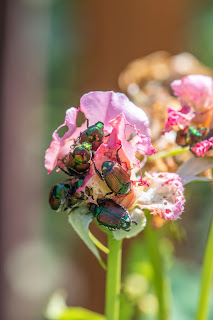
Japanese beetles on rose bud
Japanese beetles devour a 
Grandview resident's roses
The overwhelming number of catches in the Grandview area has many implications. First, WSDA has proposed a 49-square-mile Japanese beetle quarantine to restrict the movement of soil, yard debris, and plant materials that could spread the beetles. Second, WSDA is planning an extensive, multi-year eradication program to try to eradicate the pest – no easy task given the number of beetles already in the area. Finally, WSDA will conduct extensive outreach and trapping in Yakima and Benton counties in 2022. 

Japanese beetles attack over 300 different types of plants including roses, hops, grapes, corn, lawns, and many other crops grown in area gardens and farms.

If there is a silver lining to this beetle infestation, it is that the city, businesses, schools, and people in the vicinity have been open and willing to do what they can to help with WSDA’s response to this invasive pest. Another positive: although nearly 100 traps were placed around area plant nurseries, no beetles were found at the nurseries.

Invasive moths

Male Lymantria dispar
Our trappers set nearly 23,000 traps statewide this year looking for Lymantria dispar – the moth formerly known as the gypsy moth (a new common name has not yet been established.) This moth has devastated forests in the Eastern U.S. where it is established – eating over 300 different types of trees and plants. When there are cycles of large populations, they can strip entire forests from the canopy to the ground, leaving an eerie winter-like scene at the beginning of summer.

This year was a low year for Lymantria dispar catches – only six were found in the entire state. Unfortunately, one of those moths was caught in Eastern Washington just north of Kettle Falls - which is unusual in itself as most moths are normally trapped in Western Washington – and it was also a more concerning variety – Lymantria dispar asiatica, formerly known as the Asian gypsy moth. Lymantria dispar asiatica eats a wider variety of trees (including evergreens) and the females can fly, allowing them to spread more easily.

Apple maggot
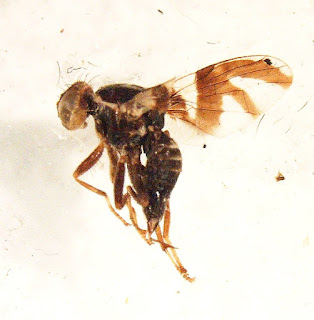
apple maggot fly
Apple maggot fly
Our apple maggot (Rhagoletis pomonella) program continued its work of safeguarding Washington’s global reputation for delicious – and pest-free – apples. The program’s work consists of trapping pest-free areas to ensure they remain pest-free as well as trapping around threatened orchards that are near known apple maggot detection sites.

The good news this year is that many of our main apple-growing regions had no catches at all this year: Adams, Asotin, Benton, Douglas, Franklin, Grant, Lincoln, and Stevens counties. Less encouraging was catching 120 apple maggots in Kittitas County and 843 in Okanogan County.

In areas where apple maggots have been detected outside of the apple maggot quarantine area, the county pest boards are responsible for taking aggressive action. WSDA and the Apple Maggot Working Group (an advisory council composed of state and local government, industry representatives, and researchers) began working last year to examine how best to address the growing apple maggot problem in the unquarantined area of Okanogan County. That effort will continue over the coming months.

Asian giant hornet
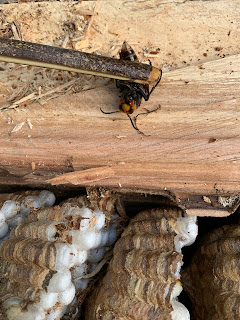
Asian giant hornet queen trapped by chopsticks against tree with combs capped with white silk from the nest in the tree showing
Asian giant hornet queen from the
third nest with part of her nest
Our Asian giant hornet (Vespa mandarinia) team had a busy season – finding and eradicating three hornet nests in August and September. Every nest was in a tree cavity, each demanding a creative approach to remove the nest. The most challenging nest was about 15 feet up a tree.

Public trapping and reporting again played a major role in locating the nests – two of the three were located after reports from area residents. Despite existing research indicating that the hornets predominately nest in the ground in their native range, all four nests eradicated in Washington over the last two years have been in tree cavities.

Our hornet program will continue for at least three more years. In order for the hornets to be considered eradicated, we must have three consecutive years with no detections. The biggest challenge to success is the lack of a highly-effective trap. While the traps we use catch hornets, they do not appear to be irresistible to them. USDA continues to work on a lure that will be more attractive to the hornets and we wish them much success!

Exotic wood-boring insects
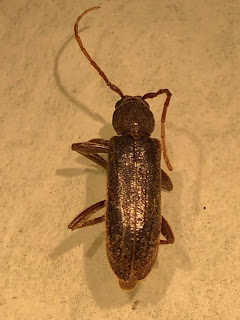
velvet longhorn beetle
Velvet longhorn beetle
Many of the pests we look for are never found. Such is usually the case with our exotic wood-boring insect survey. Imagine trapping for years and never finding what you are looking for. As disappointing as it may be not to find anything, that’s exactly what we hope the results will be as we look for potentially harmful new pests.

This year, WSDA put out over 400 exotic wood-boring insect traps at high-risk sites such as ports, shipping distribution sites, and transfer stations. Trapped areas and other high-risk areas are visually surveyed for signs of wood boring insect activity. One day, they found one.

“This is the first time in all of these years I have trapped a target species,” Don Kitchen, one of the members of the beetle survey team, said.

This past summer, the velvet longhorn beetle (Trichoferus campestris) was detected for the first time in the state in King County near Kent. WSDA responded by setting more traps and conducting visual surveys of the area, although no additional beetles were found. WSDA will continue to put out additional traps, conduct visual surveys of the area, and conduct outreach about the beetle in 2022.

The work continues

WSDA’s Pest Program has had a busy year – and this roundup covers just a handful of the pests they monitor. With their continued work and the help of the public looking for and reporting suspected invasive species, our state should be protected from harmful pests for years to come. 

Friday, September 3, 2021

Japanese beetle count passes 20,000

Amber Betts
WSDA Communications

There have been more than 20,000 Japanese beetles caught in Grandview this summer. Sound the alarm, ring the bell, this is not good news. If established in our state, we could see dire results to our crops, our gardens, and even our grass.

These invasive beetles almost double the human population in Grandview, and it keeps climbing. Our Pest Program staff are working to determine just how widespread the beetle has become.

So far, the beetles are being detected in the highest numbers in the residential area of Grandview. A few, however, have crossed the road into rural areas where the crops many people rely on for our living are found. Adult Japanese beetles love to feast on more than 300 plants, including roses, grapes, apples, hops, and grass. They are highly destructive, difficult and expensive to eradicate or control.

Japanese beetle (Popillia japonica).
  
What is a Japanese beetle?

The Japanese beetle (Popillia japonica) is a garden pest native to northern Japan. The adults eat the leaves, buds, and flowers of plants while the larvae attack the roots, particularly the roots of grasses.

How did they get here?

We’ve been trapping for Japanese beetle since the 1980s and occasionally find that they’ve caught a ride to our state, normally on a plane from an infested area in the Eastern U.S. But it has been more than a decade since even a single beetle has been detected beyond the vicinity of an airport. The larvae are found in soil associated with the roots of host plants, they are common under turf or sod and can be moved in potted plants.

What are we doing?

If you’ve been in Grandview at all in the recent months, you have likely seen traps hanging all over the city. That’s us, trying to determine the extent of the infestation. At the end of the season, we will look at the data we’ve collected and begin formulating a plan on how to eradicate these pests.

What can Grandview citizens do?

If you live in Grandview and have hung Japanese beetle traps, please report your trapping results. If you have seen the beetles on your property, consider treating your lawn following WSU’s treatment guidelines. Not all products labeled to treat your property for Japanese beetles are effective; WSU’s guidelines let you know which ones can work and how to properly apply
them.

What happens next?  

Trapping for Japanese beetles will continue at least through September, after which our staff will begin removing the hundreds of traps currently in the area. The trapping results will inform both the eradication plans which are anticipated for next spring as well as a quarantine which is being considered to prevent the unintentional movement of the beetles into beetle-free areas of the state.

Get email updates on our progress and join our Japanese Beetle Watch Facebook group for the latest information and to connect with others working on responding to this introduction.

Monday, March 6, 2017

This pest loves your flowers

Karla Salp
WSDA Pest Program Outreach Coordinator

What is green, shiny, and a pest that WSDA hopes doesn’t cross the river?

The Japanese Beetle

Japanese beetle is a metallic green and bronze beetle first found in the US in 1916. A beautiful bug to look at, those in the Eastern States and Midwest are familiar with the havoc this particular pest can inflict on the environment.

Smelling the Roses

Roses are one of the favorite plants that Japanese beetles attack. In fact, the scent used to attract the pests to traps has a very pleasant, floral scent. But roses aren’t the only plants the beetles attack. They eat the foliage, flowers, and fruit of over 300 different plant species, including favorites like grapes, hops, and cannabis in addition to roses.

How’s the lawn?

M.G. Klein, USDA Ag Research Service, Bugwood.org


One sign that Japanese beetles (or their relative, the European chaffer) are in your area is to take a look at your lawn from late fall to early spring. Japanese beetles overwinter as grubs in the ground with lawns as a favorite location. They feed on the roots of your grass all winter long.

But that’s not the only damage they do. These grubs attract everything from raccoons to ravens. They dig up your lawn looking for a mid-winter tasty snack. The upside is one small natural control for Japanese beetles. The downside is that it destroys the turf and, sadly, even this predator feeding does not keep the beetles in check.

Monitoring for Japanese Beetles
Japanese beetles in trap

Both Washington and Oregon routinely monitor for this invasive bug, and last year Oregon found an infestation in Portland. Almost 400 beetles were found – the most ever in the state. Now the Oregon Department of Agriculture is poised to start a multi-year effort to eradicate the pest.

With the increased finds in Oregon, Washington is on alert for the potential for the bugs to cross the Columbia River into Vancouver. While WSDA normally has a few traps in the Vancouver, in 2017 a full-time trapper will be dedicated to placing about 400 traps in the area.

Don’t give pests a ride

Kevin D. Arvin, Bugwood.org
While it’s unlikely that a beetle would actually fly across the river, the reality is that thousands of people cross the river from Portland to Vancouver every day. Whether a Washingtonian just drives back from working in the City of Roses or visits an Oregon nursery to find a favorite plant, the threat is real that humans could transport this pest beyond their natural flight capability.

Report suspected beetles
WSDA monitors for Japanese beetles throughout the state each year. However, if you think you have found Japanese beetle in your yard, take a picture and capture the bug if you can. Then be sure to contact the WSDA pest program at pestprogram@agr.wa.gov or call 1-800-664-6684.

Your roses will thank you and so will we.


Life cycle of the Japanese beetle
Unless otherwise noted, images in this blog are courtesy of the Oregon Department of Agriculture.

Tuesday, September 27, 2016

What's up in your grill?

Karla Salp
Pest Program Outreach Coordinator

Have you ever looked at your vehicle’s grill and found a bee, butterfly or some other bug stuck there, unable to get out of the way as you cruised down the highway? Well, checking vehicle grills is just one of the less illustrious things our staff does at WSDA. Let me explain…

A primary way that many invasive pests enter Washington is by hitching rides when people move here from infested states, unwittingly transporting devastating pests into their new neighborhoods.
To protect our state, WSDA conducts periodic vehicle checks at weigh stations, collaborating with USDA Smuggling Interdiction and Trade Compliance and the Washington State Patrol.

Together, we conducted one such check last month at two different weigh stations: Liberty Lake and Plymouth. Between the two locations, a total of 167 inspections were performed, including inspections of 19 moving trucks.

Japanese Beetle in a pickup grill
 One of the most common places to find invasive bugs is in the grill of the vehicle, and the inspected vehicles did not disappoint at this inspection. WSDA found Japanese Beetles – an invasive pest that has taken hold in the Eastern and Midwestern states – in the grills of several trucks.

But the grill isn’t the only place to find invasive pests, nor is it the most worrisome as those bugs are usually dead. Normally, the most threatening are items hauled from the infested location itself, like outdoor furniture. Some pests, like the gypsy moth, require a checklist to be completed if you are moving from a quarantined area to our beautiful state.

Luckily, no living invasive pests were detected in the latest operation. There were, however, several movers who either did not do the required checklist or whose checklists were incomplete.

If you or someone you know is moving to Washington from a gypsy moth quarantine area, make sure they check for gypsy moth egg masses and have their completed checklist. Everyone is welcome in Washington, but leave your bugs behind!


Special thanks to WSDA pest biologist Jenni Cena for the photos.