
Showing posts with label gypsy moth. Show all posts

Thursday, November 18, 2021

WSDA Pest Program trapping season wraps up

Karla Salp
Communications

Each year, WSDA’s Pest Program sets thousands of traps throughout the state to catch invasive species that could threaten agriculture. The program surveys for over 130 pests – most of which have not yet been detected in the state.

Japanese beetles

Dozens of Japanese beetles in a ziplock bag
Dozens of Japanese beetles collected from a single trap

It was a record year for Japanese beetle (Popillia japonica) catches - unwelcome news to farmers and homeowners alike. There was one catch in Washington across the river from Portland, a few as usual near Seattle-Tacoma International Airport, but more than 24,000 in the Grandview area. Catching so many in Grandview this year was surprising considering that only three were caught in 2020 between Grandview and Sunnyside combined.
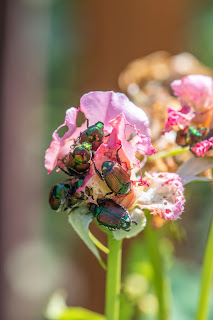
Japanese beetles on rose bud
Japanese beetles devour a 
Grandview resident's roses
The overwhelming number of catches in the Grandview area has many implications. First, WSDA has proposed a 49-square-mile Japanese beetle quarantine to restrict the movement of soil, yard debris, and plant materials that could spread the beetles. Second, WSDA is planning an extensive, multi-year eradication program to try to eradicate the pest – no easy task given the number of beetles already in the area. Finally, WSDA will conduct extensive outreach and trapping in Yakima and Benton counties in 2022. 

Japanese beetles attack over 300 different types of plants including roses, hops, grapes, corn, lawns, and many other crops grown in area gardens and farms.

If there is a silver lining to this beetle infestation, it is that the city, businesses, schools, and people in the vicinity have been open and willing to do what they can to help with WSDA’s response to this invasive pest. Another positive: although nearly 100 traps were placed around area plant nurseries, no beetles were found at the nurseries.

Invasive moths

Male Lymantria dispar
Our trappers set nearly 23,000 traps statewide this year looking for Lymantria dispar – the moth formerly known as the gypsy moth (a new common name has not yet been established.) This moth has devastated forests in the Eastern U.S. where it is established – eating over 300 different types of trees and plants. When there are cycles of large populations, they can strip entire forests from the canopy to the ground, leaving an eerie winter-like scene at the beginning of summer.

This year was a low year for Lymantria dispar catches – only six were found in the entire state. Unfortunately, one of those moths was caught in Eastern Washington just north of Kettle Falls - which is unusual in itself as most moths are normally trapped in Western Washington – and it was also a more concerning variety – Lymantria dispar asiatica, formerly known as the Asian gypsy moth. Lymantria dispar asiatica eats a wider variety of trees (including evergreens) and the females can fly, allowing them to spread more easily.

Apple maggot
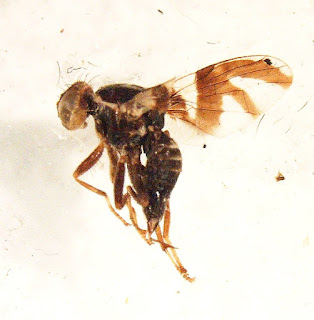
apple maggot fly
Apple maggot fly
Our apple maggot (Rhagoletis pomonella) program continued its work of safeguarding Washington’s global reputation for delicious – and pest-free – apples. The program’s work consists of trapping pest-free areas to ensure they remain pest-free as well as trapping around threatened orchards that are near known apple maggot detection sites.

The good news this year is that many of our main apple-growing regions had no catches at all this year: Adams, Asotin, Benton, Douglas, Franklin, Grant, Lincoln, and Stevens counties. Less encouraging was catching 120 apple maggots in Kittitas County and 843 in Okanogan County.

In areas where apple maggots have been detected outside of the apple maggot quarantine area, the county pest boards are responsible for taking aggressive action. WSDA and the Apple Maggot Working Group (an advisory council composed of state and local government, industry representatives, and researchers) began working last year to examine how best to address the growing apple maggot problem in the unquarantined area of Okanogan County. That effort will continue over the coming months.

Asian giant hornet
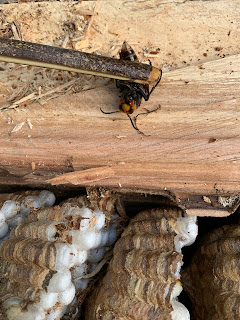
Asian giant hornet queen trapped by chopsticks against tree with combs capped with white silk from the nest in the tree showing
Asian giant hornet queen from the
third nest with part of her nest
Our Asian giant hornet (Vespa mandarinia) team had a busy season – finding and eradicating three hornet nests in August and September. Every nest was in a tree cavity, each demanding a creative approach to remove the nest. The most challenging nest was about 15 feet up a tree.

Public trapping and reporting again played a major role in locating the nests – two of the three were located after reports from area residents. Despite existing research indicating that the hornets predominately nest in the ground in their native range, all four nests eradicated in Washington over the last two years have been in tree cavities.

Our hornet program will continue for at least three more years. In order for the hornets to be considered eradicated, we must have three consecutive years with no detections. The biggest challenge to success is the lack of a highly-effective trap. While the traps we use catch hornets, they do not appear to be irresistible to them. USDA continues to work on a lure that will be more attractive to the hornets and we wish them much success!

Exotic wood-boring insects
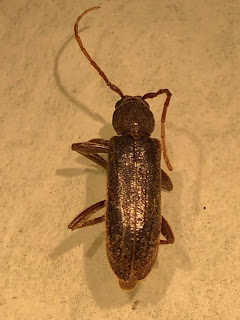
velvet longhorn beetle
Velvet longhorn beetle
Many of the pests we look for are never found. Such is usually the case with our exotic wood-boring insect survey. Imagine trapping for years and never finding what you are looking for. As disappointing as it may be not to find anything, that’s exactly what we hope the results will be as we look for potentially harmful new pests.

This year, WSDA put out over 400 exotic wood-boring insect traps at high-risk sites such as ports, shipping distribution sites, and transfer stations. Trapped areas and other high-risk areas are visually surveyed for signs of wood boring insect activity. One day, they found one.

“This is the first time in all of these years I have trapped a target species,” Don Kitchen, one of the members of the beetle survey team, said.

This past summer, the velvet longhorn beetle (Trichoferus campestris) was detected for the first time in the state in King County near Kent. WSDA responded by setting more traps and conducting visual surveys of the area, although no additional beetles were found. WSDA will continue to put out additional traps, conduct visual surveys of the area, and conduct outreach about the beetle in 2022.

The work continues

WSDA’s Pest Program has had a busy year – and this roundup covers just a handful of the pests they monitor. With their continued work and the help of the public looking for and reporting suspected invasive species, our state should be protected from harmful pests for years to come. 

Monday, November 5, 2018

6 things to know about WSDA’s 2018 gypsy moth trapping results

Karla Salp
WSDA Communications

Male gypsy moth stuck in WSDA trap
Although it is November, things are just starting to slow down for WSDA gypsy moth survey coordinator Tiffany Pahs and WSDA’s gypsy moth trapping program. They are only now wrapping up their 44th year of trapping for gypsy moths, part of a decades-long successful effort to keep gypsy moths from establishing in Washington.

While there are no permanent populations of gypsy moths in Washington, each year several European gypsy moths enter the state by hitchhiking with people who move from or visit infested areas. More than 20 states have permanent gypsy moth populations. Asian gypsy moths occasionally slip into our state as well – usually through international ports, though ships are routinely screened for gypsy moths.

Trapping is the cornerstone of the gypsy moth program. It consists of placing thousands of traps throughout the state each summer and fall to monitor for gypsy moth introductions. Almost 30,000 traps went up this year alone, set out by 48 dedicated trappers. You may have seen one in your neighborhood – small, triangular boxes hanging in trees from about June to October.

Gypsy moth traps are checked about every two weeks
Traps help WSDA monitor for gypsy moths and provide three critical pieces of information:
  • Which areas are free of gypsy moths
  • Areas where gypsy moths have been introduced
  • Areas where gypsy moths are reproducing/attempting to establish
In addition to the summer trapping, Pahs’ program also conducts visual surveys in late fall for alternate live stages of gypsy moths, such as egg masses, cocoons, or caterpillar sheddings.

Wrapping up the 2018 gypsy moth trapping season 


Here are the top six things to know about this year’s trapping results:
  1. Trappers nabbed 52 gypsy moths.
  2. Gypsy moths were found in 10 counties (Clark, Cowlitz, Island, Jefferson, King, Kitsap, San Juan, Snohomish, Thurston, and Whatcom counties).
  3. Kitsap County had the most catches: 17.
  4. Trappers found one Asian gypsy moth, which was in Snohomish County.
  5. Trapping results confirmed the successful 2016 eradication of Asian gypsy moth at six sites.
  6. The gypsy moth program is now conducting egg mass surveys in areas of multiple catches.

WSDA’s gypsy moth program will assess the trapping and any egg mass survey data later this year to determine which locations, if any, require eradication treatments to prevent the permanent establishment of gypsy moth populations.  

European gypsy moth is one of the most destructive invasive species ever introduced in the United States. They defoliate millions of acres of trees each year, which can kill the trees. In 2016, the damage was so bad in New England that the swathes of dead trees could be seen on satellite imagery. This year, Rhode Island reported that one-quarter of the state’s hardwood trees have died, in large part due to gypsy moth caterpillar infestations.

Asian gypsy moths pose an even greater threat as they readily attack evergreen trees, which die with only one year of defoliation. Additionally, unlike their European cousins, Asian gypsy moth females can fly, which enables them to spread much more rapidly.

You can see the full trapping results on WSDA’s website and watch the video below to learn more about why gypsy moths are such a threat to Washington’s environment. 


Friday, August 25, 2017

Making gypsy moth history in Washington

by Karla Salp
Communications


For WSDA entomologists, August has been an exciting month.

Trap with 14 male gypsy moths
On July 31, record numbers of gypsy moths started showing up in traps in the Graham/Puyallup area. From two traps with two moths each to a trap with 6 moths, then 8, then 14. In all, 37 male gypsy moths were caught in that area on a single day.

By comparison, we found 25 moths total during three months of trapping last year across the whole state.

But for the entomologists and trappers in our Pest Program, the high point was still to come.

An extraordinary find 


Female gypsy moths laying egg masses hidden by a shrub
Given the unusually high number of catches, our gypsy moth team went to inspect the area Aug. 1 to find the source of the moths. Ground zero turned out to be a tree and some bushes in a residential neighborhood, where, for the first time in the program’s 40-year existence, entomologists found live female gypsy moths, actively laying eggs.

The first two team members to arrive had only an empty food carton from Taco Bell, but they quickly put it to use collecting live females. Because European gypsy moth females don’t fly, they were relatively easy to pick up and contain. Male moths tried to fly off, but they were caught mid-air and didn’t get far.

Eventually, more team members arrived with better collection equipment. By the end of the day, 71 female moths were found, several male moths, numerous egg masses, viable pupae, empty pupal casings, shed caterpillar skins and lots of caterpillar frass (poop.)

On follow up visits, about 30 additional females were found, until the bushes were removed on Aug. 4. In total, approximately 100 female gypsy moths were collected.

Processing the material


Part of the collected specimens after being sorted by WSDA entomologists 
But the work wasn’t done. All the moths, pupae and other materials collected had to be brought back to WSDA’s labs to be frozen and sorted, with entomologists sifting through the materials to tally the number of moths. Potentially useful specimens will be used for displays taken to public education and outreach events. The rest will be destroyed to ensure no gypsy moths survive or escape.

An invasive species scavenger hunt


WSDA entomologist collects two more female gypsy moths
While finding live females in infested areas like New England is relatively easy because of their high numbers, that is not the case in Washington where the pest is not established. Because the females don’t fly, finding the one tree or bush where a new infestation is starting is extremely difficult. There are very few clues to point you to where a female gypsy moth may be hiding. So how did WSDA find the infestation this year?

High numbers of male gypsy moth catches alerted WSDA to the problem. The team was able to focus their search in the area of the highest catches. The team also looked for vegetation that showed damage from caterpillar feeding earlier this spring. But adding to the challenge, females aren’t always located on vegetation. They can lay their eggs anywhere – such as outdoor patio furniture, the underside of a brick on a house or inside an old tire, for example – so other surfaces had to be examined as well.

This just-emerged female's abdomen is full of eggs
In the end, it was skill and luck that resulted in the discovery of the live moths.

A trapper hung a trap on the tree that morning. By noon, three male moths were already trapped in it. Inspection of the tree showed it had extensive caterpillar feeding on the leaves. When the team member pulled back the bushes at the base of the tree, the infestation was discovered on the concealed base of the tree and within the bushes themselves.

It was a truly exceptional find.

The program works


WSDA inspects tree and removes infested bushes
One of the takeaways from this experience is confirmation that WSDA’s gypsy moth program is working.

Last year, two male moths were caught less than a mile from the Graham/Puyallup site where the females were found this month. Because of that catch, a high-density grid of 64 traps per square mile was established in the area. The grid enabled the team to target their search more effectively, which led to finding the actively reproducing population.

Trapping continues this year through September, by which time moths will no longer be flying. Because of the work that our gypsy moth program has been doing for decades, WSDA has prevented gypsy moths from becoming established in Washington for more than 40 years.

This discovery is another example of the great work the pest program does to protect our neighborhoods, farms and environment from potentially devastating invasive pests.

Wednesday, October 12, 2016

Egg hunts - WSDA style

Karla Salp
Pest Program 


Gypsy moth egg masses in CT
Not all egg hunts happen in the spring. In the Washington State Department of Agriculture Pest Program employees hit the road for a unique egg hunt with a higher cause – protecting Washington’s environment from the invasive gypsy moth.

In the shadow of Mount Rainier on a crisp and sunny fall day, about a dozen yellow WSDA vests could be seen wandering around a neighborhood near Graham. Such “egg hunts” occur in areas of interest to the pest program after summer gypsy moth trapping results.

The eggs they were looking for, however, are a lot harder to see than brightly colored eggs in the grass. Gypsy moth egg masses are cream, white, or orange colored. They are usually oblong and fuzzy. The egg masses can be laid on any outdoor surface, but the moths tend to prefer the base of trees.

Having seen so many egg masses on my trip back east this summer, I volunteer to help out. Here are some things I learned on the hunt: 


  1. Needle in the football fields – Looking for gypsy moth egg masses is much like looking for the proverbial needle in the haystack – if that haystack was strewn over an area about the size of 15 football fields.
  2. Egg masses can be anywhere – Gypsy moths will lay their eggs on any surface. In the past, WSDA has found egg masses not only on trees, but also on tires and even on a cup.
  3. Trees are the easy part – We started looking in an almost park-like setting with trees and grass, which was easy enough. When we got to items outside of houses, it became overwhelming: carports, lawnmowers, stacks of wood or junk, garden decorations, fences, vehicles, birdhouses, bushes, tires – the possibilities are endless.
  4. Pushups are optional – I was super impressed by one of the trappers who, rather than get dirty by laying on the ground to look under a trailer, did a slow pushup to lower himself down, look under the trailer, and then push himself back up. The rest of us just got on the ground.
  5. Mirror, mirror – Small telescoping mirrors were a godsend for looking under small areas without having to do #4.
  6. Bragging Rights – When it comes down to it, it takes a lot of time and even more luck to find a gypsy moth egg mass on these hunts. Serious bragging rights can be had by finding an egg mass.


In the end we didn’t find any egg masses that day, but the hunt continues. WSDA staff will be searching again this month, weather permitting. Once the egg mass survey is complete, the program will decide if treatments will be recommended for any areas in 2017. Stay tuned for that announcement, expected later this year.
 

Tuesday, September 27, 2016

What's up in your grill?

Karla Salp
Pest Program Outreach Coordinator

Have you ever looked at your vehicle’s grill and found a bee, butterfly or some other bug stuck there, unable to get out of the way as you cruised down the highway? Well, checking vehicle grills is just one of the less illustrious things our staff does at WSDA. Let me explain…

A primary way that many invasive pests enter Washington is by hitching rides when people move here from infested states, unwittingly transporting devastating pests into their new neighborhoods.
To protect our state, WSDA conducts periodic vehicle checks at weigh stations, collaborating with USDA Smuggling Interdiction and Trade Compliance and the Washington State Patrol.

Together, we conducted one such check last month at two different weigh stations: Liberty Lake and Plymouth. Between the two locations, a total of 167 inspections were performed, including inspections of 19 moving trucks.

Japanese Beetle in a pickup grill
 One of the most common places to find invasive bugs is in the grill of the vehicle, and the inspected vehicles did not disappoint at this inspection. WSDA found Japanese Beetles – an invasive pest that has taken hold in the Eastern and Midwestern states – in the grills of several trucks.

But the grill isn’t the only place to find invasive pests, nor is it the most worrisome as those bugs are usually dead. Normally, the most threatening are items hauled from the infested location itself, like outdoor furniture. Some pests, like the gypsy moth, require a checklist to be completed if you are moving from a quarantined area to our beautiful state.

Luckily, no living invasive pests were detected in the latest operation. There were, however, several movers who either did not do the required checklist or whose checklists were incomplete.

If you or someone you know is moving to Washington from a gypsy moth quarantine area, make sure they check for gypsy moth egg masses and have their completed checklist. Everyone is welcome in Washington, but leave your bugs behind!


Special thanks to WSDA pest biologist Jenni Cena for the photos.

Thursday, September 22, 2016

Now you see it, now you don’t: Northeastern forests in the wake of the gypsy moth outbreak

Karla Salp
Pest Program 

Cruising along the freeway in Connecticut, lush, mid-summer leafy green forests suddenly changed:  green leaves were sprouting from the trees like springtime and light was streaming through what should have been shady forests.

I pulled off at the next exit and confirmed my suspicions: gypsy moth females laying eggs on trees at my first stop.

The defoliation of the Northeastern forests has been astounding. Hundreds of thousands of acres have been completely defoliated by gypsy moth caterpillars – for the second year in a row.

Driving through Connecticut, Rhode Island, and Massachusetts recently, I witnessed mile after mile of trees that, if not for the extreme heat and humidity, would have made one think it was March or April, rather than the end of July.

I didn’t go up in a plane, but I was able to obtain some aerial photos of the extent of the damage from the state agencies where the damage occurred:


Unlike our local tent caterpillars and fall webworms, gypsy moths have the capacity to defoliate entire forests. It was something to behold and I was glad to have to travel across the country to see it, rather than witnessing this damage in our own forests.

Thursday, August 25, 2016

Gypsy Moths and National Parks - Not a Good Mix

Karla Salp
Pest Program Outreach Coordinator

Male gypsy moth on branch
On my recent visit to the East Coast to view gypsy moth damage, I realized upon picking up my rental car that taking the brand new Jeep down the best roads to see gypsy moth defoliation could be costly for the State of Washington.

Luckily, I met Dr. Bob Cook – a biologist with the National Park Service on the Cape Cod National Seashore – who had a beat up Ford pickup perfect for going down the roads less traveled.

Roads Less Traveled 

The roads we drove were primarily dirt and maintained by the occasional car driving down them, as evidenced by the not-infrequent fingernail-on-chalkboard branches scraping the side of the pickup and the occasional “tree branch tunnel” through which we passed.

Driving along Highway 6 on my way to meet Bob earlier, it had seemed as though everything was defoliated; I could even see male gypsy moths fluttering near the trees as I drove. However, as we made our way through the lonely roads, we noted that some of the oak trees in the National Park were lucky enough to escape damage.

Soon enough, though, we discovered sites of complete defoliation. It was awe-inspiring to see the sun streaming unhindered through the naked forest, knowing these trees should have been lush, green, and shady at the end of July.


Gypsy Moths Are Smart

We continued to make our way from hollow to ridge (a difference of a mere few hundred feet) as we wove in and out of various levels of defoliation. Where the forest was totally leafless, moths and egg masses were scarce. But upon returning to areas that had only been partially defoliated, moths were fluttering everywhere and egg masses began appearing again on the trees.

The gypsy moths were no fools. They were defoliating entire acres of forest and then moving to new, healthier forests to lay their eggs, enabling the young to hatch out next spring in a stronger, healthier forest.

Oak trees starting put leaves back on at the end of July
Gypsy Moths and the Tourism Problem

Touring the park, I couldn’t help but think of the 15 national parks in Washington that together receive more than 7.6 million visitors a year.

Like our parks, the Cape Cod National Seashore also receives thousands of tourists each year. But tourism in the area had been dampened by the outbreak owing to the nuisance caused by the moths making camping a nightmare.

I saw reports on social media of tents being covered with male moths and even someone who had a female lay eggs in their sleeping bag!

This is the second year of defoliation in the area, which is a major stress for the trees. It could be enough that some of the trees may die. If they are defoliated again next year, entire sections of the forests in the National Park could die. 

Heading back to the National Park headquarters, I reflected with gratitude that our own national parks are safe from the gypsy moth, though it will take continued diligence to protect our forests.

Friday, August 19, 2016

Fall Webworms Spinning Their Webs

by Karla Salp
Pest Program Outreach Coordinator

If you’re seeing web “nests” or “tents” in trees and lots of little caterpillars nearby, you have probably spotted a gypsy moth imposter.
Fall webworms in lilac tree

We have been receiving many reports recently of gypsy moths from concerned citizens who have spotted some of these webs. We definitely want to know about gypsy moths, but luckily what you are seeing right now are just fall webworms.
Close up of fall webworm nest. Black spots are frass (poop.)

Fall webworms hatch out of eggs in mid to late summer and begin spinning protective webs in trees. The webs protect them from predators, such as birds, so they can eat the leaves of the tree where they find themselves in relative peace.

While the web-covered branch or branches may be unsightly, the fall webworm infestations are usually nothing to be too worried about. Unlike gypsy moths, which can decimate entire forests, fall webworm infestations are usually limited to a branch or two within a tree.
Burning infested branches

You don’t have to take any action, but if you want to, controlling the pest is relatively easy. You can simply prune out the infested branch and burn it. Remove it as soon as the fall webworms are detected as the caterpillars will continue to grow and expand their nest, eating more of your tree along the way.

Learn more about the gypsy moth and common imposters on WSDA’s website.

Note: Before burning branches, be sure that there isn't a burn ban in effect in your area.


Tuesday, August 9, 2016

Gypsy Moth Outbreak Tour

Karla Salp
Pest Program

Map of Gypsy Moth Tour through Connecticut, Rhode Island, and Massachusetts
Gypsy moth tour route
At the end of July I flew back East to see first-hand the devastation that the gypsy moths had caused in the largest outbreak the area had seen since 1981 – damage so vast it could be seen from space. The tour gave me a good idea of the risk these invasive pests can pose to our own region. Over the next few weeks I’ll be writing in more detail about the trip and what I learned. Here is an overview of where I went and the gypsy moth situations there.

Connecticut
Female gypsy moths and egg masses on oak tree

Connecticut was where I saw my first-ever live gypsy moths. After meeting with the nation’s oldest agriculture research station in New Haven, I continued on Interstate 95. Not far out of New Haven I began to notice defoliation, got off at the next exit and found female gypsy moths laying eggs on trees.

Rhode Island

My meeting with a forestry employee fell through, but that left more time for touring the state. I went up and down the state, which even weeks after the caterpillars were gone still showed massive defoliation mile after mile.

Cape Cod
Gypsy moths mating on tree limb
Gypsy moths mating on tree limb in Cape Cod

Gypsy moths in Cape Cod, Massachusetts, developed well behind Connecticut and Rhode Island owing to its cooler climate. Although the moth peak was the week before I arrived, there were still plenty male and female moths to see and a lot of mating happening. Many of their forests were barely beginning to releaf out after having been completely defoliated. In addition to the defoliation of the oak trees, many pine trees had also been munched on.

Massachusetts 
Partially eaten leaves and new leaves starting to leaf out
Partially eaten leaves and new leaves starting

The last stop on the trip still offered new things to discover. The Shawme-Cromwell State Forest had been nearly completely defoliated not just this year but last year as well. The oak trees showed signs of stress, such as a last-ditch effort at survival by sprouting leaves along the trunk. Many atypical plants were defoliated, such as rose and blueberry bushes. Most dramatic, and foreboding for Washington, were the evergreens. Several had been completely defoliated and stood dead in the forest, awaiting removal by the park service.

The trip allowed me a chance to capture a number of videos and photos of the gypsy moth and the damage it can cause. I’ll share more of that in future posts on this blog.