Showing posts with label pest control. Show all posts

Monday, December 18, 2023

CSI meets agriculture: WSDA's pathology lab leads next-gen pest detection

Telissa Wilson
WSDA Plant Pathology and Molecular Diagnostics Lab

Northern giant hornets in vials awaiting testing.
Did you know WSDA’s Plant Pathology & Molecular Diagnostics Lab (PPMDL) uses cutting-edge molecular tools to detect unwanted pests and pathogens? Our PPMDL lab runs tests and uses equipment that many of you have probably seen on CSI or heard about in recent years due to COVID-19. PPMDL tests a wide variety of materials and runs an even wider array of tests, all with the shared goal of finding pests early and preventing them from being established. 

Like a forensic lab, PPMDL maintains highly trained staff, follows strict quality control measures, contributes to research and development of detection tools, and often collaborates with a wide array of organizations. Below is a snapshot of some recent work that showcases PPMDL projects straight out of a CSI episode.

Haplotyping invasive weeds

Sometimes it can be difficult to differentiate between species - whether it is a weedy plant or an invasive insect. Is this species a crime suspect or victim? Haplotyping compares genetic information among different samples to better understand how closely the samples are related - whether it is a native species or a wolf in sheep's clothing. 

Enter suspect number 1:  the highly invasive, aquatic grass Phragmites australis. Because the different subspecies of Phragmites grass are so difficult to tell apart visually, their haplotypes are used to assign them a native or non-native status, which is needed to guide treatment plans. 

For this work, PPMDL staff first extract DNA from submitted leaf samples. Then staff use a process called Polymerase Chain Reaction (PCR) to copy the DNA of very specific regions- regions that have been empirically determined to be good markers for haplotyping in a given species. The last step requires sequencing of the resulting PCR product so the sample haplotypes can be compared against a database of known haplotypes. In the case of Phragmites australis, haplotyping has allowed wetland managers across multiple agencies to preserve their native grass stands and only destroy the invaders. In our CSI analogy, you could say that haplotyping ensures that only the true perpetrator - Phragmites australis – does time for the crime. 

Forensic swabbing for trace DNA

Forensic swabbing can detect
where a pest has been. 
One of the biggest challenges in preventing the establishment of an invasive species is detecting the pest very soon after it is introduced. Sometimes WSDA receives reports of suspected invasive species, but the specimen was not collected and a determination cannot be made if a photo was provided. But what if you didn’t need a specimen – or even a photo – to confirm that a pest had been at a particular location?

You have probably seen shows where crime scenes are swabbed for the presence of DNA left behind on surfaces. These swabs are then shipped to a forensic lab, where scientists extract DNA and perform various molecular tests to analyze the sample. Even though forensic scientists have been utilizing trace DNA for decades to confirm presence at a crime scene, using trace DNA to detect agricultural pests is in its infancy. 

eDNA

Our pathology lab is changing that. PPMDL has been using swabs to collect environmental DNA (eDNA) left behind by two invasive insects – the spotted lantern fly (SLF) and the northern giant hornet (NGH). Once validated, these assays can confirm the presence of SLF and NGH at sites where a physical sample cannot be collected and early on before pest density is high enough to use alternative survey methods.

Pathogen detection

An exponential curve corresponds
to positive detection in a qPCR test
When someone passes away and the cause of death is unknown, forensic scientists may test for the presence of certain pathogens. PPMDL uses these same molecular methods to test for plant pathogens that threaten our state’s numerous agricultural resources. Quantitative Polymerase Chain Reaction (qPCR) is a highly specific and sensitive method that PPMDL routinely uses. In fact, PPMDL ran over 2,500 qPCR tests for plant pathogens alone in 2022! These test results help clear exports for trade, certify growing areas free of pests, and help prevent the establishment of high-risk pests through early detection surveys. 

DNA analysis of fecal samples

PPMDL conducts fecal analysis
to determine hornets' diet
One of the strangest-sounding projects that PPMDL has taken on recently involved extracting DNA from giant hornet fecal pellets to discover what the larvae were being fed here in Washington. To do this, PPMDL scraped fecal pellets from inside combs of the four nests that the WSDA Pest Program eradicated. They then extracted the total DNA, which theoretically contains traces of DNA from each organism that was fed to the larval hornet. Next, PPMDL used PCR to amplify a universal genetic segment (called the COI barcoding region) found in all insects and animals. Using advanced molecular magic (aka indexed metabarcoding) PPMDL was able to obtain thousands of genetic sequences that could be correlated to specific prey species. This work allowed researchers to see what NGH has been eating in Whatcom County and how that contrasts with diets in its native habitats. 

What did we find? Well, many folks have heard that northern giant hornets are a major threat to honey bees, but many other pollinators were also on their menu. PPMDL also found that bald-faced hornets made up a majority of the sequences obtained across all nests. Check out this "Wings menu" our Communications folks put together showing some of what they were eating. 

fake menu of what hornets eat

Learn more: 

Thursday, April 13, 2023

Sign up to help WSDA watch for high-priority invasive pests

Karla Salp
Communications

Image: spotted lanternfly. Text: Sign up to join the WSDA pest pathway project
Is tomato fruit borer lurking in your garden? Or is Scots pine blister rust on your tree? Early detection is critical for protecting the state’s forests, parks, farms, and gardens from invasive pests and diseases.

That’s why WSDA’s Pest Program has a new project to be on the lookout for some of the nation’s highest-priority pests and plant diseases that are not yet known to be in the state.

The program will look for national high-priority pests including pests like spotted lanternfly, which has rapidly spread and decimated vineyards in the Eastern U.S.; apple proliferation phytoplasma, a type of bacteria that inhabits, impedes, and kills orchards; and the tomato brown rugose virus, which stunts tomatoes making their fruits unpalatable.

To look for these and other* pests, the WSDA Pest Program needs your help. They are asking farms, community gardens, parks, and even private property owners to sign up to participate in the project this summer. There are two ways to participate:

  • Summer trapping – WSDA trappers will place traps early in the summer and check them several times throughout the season. The traps will be removed in the fall.
  • Single site visit – WSDA staff will visit the site once to perform a visual inspection for pests. 

Specifically, the team is looking for properties that will have one or more of the following on-site this summer: 

  • Fruit or nut trees
  • Vegetables
  • Fruiting shrubs/vines
  • Ornamental trees/shrubs

While anyone in Washington is welcome to sign up, the program is especially interested in sites near highways or ports.

If you are willing to participate by offering your property for trapping or a site visit, please sign up to have your location considered. The Pest Program will review your information and contact you by May 15, 2023, to let you know if your property has been selected as a pest survey site for the upcoming season.

WSDA has a long history of looking for invasive pests to prevent them from establishing in the state. For example, the longest-running program is the invasive moth program, which has kept spongy moth (formerly known as gypsy moth) from establishing in Washington (despite numerous introductions) for almost 50 years. Public support and participation have always played a key role in protecting our state from invasive pests and diseases.

With your support and early detection, there is a much higher chance of eradicating or significantly slowing the spread of any new pest. 

*The complete list of pests for this project:

Scientific Name

Common Name

Lycorma delicatula

Spotted lanternfly

Adoxophyes orana

Summer fruit tortrix moth

Anthonomus rubi

Strawberry blossom weevil

Diabrotica speciosa

Cucurbit beetle

Helicoverpa armigera

Old world bollworm

Heteronychus arator

Black maize beetle

Neoleucinodes elegantalis

Tomato fruit borer

Thaumatotibia leucotreta

False codling moth

Phthorimea absoluta

Tomato leafminer

Candidatus Phytoplasma australiense 16SrXII-B

Australian grapevine yellows

Candidatus Phytoplasma mali 16SrX-A

Apple proliferation

Candidatus Phytoplasma phoenicium 16SrIX-B

Almond witches' broom

Candidatus Phytoplasma prunorum 16SrX-F

European stone fruit yellows

Candidatus Phytoplasma solani 16SrXII-A

Bois noir; Stolbur

Candidatus Phytoplasma ziziphi

Jujube witches' broom

Cronartium flaccidum

Scots pine blister rust

Magnaporthiopsis maydis

Late wilt of corn

Orthotospovirus Groundnut bud necrosis virus

Groundnut bud necrosis virus (GBNV)

Hymenoscyphus fraxineus

Ash dieback

Tobamovirus Cucumber green mottle mosaic virus

Cucumber green mottle mosaic virus (CGMMV)

Tobamovirus Tomato brown rugose fruit virus

Tomato brown rugose (ToBRFV)

Alectra vogelii

Yellow witchweed

Onopordum acaulon

Horse thistle


Friday, August 5, 2022

Pest alert: Have you seen this huge moth? It just showed up in Bellevue

Karla Salp
Communications

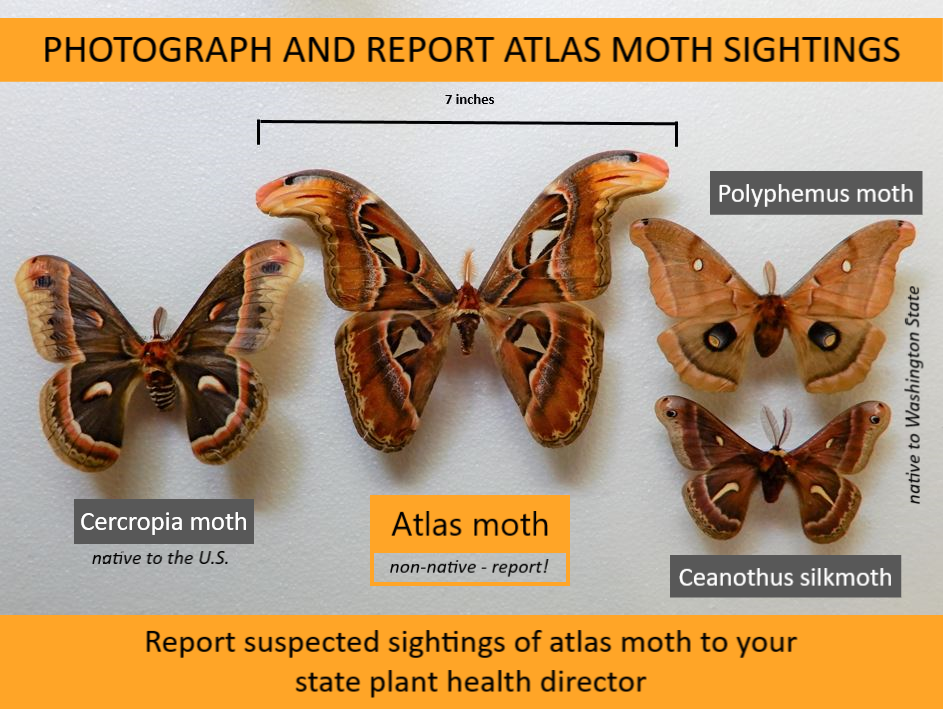
The non-native atlas moth compared with large
moths found in North America. 
Washington State entomologists are asking the public to report sightings of the atlas moth after one was recently discovered in Bellevue. There are no known traps for atlas moths, so WSDA is hoping to determine whether there are additional moths in the area based on public reports. With this single atlas moth detection only, there is no evidence that an atlas moth population is established in Washington.

Residents are encouraged to photograph, collect, and report atlas moths if they are seen. The moths do not pose a public health threat and thus can safely be photographed, handled, and collected.

“This is a ‘gee-whiz’ type of insect because it is so large,” Sven Spichiger, WSDA managing entomologist, said. “Even if you aren’t on the lookout for insects, this is the type that people get their phones out and take a picture of – they are that striking.”

Washington State residents who believe they have seen this moth should send a photo to pestprogram@agr.wa.gov for identification and include the location where it was spotted. While there are no reports of atlas moth anywhere else in the U.S., if you believe you’ve found it outside of Washington State, please take a picture of it, note the location, and report it to the State Plant Regulatory Official or State Plant Health Director in your state.

The atlas moth found on a Bellvue garage
The moth was initially reported to WSDA via a University of Washington professor on July 7. WSDA entomologists identified it as an atlas moth and sent it to USDA for confirmation, which is the standard process for new pest detections. USDA’s Animal and Plant Health Investigation Service confirmed the specimen as an atlas moth on July 27 and it is believed to be the first confirmed detection of the moth in the United States.
Atlas moth compared to a man's hand

One of the world’s largest known moths with a wingspan of up to almost 10 inches, it is also a federally quarantined pest – meaning it is illegal to obtain, harbor, rear, or sell live moths whether adults, eggs, larvae, or pupae without a permit from USDA. USDA has more information about permits on its invertebrate pets web page. While there is minimal research about the moth, entomologists believe host plants may include apple and cherry.

“This is normally a tropical moth. We are not sure it could survive here,” Spichiger said. “USDA is gathering available scientific and technical information about this moth and will provide response recommendations, but in the meantime, we hope residents will help us learn if this was a one-off escapee or whether there might indeed be a population in the area.” 


Note: This blog was updated on August 17 to reflect that rather than being the world's largest moth, it is one of the world's largest moths. 

Thursday, November 18, 2021

WSDA Pest Program trapping season wraps up

Karla Salp
Communications

Each year, WSDA’s Pest Program sets thousands of traps throughout the state to catch invasive species that could threaten agriculture. The program surveys for over 130 pests – most of which have not yet been detected in the state.

Japanese beetles

Dozens of Japanese beetles in a ziplock bag
Dozens of Japanese beetles collected from a single trap

It was a record year for Japanese beetle (Popillia japonica) catches - unwelcome news to farmers and homeowners alike. There was one catch in Washington across the river from Portland, a few as usual near Seattle-Tacoma International Airport, but more than 24,000 in the Grandview area. Catching so many in Grandview this year was surprising considering that only three were caught in 2020 between Grandview and Sunnyside combined.
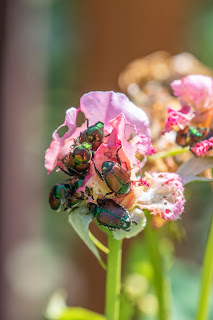
Japanese beetles on rose bud
Japanese beetles devour a 
Grandview resident's roses
The overwhelming number of catches in the Grandview area has many implications. First, WSDA has proposed a 49-square-mile Japanese beetle quarantine to restrict the movement of soil, yard debris, and plant materials that could spread the beetles. Second, WSDA is planning an extensive, multi-year eradication program to try to eradicate the pest – no easy task given the number of beetles already in the area. Finally, WSDA will conduct extensive outreach and trapping in Yakima and Benton counties in 2022. 

Japanese beetles attack over 300 different types of plants including roses, hops, grapes, corn, lawns, and many other crops grown in area gardens and farms.

If there is a silver lining to this beetle infestation, it is that the city, businesses, schools, and people in the vicinity have been open and willing to do what they can to help with WSDA’s response to this invasive pest. Another positive: although nearly 100 traps were placed around area plant nurseries, no beetles were found at the nurseries.

Invasive moths

Male Lymantria dispar
Our trappers set nearly 23,000 traps statewide this year looking for Lymantria dispar – the moth formerly known as the gypsy moth (a new common name has not yet been established.) This moth has devastated forests in the Eastern U.S. where it is established – eating over 300 different types of trees and plants. When there are cycles of large populations, they can strip entire forests from the canopy to the ground, leaving an eerie winter-like scene at the beginning of summer.

This year was a low year for Lymantria dispar catches – only six were found in the entire state. Unfortunately, one of those moths was caught in Eastern Washington just north of Kettle Falls - which is unusual in itself as most moths are normally trapped in Western Washington – and it was also a more concerning variety – Lymantria dispar asiatica, formerly known as the Asian gypsy moth. Lymantria dispar asiatica eats a wider variety of trees (including evergreens) and the females can fly, allowing them to spread more easily.

Apple maggot
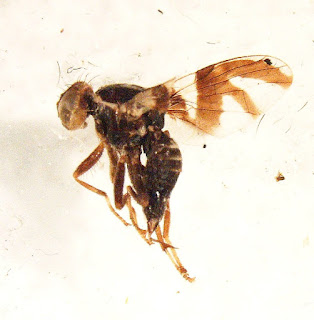
apple maggot fly
Apple maggot fly
Our apple maggot (Rhagoletis pomonella) program continued its work of safeguarding Washington’s global reputation for delicious – and pest-free – apples. The program’s work consists of trapping pest-free areas to ensure they remain pest-free as well as trapping around threatened orchards that are near known apple maggot detection sites.

The good news this year is that many of our main apple-growing regions had no catches at all this year: Adams, Asotin, Benton, Douglas, Franklin, Grant, Lincoln, and Stevens counties. Less encouraging was catching 120 apple maggots in Kittitas County and 843 in Okanogan County.

In areas where apple maggots have been detected outside of the apple maggot quarantine area, the county pest boards are responsible for taking aggressive action. WSDA and the Apple Maggot Working Group (an advisory council composed of state and local government, industry representatives, and researchers) began working last year to examine how best to address the growing apple maggot problem in the unquarantined area of Okanogan County. That effort will continue over the coming months.

Asian giant hornet
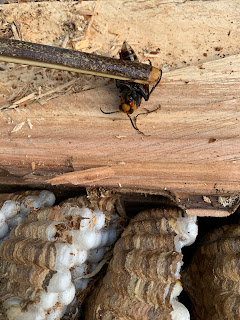
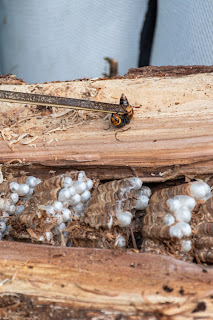
Asian giant hornet queen trapped by chopsticks against tree with combs capped with white silk from the nest in the tree showing
Asian giant hornet queen from the
third nest with part of her nest
Our Asian giant hornet (Vespa mandarinia) team had a busy season – finding and eradicating three hornet nests in August and September. Every nest was in a tree cavity, each demanding a creative approach to remove the nest. The most challenging nest was about 15 feet up a tree.

Public trapping and reporting again played a major role in locating the nests – two of the three were located after reports from area residents. Despite existing research indicating that the hornets predominately nest in the ground in their native range, all four nests eradicated in Washington over the last two years have been in tree cavities.

Our hornet program will continue for at least three more years. In order for the hornets to be considered eradicated, we must have three consecutive years with no detections. The biggest challenge to success is the lack of a highly-effective trap. While the traps we use catch hornets, they do not appear to be irresistible to them. USDA continues to work on a lure that will be more attractive to the hornets and we wish them much success!

Exotic wood-boring insects
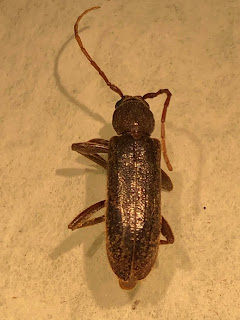
velvet longhorn beetle
Velvet longhorn beetle
Many of the pests we look for are never found. Such is usually the case with our exotic wood-boring insect survey. Imagine trapping for years and never finding what you are looking for. As disappointing as it may be not to find anything, that’s exactly what we hope the results will be as we look for potentially harmful new pests.

This year, WSDA put out over 400 exotic wood-boring insect traps at high-risk sites such as ports, shipping distribution sites, and transfer stations. Trapped areas and other high-risk areas are visually surveyed for signs of wood boring insect activity. One day, they found one.

“This is the first time in all of these years I have trapped a target species,” Don Kitchen, one of the members of the beetle survey team, said.

This past summer, the velvet longhorn beetle (Trichoferus campestris) was detected for the first time in the state in King County near Kent. WSDA responded by setting more traps and conducting visual surveys of the area, although no additional beetles were found. WSDA will continue to put out additional traps, conduct visual surveys of the area, and conduct outreach about the beetle in 2022.

The work continues

WSDA’s Pest Program has had a busy year – and this roundup covers just a handful of the pests they monitor. With their continued work and the help of the public looking for and reporting suspected invasive species, our state should be protected from harmful pests for years to come. 

Monday, October 11, 2021

Tree-of-heaven reports safeguard state from another invasive pest

Cassie Cichorz
Pest Program Outreach Coordinator

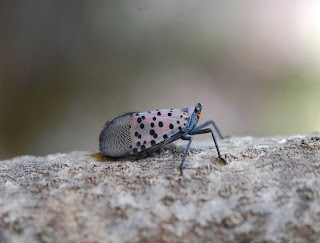
Adult spotted lanternfly
Photo credit: Pennsylvania Dept. of Agriculture
The reports of tree-of-heaven are rolling in now that the Washington Invasive Species Council has launched a month-long effort to identify where this invasive tree is located. This is the first step in an effort to proactively prepare for the arrival of another dread invasive species that prefers tree-of-heaven: the spotted lanternfly.

Spotted lanternfly (SLF) is an invasive piercing-sucking insect. It feeds on a wide variety of plants including apples, grapes, cherries, hops, plums, walnut and many more species.

Damage incurred by spotted lanternfly includes oozing sap, wilting, leaf curling, and tree dieback. SLF also secretes large amounts of honeydew (feces), which enables the growth of sooty mold on vegetation and fruit.

Currently, it has only become established the northeastern United States, although it has been found dead in Oregon as a hitchhiker on goods shipped from the northeast. More alarmingly, more than fifty spotted lanternflies have been found both alive and dead in California at state border agricultural inspection stations as well as on air cargo flights.

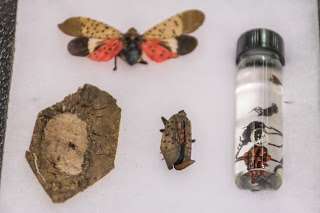
Display showing various
life stages of spotted lanternfly
Most adults are bad fliers and will be found with their wings closed. Adults begin to lay grey-brown egg clusters in September on tree bark and outdoor surfaces. They will cover the egg masses with a wax coating that resembles mud. When performing a survey for spotted lanternfly, check items in the area such as outdoor furniture, stonework, firewood piles, and rusty items.

Adult ID

  • 1’’ long, ½’’ wide at rest
  • Yellow abdomen with black bands
  • Black head and legs
  • Light gray forewings with black spots and a rear speckled band
  • Scarlet hindwings with black spots and rear black and white bars

Spotted lanternfly is likely to infest tree-of-heaven if it arrives. Tree-of-heaven is rapid-growing and its bark is often compared to cantaloupe skin. Mapping known tree-of-heaven populations allows Washington to plan control efforts, keeping our state safe from this invasive pest.

Report spotted lanternfly sightings to the Washington State Department of Agriculture by e-mailing PestProgram@agr.wa.gov or calling (800) 443-6684. You can also report known tree-of-heaven locations by visiting the Washington Invasive Species Council’s website. 

Thursday, September 30, 2021

Taking hornet nest removal to new heights

Karla Salp
Communications

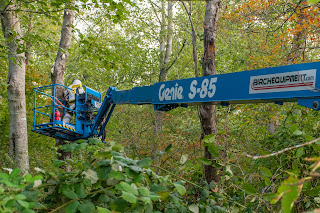
WSDA's Pest Program uses a buck lift to access
the nest 15 feet up in an alder tree

Last week, WSDA’s Pest Program removed the third Asian giant hornet (Vespa mandarinia) nest of 2021, making it the fourth nest removed since the invasive hornet was first detected in Washington in December 2019. All of the nests have been in the same general area east of Blaine.

Most research on these hornets suggests that they normally nest in the ground and more rarely in trees. But so far, 100 percent of nests found in Washington have been in tree cavities. The entrance to this latest nest was over 15 feet above the ground. A thermal-imaging camera showed the nest itself was below the nest entrance.

The challenge posed by working on a nest so high up was compounded by the fact that the nest was also surrounded by dense trees and vegetation – especially blackberry patches as much as eight feet tall. The team of entomologists and others from the pest program had to use some new tools to eradicate this nest, including a rented bucket lift to raise them over the bulk of the vegetation so they could work safely at the nest entrance.

Just as in the other nest removals, once at the entrance, the team sealed up the tree and vacuumed most of the hornets out before sealing the entrance.

Inspiring Halloween costumes everywhere -
Dan DeVoe prepares to take down the tree with the nest

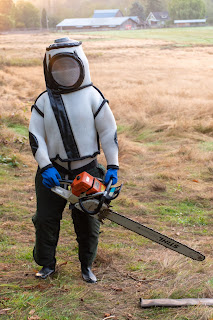
In addition to the height of the nest, it was also in a decaying alder tree. This made it risky to safely cut the tree down. A trail steward from the Department of Natural Resources was able to help. Wearing a bulky hornet suit, he cut the tree so it dropped right on target. Once the tree was down, he cut it into sections and split the tree open so the team could finish collecting the remaining hornets and the nest.

Queen and the nest
Here is what was found in the latest nest: 

  • 10 combs
  • 674 total cells
  • 86 empty cells
  • 128 eggs
  • 202 larvae
  • 261 capped cells
  • 185 workers
  • 0 males
  • 1 queens
  • TOTAL LIFE STAGES – 777

Luckily, none of the three nests eradicated this year have had new queens, meaning the nest was found and removed before the queens could emerge, mate, and left to start new nests next year.

Two of the three nests this year were found from reports made by local residents, and this is the critical time to find nests before creating new queens. If you think you see an Asian giant hornet, take a photo and submit a report at agr.wa.gov/hornets.

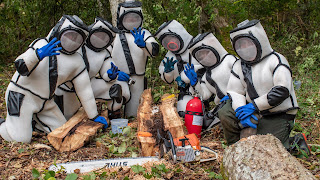
WSDA/DNR/USDA team that removed the 
third nest of 2021, fourth nest total

Video of activity at the nest as well as the nest removal is available on WSDA's YouTube channel. 

Wednesday, June 23, 2021

Top reasons to trap for Asian giant hornets

Karla Salp
Communications

Asian giant hornet bottle trap
With this being National Pollinator Health Week and only days away from the July 1 start for citizen scientist Asian giant hornet trapping, we reached out to our Pest Program and Asian Giant Hornet WatchFacebook group members to get their top reasons (some serious, others...not so much) to trap for Asian giant hornets.

  • To help honey bees keep their heads. – Cassie C.
  • So I can get some business cards made that say "Citizen Scientist" on them and pass them out. Duh. – Steve S.
  • No species of hornet is native to Washington. Let's keep WA hornet-free. – Sven S.
  • You might come upon a new odor you have never experienced previously! – Debbie V.
  • It is a great way to get kids and kids-at-heart involved in a science project that really makes a difference. – Karla S.
  • They are great for stir-fry. Best part is they are already soaked in orange juice and cider. – Lior H.
  • I garden and don't want to have the AGH become commonplace for me or anyone else. – Georgia N.
  • Because I don’t want my honey bee tattoo to be the only version I get to see in the future. – Becca S.
  • I'm SEVERELY anaphylactic and need to stay as safe as possible, so knowing how close the AGHs are is critical to me. – Rhainy C.
  • The hornet squad might come over and chest bump after removing the nest. – Rian W.
  • Tired of getting "Ancistrocerus sp.", "Polycheirus sp.", "Andrena sp." on iNaturalist. I just want a nice unambiguous chonker insect that doesn't need a microscope to ID to species. – Peter L.
  • Because if you trap one, the team in hornet suits might come. – Sven S.
  • No packing and mailing in nasty OJ-soaked bugs this year! Unless it is AGH of course... – Karla S.

If these reasons have inspired you to participate in citizen scientist trapping for Asian giant hornets (or you want to trap anyway), get ready now by getting your supplies so you are ready to trap starting July 1. A list of materials and trapping instructions are available on WSDA’s website.

Tuesday, November 10, 2020

A nest by the numbers - what WSDA found inside the Asian giant hornet nest

Karla Salp
Communications

A new Asian giant hornet ready to emerge
More than 500 Asian giant hornet specimens in various stages of development were collected when entomologists found the first Asian giant hornet nest in the United States.

But finding the nest was just the first step in the eradication. After the discovery of the nest site, WSDA entomologists had to safely remove hornets living in the nest, remove the tree, and finally split the tree open to reveal the nest inside.

After opening the tree containing the Asian giant hornet nest on Oct. 29, WSDA entomologists still had a lot of work to do to collect data about what the nest contained. Much like the election, the tallying took quite a bit of time and, to some extent, continues. 

Pupae in various stages of
development taken from the nest
The nest was just over 8 feet high in the tree and, once opened, was found to be about 14 inches long and 8 to 9 inches wide. Here are the preliminary results of what our entomologists found in the nest.

  • 6 combs – There were six layers of comb in the nest. Combs are the structures that hold the hornet larvae as they develop. Part of the interior of the tree had been chewed away to accommodate the combs.
  • 776* cells – The combs are made up of cells and each individual cell can hold a developing Asian giant hornet. *This number is approximate as there was some damage to the combs.
  • 6 unhatched eggs – These eggs were all located in the last and smallest of the combs.
  • 190 total larvae - The larvae are whitish “grubs” in uncapped cells. Many had fallen out of the combs into the tree cavity during the nest removal.
  • 108 capped cells with pupae – Pupae are the next stage after larvae. Based on the size of the cells, most of the pupae found are believed to be pupae of new virgin queens.
  • 112 workers – This total includes 85 workers that were vacuumed out of the nest on Oct. 24. All of the workers survived being vacuumed out of the nest.
  • 9 drones – Drones are male hornets and they generally emerge from the nest before the new queens emerge.
  • 76 queens – Most likely all but one queen would be new virgin queens. New queens emerge from the nest, mate, and then leave to find a place to overwinter and start a new colony the next year.

Despite multiple applications of carbon dioxide, removal of the workers, and storage in a cold facility, most of the specimens were still alive when the nest was opened.

Where we go from here

Nest reassembled in the tree

WSDA will continue trapping through at least Thanksgiving and possibly beyond, but will likely only track worker hornets. Our entomologists will not, for example, track new queens if any are captured as they are unlikely to return to a nest, but instead will attempt to locate a mate. Even if no other hornets were to be found, WSDA will continue to trap for at least three more years to demonstrate the area is free from Asian giant hornets.

WSDA’s Pest Program still hopes to eradicate Asian giant hornets from the Pacific Northwest in cooperation with our neighbors to the north in Canada. The effort will take require international cooperation, research for better detection tools, and the continued work of vigilant observers from the public to prevent Asian giant hornets from gaining a permanent foothold here.

If you may have seen an Asian giant hornet in Washington State, report it with a photo if you can get one at:

If you believe you have seen an Asian giant hornet but live in another area, please report it to your state or province’s invasive species managers.


Additional photos of the nest examination can be found on our Box account. When using the photos, please credit the Washington State Department of Agriculture. You can also watch a recording of the press conference on YouTube. 

Tuesday, October 6, 2020

Steam cleaning invasive snails

Scott Weybright
Washington State University

Where other solutions failed to eradicate invasive snails, steaming them appears to do the trick.

The steaming apparatus at work, next to
a plot that had just been steamed.
Photo courtesy of WSU. 


WSDA is working with Washington State University and the Port of Tacoma to eradicate an infestation of invasive Mediterranean vineyard snail using an innovative new method, steam. 

The invasive snails were first found on Port of Tacoma property in 2005. The total infestation covered about 300 acres of land held by the port, Pierce County, and private owners, according to Jenn Stebbings, a Port of Tacoma biologist. 

Traditional treatments, including debris removal, brush cutting, and molluscicides, or snail bait, were used on most of that area. But areas within a 10-acre plot at the port, where the invasive snail was originally found, have proved difficult to clear. 

“It’s a wetlands area, so you can’t use snail bait when surface water is present,” said WSDA Eradication Coordinator Rian Wojahn. “We’ve been looking for years for another way to get rid of them.”

“We’ve had a portable steam boiler system that we use to fight fungi,” said Gary Chastagner, a plant pathology and extension specialist at WSU’s Puyallup Research and Extension Center. “This is definitely an unplanned use of the technology, but the results have been very positive.” 

The idea came up at a meeting about other projects two years ago. WSU research associate Marianne Elliott overheard people talking about the continuing snail problem and suggested the steam system could help.

How to steam invasive snails 

The system consists of a trailer-mounted powerful boiler with a 300-gallon water tank, temperature sensors, hoses, and large plastic tarps. Swimming pool covers are used to retain heat. 

Steam from the boiled water is released at several spots under the tarp, warming the covered soil.

The steam kills snail eggs and adults in the covered area. The process takes about four hours per plot, and they can do two 750-square-foot plots per day. 

Treatment of infested areas will take a few weeks to complete, depending on weather. The colder the temperature, the longer it takes to heat the soil, Elliott said. Wet soil is more difficult to work with.

“This is a bigger area than we’re used to, it’s not a nursery with a small area infested with an invasive fungus problem,” Chastagner said. “But we did several test runs last year and it really worked well.”

The steam process isn’t targeted, so all plant life is killed in treated areas. As part of the permit for the steaming project, WSDA is seeding the affected area with native grasses and covering it with hay for protection.

Need for eradication

Examples of the Mediterranean vineyard snails that 
invaded Port of Tacoma land.  
Photo courtesy of WSU. 

Mediterranean vineyard snails love to feed on wheat. That’s a big problem in a state with a $700 million wheat industry. 

“It’s a nasty wheat pest,” Wojahn said. “It’s gotten to Australia, and they can’t harvest the wheat. They gum up the harvesters. It would be a huge problem if the snails get away from the port.”

Other uses for steam-powered pest control

This isn’t the first unplanned use for WSU’s steam system. Chastagner and his team have helped fight apple maggots near Twisp and treated yard waste in Okanogan County, among other projects.

“Steam is one of the oldest ways to fight agricultural pathogens,” Chastagner said. “It’s all about reaching the right temperature at soil depths where the targeted organism occurs. We think this will be very helpful for the port as a way to eliminate this invasive species.”

Visit our website for more information about WSDA's Pest program.

Thursday, April 2, 2020

Trapping for Asian giant hornets - 8 things to know

Karla Salp
Communications

Please note - if you are not in Washington State, please DO NOT trap for Asian giant hornets. You have virtually no chance of catching an Asian giant hornet but can kill local insects. If you live outside of Washington and believe you have seen Asian giant hornets, please report to your state's invasive species managers, not to WSDA. 

Since the first report of Asian giant hornets in Washington last December, the Washington State Department of Agriculture’s (WSDA) Pest Program has been doing extensive research and planning to find and, if possible, eradicate Asian giant hornets from Washington this summer.

The first step to eradicating this invasive pest - which threatens honeybees and all the crops they pollinate - is to locate the existing Asian giant hornet colonies. To do that, WSDA is enlisting the help of beekeepers and the public to trap and report Asian giant hornets in Washington. But helping out has risks and takes time, so read our list below before you decide to trap.

Here are the top eight things to know about trapping for Asian giant hornets:

  1. You can help trap for Asian giant hornets. WSDA is especially looking for people in Whatcom, Skagit, Island, San Juan, Jefferson, and Clallam counties to trap for Asian giant hornets.
  2. Trapping is a commitment. If you participate in trapping, it will require that you check traps and change the bait once per week for 17 weeks (if you start in July) or up to 34 weeks (if you start in April). You’ll also need to purchase the materials for the trap and bait, as well as mail any specimens you collect to WSDA.
  3. The best time to trap is from July through October. The most likely time to catch Asian giant hornets is from July through October - when colonies are established and workers are out foraging. Traps can be hung as early as April if attempting to trap queens, but since there are significantly fewer queens than workers, catching a queen isn’t very likely.
  4. You could get stung. Trapping for Asian giant hornets could increase your chances of being stung by one. While Asian giant hornets don’t typically bother people, they will sting if they feel threatened. Don’t trap for Asian giant hornets if you are allergic to bee or wasp stings. The venom of the Asian giant hornet is more toxic than that of local bees and wasps.
  5. Hornet traps from the store won’t work. Hornet traps currently on the market in the United States won’t work for Asian giant hornets because their holes are too small. WSDA has researched numerous trapping options and has provided instructions on how to make and monitor homemade traps that will be effective for Asian giant hornets.
  6. Reporting your trap location and catches is very important. Knowing where hornet traps are located and promptly reporting any Asian giant hornet catches will be critical to WSDA’s ability to find and remove Asian giant hornet nests. Failing to do so could thwart WSDA’s attempts to locate Asian giant hornets in Washington.
  7. Do not approach or attempt to remove an Asian giant hornet nest. When trapping, you could come across an Asian giant hornet nest. They typically nest in the ground. Take care when placing traps and if you locate one, do not approach it. Contact WSDA immediately at 1-800-443-6684. WSDA has obtained special equipment for the removal of Asian giant hornet nests.
  8. Beekeepers are helping WSDA evaluate experimental spring “sap traps.” Volunteers from the Mt. Baker Beekeeper Association are working with WSDA to test an experimental “sap trap” which uses tree sap as the bait to attract Asian giant hornets. This experimental trap is for use in the spring when queens emerge.

Trapping for Asian giant hornets is just the first step in locating and eradicating nests. WSDA is still finalizing plans for tracking live, trapped hornets back to their nests. To learn more about Asian giant hornets and WSDA’s program to eradicate them, visit agr.wa.gov/hornets.

Update: this blog was updated on April 27, 2020 to add Jefferson County to the list of targeted counties. 

Update: this blog was updated on May 8, 2020 to add information for people outside of Washington State.