
Showing posts with label food banks. Show all posts

Monday, September 11, 2023

Innovation and commitment: How WSDA Food Assistance is reshaping hunger relief

Daniel Schafer
Communications

“Our job is to feed people.” 

The WSDA Food Assistance team.

It sounds like a simple objective, but the act of feeding hungry people across Washington State is nothing short of a herculean effort involving hundreds of dedicated people and dozens of community and state organizations. At the center of this effort is the Food Assistance Program at Washington State Department of Agriculture (WSDA).  

In Washington’s hunger relief landscape, WSDA’s role is multi-faceted. The Food Assistance Program manages and distributes funds and food that comes from the Federal government as well as the state. It’s a world full of acronyms, where one program may serve a particular niche while another attempts to cover a broad swathe of needs. The funds dedicated to hunger relief in Washington provide some idea of the scale of the need. Food banks and pantries received just under $5 million in funding from the state of Washington’s Emergency Food Assistance Program (EFAP) in 2019, according to the WSDA website. To put that into perspective, EFAP alone provided a staggering 148 million pounds of food to 1.12 million Washingtonians struggling with food insecurity. That’s on top of food provided by the Federal government, an amount that totaled $32 million last year. 

It’s easy to see why Kim Eads, the program manager for WSDA’s Food Assistance Program, and her team take their work so seriously. “If we don’t do our job, hunger relief organizations don’t get funding and we can’t feed people,” she says. 

Eads has worked for various agencies in Washington as the state’s hunger relief efforts have evolved, and in August 2023, she celebrated 35 years on the job. Today, Eads is highly respected in the emergency food assistance community, developing new programs and directing WSDA’s efforts to address food insecurity in the state. But Eads is quick to point out that none of the work going on at Food Assistance would be possible without the dedication of her team, and those across the state working in the hunger relief sector.  

“I could not have had a better team of committed people,” says Eads. “They do this work for the same reasons. We sometimes disagree, but we remember why we’re here and we work hard. Whatever we do, we are mindful of why we’re doing it.” 

A dedicated staff leads this important work 

WSDA’s Food Assistance program serves as the conduit for state and federal dollars and food that must be distributed to food banks, food pantries, and similar organizations throughout Washington. The work is important, and the program’s 16 employees are acutely aware of this. 

“If Food Assistance stopped functioning, a lot of people would go hungry,” says logistics specialist James Scovel, who has worked with the program his entire career, since 1997. Without Food Assistance, “people wouldn’t get the food they need to survive day to day,” he continues. “That means something. This is a meaningful job, and not a lot of people get to say that.” 

Jeff Mathias, the Food Assistance farm to community specialist lead, adds that “it’s all about feeding hungry people.” Mathias goes on to say that the results of the work being done in the Food Assistance program is tangible. “When it comes to getting work done, we know why we’re doing it, there’s no disconnect. Because of the work that we do today, someone is going to get fed.” 

Scovel and Mathias’ outlook is common among their colleagues, and this dedication and understanding of the gravity of the program’s work has led to a high degree of retention and engagement in the program. 

“You get hooked,” says Kyle Merlich, the program’s lead food assistance specialist and a ten-year Food Assistance veteran. Part of the reason people working in the Food Assistance Program are so dedicated is because government guidelines and community needs are always changing, adding a layer of challenge to the work, but also providing opportunities. “I have always felt there’s an upward trajectory with our work,” says Merlich. “There’s always more to learn. Our programs don’t have a ceiling.” 

Building the Food Assistance team 

Kim Eads has played a central role in building this dedicated, high-functioning team. “Kim pulls the best out of all of us,” says Lisa White, the program’s business operations administrator. White, has worked in Food Assistance for ten years and attributes much of her professional growth to Eads. “She saw something in me that I didn’t see in myself,” says White. “Kim asked if I would like to try a new project, and over time she gave me more and more responsibility,” she continues. “Little by little, she taught me things. And when I was able, I took those projects over.” White attributes Eads’ mentoring abilities to the fact that she cares for the people on her team. “It’s not just about her program, it’s about her people as well.” 

Kyle Merlich adds that Eads is adept in helping everyone on the team to move toward common goals. “Kim makes sure everyone knows they have a part to play in achieving our goals,” he says. But a key component is also valuing colleagues as people. Even though the Food Assistance team works hard, Merlich is quick to add that Eads ensures “there is time to get to know coworkers and value them as people, too.” 

Improving hunger relief in Washington 

WSDA’s Food Assistance program is dedicated to serving hungry people in Washington. This means understanding what people in communities across the  state need — and these needs are as diverse as the communities themselves.  

“The emergency food system is always evolving so our programs have to evolve,” says Kyle Merlich. “Food banks and food pantries are in the same situation — needing to adjust to a changing food system.” But the changing needs of communities also mean that Food Assistance must constantly evaluate their approach to make sure it’s effective. 

One innovation that the program has led in recent years is to empower food banks in smaller, and often rural, communities to make more decisions. This has allowed hunger relief organizations to serve the unique needs of their clients. “We are trying to give smaller organizations a say in how their dollars are spent, how the food is distributed, and how local matters in terms of food banks,” says logistics specialist, James Scovel. “Having decisions made on a smaller level provides local buy-in and allows for better facilities in smaller areas, and sometimes means more people can be employed there,” he adds. Hiring more people can be a game-changer for rural food banks, because it means the facilities can be open for longer hours or more days during the week, which in turn means they can serve more people. 

Seeing food as a system 

WSDA's Food Assistance Program is working to
connect farmers with local food banks.
In addition to empowering smaller food banks, WSDA’s Food Assistance Program has made it a
priority to approach hunger relief as a component of the larger food system. Hunger relief intersects with local food and agriculture, and the program has worked to leverage these intersections in a way that will better serve individuals and families in need. 

State and Federal programs have made it possible for food banks and food pantries to purchase food directly from farmers. This not only brings more fresh fruits and vegetables to food-insecure people in Washington, but it also supports local agriculture. What’s more, by helping get local produce into the hands of their clients, hunger relief organizations have the ability to provide culturally relevant and healthier foods that may not otherwise be available. 

This approach has been successful in Washington State, and the timing couldn’t have been better. Hunger relief has always been an uphill battle because the need almost always outpaces the ability to provide relief. But there are signs that Food Assistance and the hunger relief organizations they support are making a difference. Preliminary data shows nearly 10.8 million clients (including repeat clients) visited food banks and food pantries in Washington State during the 2023 fiscal year, which runs from July 1st to June 30th. If these figures hold, it would mean an increase of over 2.4 million visits from the previous year.

Need is increasing across Washington 

With more people visiting food banks than ever before, there is a need for more food to be distributed. In 2022, 181.4 million pounds of food were distributed in Washington. That figure will increase this year, with preliminary figures totaling just over 202 million pounds. For almost every metric, the need for hunger relief is increasing in Washington. The number of families served increased by almost 136,000 this year, while 1.7 million people visited a food bank or food pantry for the first time. 

With such a need, Washington requires the dedicated and capable team at Food Assistance, as well as their partners throughout the hunger relief ecosystem, including food bank and food pantry employees, farmers, and more.

“All the people who work here are all super important,” says James Scovel. “It’s the team that does it and it couldn’t be done without everyone.” 

Luisa Castro, the assistant director of Food Safety and Consumer Services – within which the Food Safety Program is housed – agrees. She also explains how Program Manager Kim Eads helps the team thrive through her example and leadership. “Kim Eads is a unique leader whose natural inclination is to serve and serve first,” she says. “This includes serving her team and serving the greater Washington community in need. It is obvious in everything that Kim does.” 
Friday, February 18, 2022

WSDA awards $4.1 million in grants for hunger relief efforts

Hector Castro
WSDA Communications 

Last fall, WSDA announced a new grant program to help expand hunger relief efforts statewide, opening the grants up to all eligible hunger relief organizations serving Washington communities whether or not they were previously contract with WSDA to distribute food assistance.

This month, the agency notified 91 organizations around Washington that they would be receiving funds through the Flexible Fund Grant Program. In all, WSDA awarded $4.1 million to these organizations. 

WSDA distributes millions of dollars annually through its Food Assistance programs. The program works by contracting with hunger relief organizations, Tribes, and tribal organizations in all 39 counties to deliver government-funded food assistance resources across the state. These include both state funds and federal funds as well as commodities from the U.S. Department of Agriculture (USDA).

The Food Assistance Flexible Funding grants program is funded through the state Legislature to build resiliency through grants and initiatives. In its inaugural year, eligible grants fell into three categories:

  • Making food distribution more efficient:  Improving food access through staff support, capacity improvements, and equipment purchasing.
  • Targeted community needs: Supporting organizations serving historically underrepresented communities and needs.
  • Innovations and food system improvements: Improving local food systems and/or supporting local agriculture and businesses.

Grants ranged from just under $1,000 to more than $200,000. Projects included culturally-relevant foods access, staffing, gleaning program expansion, warehouse equipment, facility renovations, and more. 

Visit agr.wa.gov/grants for more information about WSDA grant opportunities, including the second round of this grant program to launch Spring 2022 under a new name, the Resiliency Grants Program. 

The grant program contributes to WSDA’s ongoing Focus on Food Initiative, which focuses on strengthening Washington’s food system at the regional level and ensuring safe, nutritious food is effectively produced and distributed throughout our state.

Thursday, December 16, 2021

Grant applications now open for Farm to Food Bank, a program to reduce food waste and feed Washingtonians


Nichole Garden
WSDA Food Assistance Program 

Photo Courtesy of Maddie Price,
Harvest Against Hunger.
A food bank client in Kitsap County visited a local restaurant to thank the chef, who made soup they received at a local food bank during the pandemic shutdown.

The soup the client’s family received—made from scratch using locally grown, donated produce—was just a fraction of the 680 quarts of soup processed and distributed in the area from September 2020 to March 2021 through The Emergency Food Assistance Program (TEFAP) Farm to Food Bank grant. 

The soup project was run by Kitsap Conservation District with support from the Olympic Community Action Program. They worked with local chefs who processed more than one ton of gleaned and donated vegetables into 25 different types of soups, which were frozen before distribution to food pantry clients. 

The project provided access to healthy, ready-to-eat meals to food pantry clients, helped reduce on-farm food waste, and even kept a restaurant’s staff employed during the worst part of the shutdown.

TEFAP Farm to Food Bank projects, funded by the U.S. Department of Agriculture (USDA) through the 2018 Farm Bill, helps capture food from agricultural producers to distribute to food pantry clients, while also reducing food waste through partnerships with farms, gleaning operations, and others. 

Another round of Farm to Food Bank grants opened on December 10 for public agencies, tribes, and nonprofit organizations for services provided from April 1 – October 31, 2022.

About the Farm to Food Bank program

With USDA’s TEFAP Farm to Food Bank funding, WSDA is able to support projects across the state that—like the one in Kitsap County—help with the harvest, processing, packaging, or transportation of unharvested, unprocessed, or unpackaged foods that are donated by agricultural producers, processors, or distributors. The food is then distributed by TEFAP emergency feeding organizations to food-insecure Washingtonians. These projects help build relationships between agricultural producers, processors, and distributors.

Year 1 results

In 2020, with little time to implement the program, WSDA prioritized projects with Farm to Food Pantry subcontractors who were already gleaning a tremendous amount of produce for food pantries and meal programs in rural areas, as well as areas identified as food deserts by the USDA. 

In addition to the production of ready-to-eat soups in Kitsap County, Farm to Food Bank funded these activities in its first year.


  • Gleaning: Harvest Against Hunger, our Farm to Food Pantry partner, purchased and distributed harvesting materials, including collapsible produce crates, compostable produce bags, twist-ties, and electronic scales, to aid gleaning organizations that provide food to TEFAP food pantries and meal programs across the state.
  • Refrigeration: Chelan Douglas Community Action Council purchased a refrigerated container and supported the installation of a walk-in refrigerator at Upper Valley MEND, a nonprofit that runs a food pantry and vibrant gleaning program in the heart of orchard country. These investments expanded access to freshly gleaned produce from just a few families to recipients across two counties. 
  • Weekly deliveries and centralized storage: The North East Washington Hunger Coalition made weekly produce deliveries to 15 food pantries across 260 miles. In partnership with Rural Resources Community Action Council they were able to purchase a refrigerated container along the delivery route to safely store donated produce between pickups or transfers to food pantries, reducing the time it takes to deliver perishable foods in this large service area. The funding also employed a dedicated gleaning coordinator. 

Together, these projects captured more than 82,000 pounds of donated produce and aided the production of 1,400 pounds of processed soups that were distributed through TEFAP food pantries. Investments in building refrigerated capacity will help reduce waste for years to come.

Year 2 projects

In the program’s second year, 2021, WSDA opened a grant application period that was open to all of our current contractors. Year 2 projects include:

  • Gleaning: WSDA continued to collaborate with Harvest Against Hunger to fund harvest supplies for qualified gleaning organizations. New items included produce washing stations, tree fruit harvesting bags, and more.
  • Value-added processing support: Chelan Douglas Community Action provided harvesting supplies and funded gleaning coordinator salaries for their subcontractor, Upper Valley MEND. Due to staffing shortages, they were unable to pursue value-added processing by restaurants to the extent they had hoped. Instead, they purchased equipment to support in-house processing in the future.
  • Pantry on the Go: Central Kitsap Conservation District was able to support a portion of their Pantry on the Go Program, a mobile food pantry that supplements TEFAP commodities with donated produce. The program provides food for seniors and people living in low-income housing in rural, underserved areas. They also partnered with Kitsap Conservation District to continue the soup project from Year 1.

Year 3 grant applications 

The application period for the next round of Farm to Food Bank grants are open until January 31 for services that will be provided between April 1 – October 31, 2022. Grants will be a minimum of $30,000 with the total amount allocated $140,000. 

The application is open to public agencies, tribes, and nonprofit organizations. For more details on qualifications and to apply, visit the TEFAP Farm to Food Bank Grants webpage. Email Nichole Garden at ngarden@agr.wa.gov for any questions about the TEFAP Farm to Food Bank grant.

Thursday, August 5, 2021

WSDA grant funds new offices for Pierce County food bank, projects statewide in support of food assistance

Hector Castro
WSDA Communications

The new office building for the Emergency Food Network, tucked just off South Tacoma Way in Lakewood, is a simple, modular building across the street from the organization’s food distribution warehouse.

New offices for the Emergency Food Network.
There is a tidy vegetable garden out front and 10 offices inside that open onto an ample meeting room. Construction of the $622,000 office building was one of dozens of projects funded statewide through a WSDA grant program for food assistance organizations.

To Michelle Douglas, CEO of the Emergency Food Network, the building’s very existence is worth celebrating.

“We could not be more excited for our new building and the impact it will have on our work,” she said in a statement announcing the building’s ribbon cutting ceremony last week.

New offices were on EFN’s to-do list for the past few years, but the COVID-19 pandemic made the need acute. Like many food assistance providers, EFN saw a huge increase in need as the pandemic spread, distributing 19.5 million pounds of food in 2020, compared to 14 million pounds the year before. The rising workload meant EFN needed more staff, but employees were already squeezed in the limited office space available at their warehouse.

The WSDA supplemental capacity grant, $576,000 to EFN, was enough to complete the project.

Grant program supports to food assistance statewide

The WSDA supplemental capacity grants were funded through $6.4 million provided by the Legislature in the last session, using funds provided earlier from federal COVID relief money.

WSDA Director Sandison speaking at the ribbon cutting for
the new building for the Emergency Food Network.

The grants were meant to address the pressures on the state’s emergency food system. There was one catch – the money had to be spent by June 30, the end of the fiscal year, with most of the grants awarded in March and April.

Nevertheless, WSDA managed to provide grants to more than 80 food assistance organizations in 25 Washington counties, with awards ranging from $2,400 to $700,000.

The grants funded a box truck with a lift gate for a food bank in Yakima County, a walk-in cooler for another organization in Whatcom County, as well as building improvements, freezers, pallet jacks, shelving, forklifts, and other vehicles for food assistance operations statewide.

Michelle Douglas (L) is CEO of the Emergency Food Network.
Also pictured: WSDA Director Sandison and communications
director Hector Castro, EFN development director Elizabeth Howe (R).
(Photo credit: Emergency Food Network)
“Agriculture has always been about feeding people,” WSDA Director Derek Sandison said. “Making sure that our food assistance safety net remains strong and robust is a natural extension of what we do at WSDA. As the need remains high, we plan to continue efforts like these to provide on-going support for food assistance providers and the communities they serve.”

WSDA distributes millions of dollars annually through its Food Assistance Program, contracting with hunger relief organizations and Tribes in all 39 counties to make sure government-funded food assistance resources are available to people across the state. The agency also administers U.S. Department of Agriculture programs that bring not just dollars, but millions of dollars’ worth of food into food banks, food pantries, and tribal programs.

Dona Ponepinto, president of United Way of Pierce County,
with EFN's Douglas and WSDA Director Sandison.
The van was donated by the United Way.
(Photo credit: Emergency Food Network)
But in 2020, WSDA had to increase its food assistance efforts in response
to the need for food assistance brought on by the pandemic and related economic hardship. The agency was able to obtain additional state and federal COVID-relief funds, using the money to buy food, supplies and other materials needed to support food assistance efforts statewide.

Money for the supplemental capacity grants is just one of the appropriations legislators provided to WSDA this past session in support of on-going food assistance efforts, including an additional $23 million to increase support for hunger relief organizations, farm to community initiatives, local food purchasing, and capacity grants. The next round of grant applications will be coming in early fall.

You can read more about WSDA’s efforts in our Ag Briefs blog post, “Food security during COVID-19, WSDA rises to the challenge” and this infographic, “Food security during COVID-19.”

Monday, October 15, 2018

National Food Bank Week spotlights needs to fight hunger

Nichole Garden
Food Assistance programs

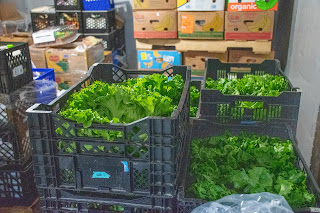
Bins brimming with fresh produce at Hopelink in Kirkland. 
Food banks and pantries across Washington State aim to alleviate hunger locally, providing food for one in six Washingtonians to nourish themselves and their families. As the holiday season approaches, food pantries tend to see an influx of patrons hoping to fill their holiday tables with nutritious foods. 

National Food Bank Week, observed October 14-20 this year, is an opportune time to remember our neighbors in need. 

While the week was initially designated in May, emergency food providers began observing it in October to coincide with World Food Day on October 16. Established by the United Nations in 1979 and adopted by the United States in 1984, World Food Day aims to raise awareness of hunger around the world.

While the Washington State Department of Agriculture’s Food Assistance programs provide commodity foods and some funding to help support the hunger relief efforts across our state, community donations and contributions are still vital to keeping the lights on and the shelves full.

Below is a list of suggested ways you could help observe this week and celebrate the individuals and organizations that provide hunger relief.

Donate Food

Food banks are always looking to their communities for food donations. Some of the most requested items include:

  • High-protein foods such as canned chili, peanut butter, beans, or canned meat.
  • Pasta, and macaroni and cheese.
  • Canned fruit and vegetables.
  • Soup.
  • Fresh fruits and vegetables that store well in a refrigerator.
  • Baby food, baby cereal, and formula.
  • Nutritional drinks and shakes for seniors (Ensure, Boost, etc.).

Consider setting up a food donation box at your work, school, church, or other community group and deliver the collected items to your local food pantries.

Donate Money

While food is always a welcome donation, food pantries can use monetary donations to purchase in bulk at a discount or pay utility bills and other costs of running a food pantry.
Susan Curtis and Mary Downs keep the shelves stocked at the Community
Cupboard in Leavenworth. 


Volunteer

While some food pantries have paid staff, volunteers are the backbone of many food pantries. Food pantries have a variety of volunteer tasks such as food sorting, deliveries, gleaning, office support, facility and equipment maintenance, and food distribution.

Pledge to Grow-a-Row

More and more food pantries are encouraging donations of produce items for their patrons. WSDA is assisting with these efforts with their Farm to Food Pantry initiative, providing funding to food pantries to purchase produce directly from local farmers. 

You can help by growing extra crops in your home gardens. Food pantries are looking for a wide range of produce items from beets and berries to radishes and rutabagas. Check your local food bank website for requested items and how to donate.

Spread Awareness

Consider using social media to let your friends know why you appreciate food banks or why food security is important to you. End your post with #NationalFoodBankWeek. 

Thanks to the commitment of Washington’s emergency food assistance system, as well as the donations and volunteer aid of so many citizens, our robust partnership is working to alleviate hunger and provide healthy food options.

Tuesday, September 4, 2018

Fighting hunger together

Nichole Garden
WSDA Food Assistance 

Food pantries, hunger relief agencies, and others dedicated to fighting hunger will gather in Yakima September 12th – 14th for the Washington Food Coalition (WFC) conference. The annual conference provides a unique opportunity for those interested in hunger relief in Washington to share best practices, tools, and resources; hear about new and innovative programs and services; and network with others who share in a commitment to alleviate hunger.

The conference will feature speakers, breakout sessions, and tours, including:


  • Keynote speakers discussing the growth of food insecurity on college campuses 
  • A panel discussion with current Farm to Food Pantry participants
  • Touring Rainier Fruit, a family owned and operated farm that grows and sells organic apples, pears, cherries, and blueberries

In addition to facilitating the Farm to Food Pantry panel discussion, the WSDA will staff a booth. Attendees can visit the WSDA Food Assistance programs resource booth to show their support of the Farm to Food Pantry initiative by donning a F2FP temporary tattoo, posing for a picture, and posting it on social media with the hashtag #Farm2FoodPantry.

Cow proudly displaying F2FP "tattoo"
WSDA’s resource booth will also feature new resources now available in English, Spanish, Russian, and Ukrainian. These resources include Washington Grown Produce posters and brochures as well as MyPantry posters and recipe cards highlighting where the commodity foods available at food pantries fit into USDA’s MyPlate. 

Visit WFC’s website o learn more or register for the conference. WFC represents a unified voice in the emergency food system, providing technical assistance and advocacy for hunger relief agencies.

Monday, April 23, 2018

Farm to Food Pantry– a win-win for farmers and food pantries

Nichole Garden
Food Assistance 

The Washington State Department of Agriculture’s (WSDA) Food Assistance programs, in partnership with Rotary First Harvest, is kicking off the fifth year of its Farm to Food Pantry initiative. The goal is to make more fresh produce available to hungry people by connecting local farms to food pantries. This initiative also helps promote a community-based food system, increasing the viability and success of both agricultural producers and emergency food assistance providers.

What is the Farm to Food Pantry Initiative?

WSDA contracts with Rotary First Harvest of Seattle to coordinate the allocation of grant funds. These funds are distributed to lead agencies involved in the emergency food system that, in turn, use the money to buy produce directly from local growers. These lead agencies are asked to obtain matching funds from private groups, in some cases doubling the amount available to purchase produce.

What’s New?

WSDA has launched a Farm to Food Pantry Seal that lead agencies, food pantries, farmers, and donors can use to display their participation in the initiative. The seal was created as part of a collaboration between WSDA and Farm to Food Pantry participants. Elements included in the seal  came from the feedback we received when speaking with the farmers, food pantries and lead agencies that will use it. This seal is meant to give farmers a marketing tool for their produce and food pantries a tool to leverage additional donations.

What Impact is the Initiative Making?

Since our pilot in 2014, WSDA has invested $98,467 in the initiative, with $77,000 of that going directly to farmers. Farmers also received $52,181 in local match and SNAP-Ed funding for a grand total of $129,181 targeted for farm direct purchases. This resulted in food pantries receiving over 395,882 lbs. of purchased, donated, and/or gleaned, nutrient dense produce to distribute to low-income families in the state of Washington.

Next Steps

This year, WSDA has carved out $33,000 in existing state and SNAP-Ed funds to pay local farmers in 18 Washington counties. These counties include: Asotin, Chelan, Clallam, Clark, Columbia, Ferry, Garfield, Island, Jefferson, King, Okanogan, Pend Oreille, Skagit, Snohomish, Stevens, Walla Walla, Whitman, and Yakima. In addition to the 12 lead agencies participating in 2017, Opportunities Industrialization Center in Yakima and the South King County Food Coalition in Des Moines are joining the initiative for the first time.

Where can I Learn More?

More details on the initiative, with feedback from the participating food pantries and farmers are included in the 2017 Farm to Food Pantry Report. Visit our Farm to Food Pantry webpage  to review the report, past reports and learn more about our project. 

Tuesday, January 16, 2018

Food pantries see fewer clients, more seniors

Kim Eads
Food Assistance program manager

Food pantries across Washington saw fewer new clients last year and fewer clients made return visits, according to data collected by WSDA’s Food Assistance programs. The one exception, the figures show, was for the state’s senior population, which saw an increase in return visits.

“The need remains high in specific segments and regions of our state, but for seniors, this is particularly true,” Kim Eads, Food Assistance program manager said. “For seniors, they visited a local food pantry an average of nearly 9 times a year, which is 2 more times annually than the average for every other age group. Our numbers don’t show why that is, but clearly food insecurity is a significant issue for a population that often relies on a fixed income.”

The complete data is in the annual report, “Emergency Food Assistance Program: Closeout Report for State Fiscal Year 2017,” which is posted at www.agr.wa.gov/FoodProg for
viewing.

Thurston County Food Bank
Each year, WSDA’s Food Assistance programs collect data from food pantries and tribal voucher programs and food pantries to help develop the best strategies for responding effectively to hunger needs in our state. Currently, an estimated 1 in 6 people in Washington use the services of their local food pantry at least once each year.

In the last fiscal year, from July 2016 through June 2017, our state’s food pantries provided a pound of food to each client served, at an average cost of 29 cents per pound. By comparison, the fair market value for a pound of food is $1.73. This is a 6 to 1 return on investment.

Some other facts from the food assistance report for the 2017 fiscal year:
  • Food pantries distributed 140.47 million pounds of food.
  • Food pantries served 1.16 million clients. 
  • Clients visited a food pantry an average of 6.91 times per year. 
  • Each client received an average of 17.51 lbs. of food per visit.
Tribal food assistance 

WSDA’s Food Assistance programs provide funding to support both tribal food pantries and voucher programs. In the past fiscal year, several tribes used some or all of their food assistance money to fund their own food pantries. Generally, these pantries also saw declines in total client visits, a decrease in pounds of food provided per client and fewer total pounds distributed.

Tribes provided food vouchers to 8,349 new clients, a decline of 8.9 percent from the previous year. However, there was a slight increase in returning clients.

Looking ahead 

While there have been improvements in Washington’s economy, the data shows a continued need among those who rely on the emergency food system as shown through the continued elevated level of returning client visits since the recession.

In the coming year, WSDA Food Assistance programs plan to focus on increasing the variety and nutrient density of foods available to clients by continuing its Farm to Food Pantry initiative as well as working with the Food Assistance Advisory Committee, the agricultural community and tribal partners to develop strategies for addressing the continued  need for food assistance in our state.

Friday, July 29, 2016

Farm to food pantry – getting fresh produce to hungry people

Communications

For the past three years, WSDA’s Food Assistance Programs have been managing a pilot program with the goal of getting more fresh produce into local food banks, while at the same time connecting local farms to the non-profits feeding the hungry in their communities.

Through the Farm to Food Pantry pilot program, WSDA has provided grants to food banks that, in turn, use the money to buy produce directly from local growers. Recently, the Food Assistance Programs staff partnered with the Washington State Dairy Council to conduct a tour of one local farm providing fresh produce to a local food pantry to showcase this effort.
Touring the HopeLink Food
Pantry.

The Dairy Council produced the brief video of the tour, featured in this article, which includes remarks from WSDA Director Derek Sandison and Deputy Director Kirk Robinson.

In 2015, the Farm to Food Pantry program provided $14,000 in grant funding to six food pantries in Snohomish, Chelan, King, Okanogan, Clark and Stevens counties. Rotary First Harvest of Seattle was contracted to coordinate the distribution of these funds and local operations.

Most of the organizations also obtained matching funds from private groups, in some cases doubling the amount of funding they received. More details on the pilot project with feedback from the participating food banks are included in the “2015 Farm to Food Pantry Purchasing Report.”