Showing posts with label grants. Show all posts

Thursday, August 24, 2023

More than a pickle: How grants from Washington State Department of Agriculture are yielding impressive impacts across the state

Micha Ida and Galen Van Horn
WSDA Regional Markets Program

Small farms and food businesses play important roles in maintaining vibrant and robust local food systems that support growth in local economies and ensure healthy communities. Disruptions to supply chains and food distribution systems can have far-reaching impacts, as witnessed during the COVID-19 pandemic. To increase the resiliency of local food systems, Washington State Department of Agriculture (WSDA) has distributed nearly $20 million in grants to small farms and local food businesses through several grant programs administered by the WSDA Regional Markets Program. Continued funding from the Washington State Legislature will further bolster the resiliency of our local food systems in the years ahead.

Recent grants from WSDA have allowed businesses and organizations to expand and diversify in a variety of ways, including increasing the amount of product they produce, expanding their customer bases, and facilitating linkages with other businesses in their local food systems.

Lum Farm: Building resilience 
Amy Lum
Amy Lum welcomes one the farm’s newest members.

“Living on an island, buying local food, and having local food access is critical,” says Amy Lum, of Lum Farm. Her farm is located on Orcas Island, and during the pandemic, Lum witnessed how difficult food access became for her community. According to the San Juan Community Food Assessment, in 2020 less than 5% of the food consumed in San Juan County was produced locally. In response, Lum Farm scaled up and increased its food production and distribution within the county by 275%. 

Lum Farm is the only WSDA-inspected dairy in the state that produces goat’s milk ice cream, along with a variety of goat’s milk cheeses and pasture-raised meats. Everything produced on their farm is sold and distributed within San Juan County through restaurants, grocery stores, the local food bank, and directly to consumers. 

The farm used Local Food System Infrastructure Grant funds to support their growth and resilience through added cold storage space, additional equipment for cheese making, a new cattle handling system, and technological upgrades to their operation. These enhancements are allowing them to raise more animals and produce more food for their small island community. “Our customers and farming partners have all experienced the positive impact of this grant, and celebrated each new change with us,” Lum said.

Expanding services at Windy N Ranch 

Newhall family.
The Newhall Family of Windy N Ranch.


To Bradley Newhall of Windy N Ranch, the need for this type of support is clear. “We all saw the devastating effects that Covid-19 had on food supply and distribution,” he says. His family’s operation is a Certified Organic meat ranch located in Ellensburg that specializes in humanely raised beef, pork, lamb, goat, and poultry. In May 2021, Windy N Ranch opened their own butcher shop on their farm, with licensing that allows them to process their own meat as well as provide butchering services to other area producers.

The Newhalls used Local Food Infrastructure Grant funds to make improvements to Windy N Ranch's meat processing facility, which has allowed them to expand the variety of products they prepare, as well as increase their butcher shop services to other farmers and ranchers in the Kittitas Valley. They also aspire to transition their USDA-inspected butcher shop into a Certified Organic facility.

Critical services, such as Local Food Infrastructure Grant funding, increase the viability of small farms and ranches by opening new marketing avenues and revenue streams. “With [added] infrastructure for local USDA meat processing in place, we and other ranchers will be better suited to meet the food needs of our local communities regardless of supply chain issues that may be occurring nationally,” Newhall added.

Increasing capacity: Beyond Pickles

Increased resiliency in our local food systems can come from surprising places too, and something as humble as a pickle can have an outsized impact. Beyond Pickles is a micro food processing company located in the Tri-Cities that uses lactobacillus salt fermentation to preserve and create sauerkrauts, kimchi, and other vegetable-based fermented condiments using locally-grown vegetables from small farmers in eastern Washington. Local Food System Infrastructure Grant funds helped Beyond Pickles install a walk-in cooler addition that is allowing them to quadruple the amount of product they can store prior to distribution.

Packing jars at Beyond Pickles.

Increased capacity and demand for Beyond Pickles’ products will allow them to ramp up their orders from local farms, which is one way these grant funds are supporting the broader local food economy. A larger walk-in cooler has also allowed Beyond Pickles to collaborate more on food distribution with other local food-centric companies such as the Walla Walla Food Hub, Chesed Farms, and Farmstand Local Foods. Strong linkages like these among Washington’s local food businesses create a more robust and secure food system.

“The remarkable level of interest in these grants demonstrates the clear need for WSDA to invest in local food system infrastructure in Washington,” says WSDA Local Food Infrastructure and Supply Chain Specialist Galen Van Horn. “We’ve received wonderful feedback from grant recipients about how their businesses are thriving beyond their imagination. These grants are allowing the people of Washington to benefit from those investments and we’re grateful for the Legislature for recognizing the impact and providing continued funding.”
WSDA is interested in making continual improvements to our grant offerings and are inviting interest and comment on future grant rounds. You can sign up to be notified of future grant opportunities and share your thoughts on investing local food system infrastructure by completing this short interest survey. Comments should be submitted by September 15, 2023.

For questions about the Local Food Infrastructure Grant Program please contact Galen Van Horn at galen.vanhorn@agr.wa.gov.


Friday, February 18, 2022

WSDA awards $4.1 million in grants for hunger relief efforts

Hector Castro
WSDA Communications 

Last fall, WSDA announced a new grant program to help expand hunger relief efforts statewide, opening the grants up to all eligible hunger relief organizations serving Washington communities whether or not they were previously contract with WSDA to distribute food assistance.

This month, the agency notified 91 organizations around Washington that they would be receiving funds through the Flexible Fund Grant Program. In all, WSDA awarded $4.1 million to these organizations. 

WSDA distributes millions of dollars annually through its Food Assistance programs. The program works by contracting with hunger relief organizations, Tribes, and tribal organizations in all 39 counties to deliver government-funded food assistance resources across the state. These include both state funds and federal funds as well as commodities from the U.S. Department of Agriculture (USDA).

The Food Assistance Flexible Funding grants program is funded through the state Legislature to build resiliency through grants and initiatives. In its inaugural year, eligible grants fell into three categories:

  • Making food distribution more efficient:  Improving food access through staff support, capacity improvements, and equipment purchasing.
  • Targeted community needs: Supporting organizations serving historically underrepresented communities and needs.
  • Innovations and food system improvements: Improving local food systems and/or supporting local agriculture and businesses.

Grants ranged from just under $1,000 to more than $200,000. Projects included culturally-relevant foods access, staffing, gleaning program expansion, warehouse equipment, facility renovations, and more. 

Visit agr.wa.gov/grants for more information about WSDA grant opportunities, including the second round of this grant program to launch Spring 2022 under a new name, the Resiliency Grants Program. 

The grant program contributes to WSDA’s ongoing Focus on Food Initiative, which focuses on strengthening Washington’s food system at the regional level and ensuring safe, nutritious food is effectively produced and distributed throughout our state.

Thursday, November 12, 2020

Washington receives $4.65 million in Specialty Crop Block Grant funds

Leisa Schumaker 
WSDA SCBG Program Manager 

The Washington State Department of Agriculture (WSDA) has received $4.65 million in federal Specialty Crop Block Grant funds to support projects that increase the competitiveness and demand of the state’s specialty crops.  

Specialty Crops are defined as fruits, vegetables, tree nuts, horticulture, and nursery crops, including floriculture. WSDA will fund 21 projects with the money, with awards ranging from $61,000 to $250,000 going to non-profits, government organizations, universities and community colleges, and agricultural commissions.

WSDA selected projects through a competitive two-phase process with Phase I focusing on the concept behind the project and Phase II expanding on the project with much more detail.  

These projects focus on areas of plant health and pest management, small farm operations, domestic and international marketing, food safety, training and education, as well as new innovative technologies.

You can review the 2020 Specialty Crop Block Grant projects on our website. For more information, visit agr.wa.gov/grants and click on the Specialty Crop Block Grants link. 

For those interested in applying for 2021 SCBG funds, review the 27-page Request for Proposal document for details on the application process and deadlines.

Wednesday, September 16, 2020

Natural Resources Assessment Section awarded water quality protection grant

Chris McGann

Communications

 Marion Drain, an irrigation ditch that releases into the
 Yakima River, is one of the waterways NRAS tests for
 water quality. An EPA grant will help expand the program. 

The Environmental Protection Agency (EPA) announced a $200,000 grant for WSDA’s Natural Resources Assessment Section (NRAS), Wednesday. The award is part of a $2 million EPA distribution for 14 projects designed to help reduce and assess toxics affecting the Columbia River Basin watershed. 

The EPA grant funds an NRAS Pesticide Stewardship Partnership (PSP) pilot program that will collect water quality data and utilize local expertise to guide voluntary changes in pesticide use practices and ultimately improve water quality.

NRAS manager Gary Bahr said the grant helps further the important work already under way in the Columbia River Basin and around the state to monitor and improve water quality. 

The money also allows NRAS to expand its current work to the Palouse River and the Yakima River watershed where it will monitor surface water for agricultural pesticides, collect waste pesticides, and conduct targeted outreach in partnership with Conservation Districts.

“We will continue our work in the Yakima valley, where we have monitoring sites and have an active education and training program, Bahr said. “We’ll also begin new stream monitoring in the Palouse region in Eastern Washington, in partnership with the Palouse Conservation District.”

The watersheds were chosen because each is a unique agricultural production region in Washington and located upstream from critical habitat for species on the Endangered Species Act list. Sampling will look for more than 150 legacy and currently used pesticides, including DDT and its breakdown products. 

NRAS will partner with the WSDA Pesticide Management Division and Technical Services and Education Program (TSEP) for providing waste pesticide disposal collections, and pesticide education, applicator training, and sprayer calibration training. 

The Palouse Conservation District will collect the samples and work with NRAS to conduct outreach and promote pesticide applicator trainings and waste pesticide collection events.  The NRAS science group will lead the team to conduct coordinated work related to pesticide presence in the watershed and trends in pesticide usage, transport, and ways to protect water quality.

The grants are the first from the Columbia River Basin Restoration Funding Assistance Program which was established by Congress in 2016 as an addition to the Clean Water Act to reduce toxics that have long affected the health of the waters throughout the basin. 

Information about the other projects funded by the EPA grants for the Columbia River Basin watershed is available at the agency’s website

More information about NRAS and water quality monitoring in Washington State on WSDA’s website


Thursday, July 2, 2020

Farm to School initiatives awarded over $600,000 in USDA Grants

Farm to School Lead


Common Threads AmeriCorps Food
Educator Grace McElhone harvests
carrots from the Whatcom Middle
School hoophouse for food distribution
during COVID-19 school closures.
Photo source: Common Threads
The U.S. Department of Agriculture (USDA), announced $12.1 million in farm to school grant awards this week, including $633,703 for seven farm to school projects in Washington State.

The grants support activities connecting students with local farmers, school gardens, and agriculture education during the coming school year.

The financial support comes at a critical time for educating and feeding students with locally grown foods. It also highlights farm to school programming that has taken place for many years in classrooms, gardens, and cafeterias at school districts across Washington State.

Efforts connected regionally and statewide

Though the grants are spread across the state, many partners plan to work collaboratively to increase the impact of their individual projects and build broader momentum for farm to school activities.
They also share a common connection to WSDA Farm to School, which has provided guidance, assistance, or encouragement to these programs to support their success.

In addition, some organizations are members of the Washington State Farm to School Network, launched by WSDA Farm to School and dozens of other organizations in 2018 (also thanks to the support of a USDA Farm to School Grant).

WSDA looks forward to the seeing successes and benefits of these projects for students, farmers, and communities in the coming years, and supporting many of the projects through our WSDA Farm to School programming.

Washington’s award recipients include:

Chimacum School District 49, Chimacum

Chimacum School District, in partnership with the nonprofit Community Wellness Project and the local food and farm community, will increase the amount of fresh and local food procured, prepared and served in school cafeterias. The project will increase school meal participation, agricultural education, food and farm career and technical education programs, and develop a school food waste composting program in partnership with a local farm.

Common Threads, Bellingham

The project will enhance existing farm to school partnerships with staff at six rural schools and build new partnerships with four additional high-need rural schools. The project will work with district and school staff to increase understanding of and support for farm to school; and offer support to rural and high poverty communities across Washington state via training, consultation and the recruitment, training and support of food educators in partnership with OSPI, WSDA, the Washington State Farm to School Network, and Whatcom County Health Department.

Coupeville School District, Coupeville

Coupeville School District take-home meals featuring pasta and
Washington grown beef sauce for distribution during COVID-19
 school closures. Photo source: Coupeville School District
The Coupeville School District and Coupeville Farm to School will work to improve students’ knowledge and access to locally grown foods. The project will finish development of the Coupeville School District Farm Site, incorporate experiential activities and participation in farm based activities, hire a part-time school farm manager to coordinate site production and educational activities, develop district-wide plans and policies for local food purchase and use, and participate in the Whidbey Island Grown farmer cooperative food hub to solve distribution bottlenecks of local produce.

Viva Farms, Burlington

The project will increase procurement of local produce and whole grains in schools through training, technical assistance and connecting farmers and school buyers; engage students and teachers in experiential learning and educational activities related to agriculture, food and nutrition; and increase understanding and support for farm to school with regional school district leadership. Partners include WSU Skagit County Extension, Mt. Vernon School District, Skagit/Island Head Start, WSDA and University of Wisconsin.

Northeast Washington Educational Service District 101, Spokane

The Northeast Washington Educational Service District 101 (NEWESD 101) Child Nutrition Cooperative will work with Empire Health Foundation to help plan farm to school activities at rural school districts in Northeastern Washington. The project will establish a supply chain linking regional farmers and ranchers to school districts, introduce seasonal menus that incorporate local food items, and further agricultural education and introducing school garden projects.

Okanogan Conservation District, Okanogan

Students Students at a fall garden party at Virginia
Grainger Elementary in Okanogan, compare sunflower
 Photo source: Okanogan Conservation District
Okanogan Conservation District, in partnership with Classroom in Bloom, will collaborate with
school districts, local organizations, and community members to implement and expand school gardens and improve local food procurement and agricultural education efforts in Okanogan County. The project will increase garden educator capacity, develop STEM agricultural curriculum, and expand food procurement from local farms.

Washington State Department of Agriculture, Olympia

Washington State Department of Agriculture (WSDA) and a team of trainers will develop and deliver three "scratch cooking & farm to school institutes" in Washington State for cross-disciplinary district teams, including one training by and for tribal schools and meal programs. The institutes will consist of two-day intensive training and planning sessions for schools to implement scratch cooking programs and local procurement. The project aims to increase the use of minimally processed, locally produced ingredients, traditional and culturally relevant menus, and student participation in meal programs.

For a comprehensive list of the grants awarded nationwide, visit USDA 2020 Farm to School Grantees webpage.

Wednesday, January 16, 2019

WSDA partners with Oregon and national agriculture group to support women in agriculture

Laura Raymond
WSDA Regional Markets 

A prize of as much as $20,000 is waiting for a woman in the agriculture industry, the top prize in the new Women Farm to Food Business Competition. The competition, which closes Jan. 31, is sponsored by the National Association of State Departments of Agriculture (NASDA), and is one way it is promoting a new program to help women in agriculture launch or boost their farm businesses.

Both WSDA and the Oregon Department of Agriculture (ODA) are partnering with NASDA in the effort. In addition to the competition, NASDA is launching a new business accelerator program for women and conducting a survey to learn more about the business needs of women in agriculture.

The competition - The 2019 Women Farm to Food Business Competition is open to women-owned food and beverage businesses in Washington and Oregon. Advantage will be given to farm-based businesses that grow their own ingredients and businesses that source their ingredients from Washington or Oregon agricultural producers. Applicants must complete an on-line application and submit a video of 3-minutes or less pitching their business. A $20,000 grand prize will be awarded, as well as a $10,000 prize and two $5,000 prizes.

The business accelerator – Currently under development is the NASDA Women Farm to Food Accelerator Program, scheduled to begin later in the year. It is a 90-day program of training, skill building and networking tailored to the needs of women in agribusiness.

The survey – The Women in Agriculture survey is meant to help NASDA develop the accelerator program so that it best meets the needs of women in agriculture.

More information - Visit www.nasda.org/foundation/women-in-agriculture for links to the contest application, the survey, or more information on any of the three initiatives.

Thursday, July 27, 2017

WSDA accepting proposals for specialty crop grants

Leisa Schumaker
Specialty Crop Block Grant Program


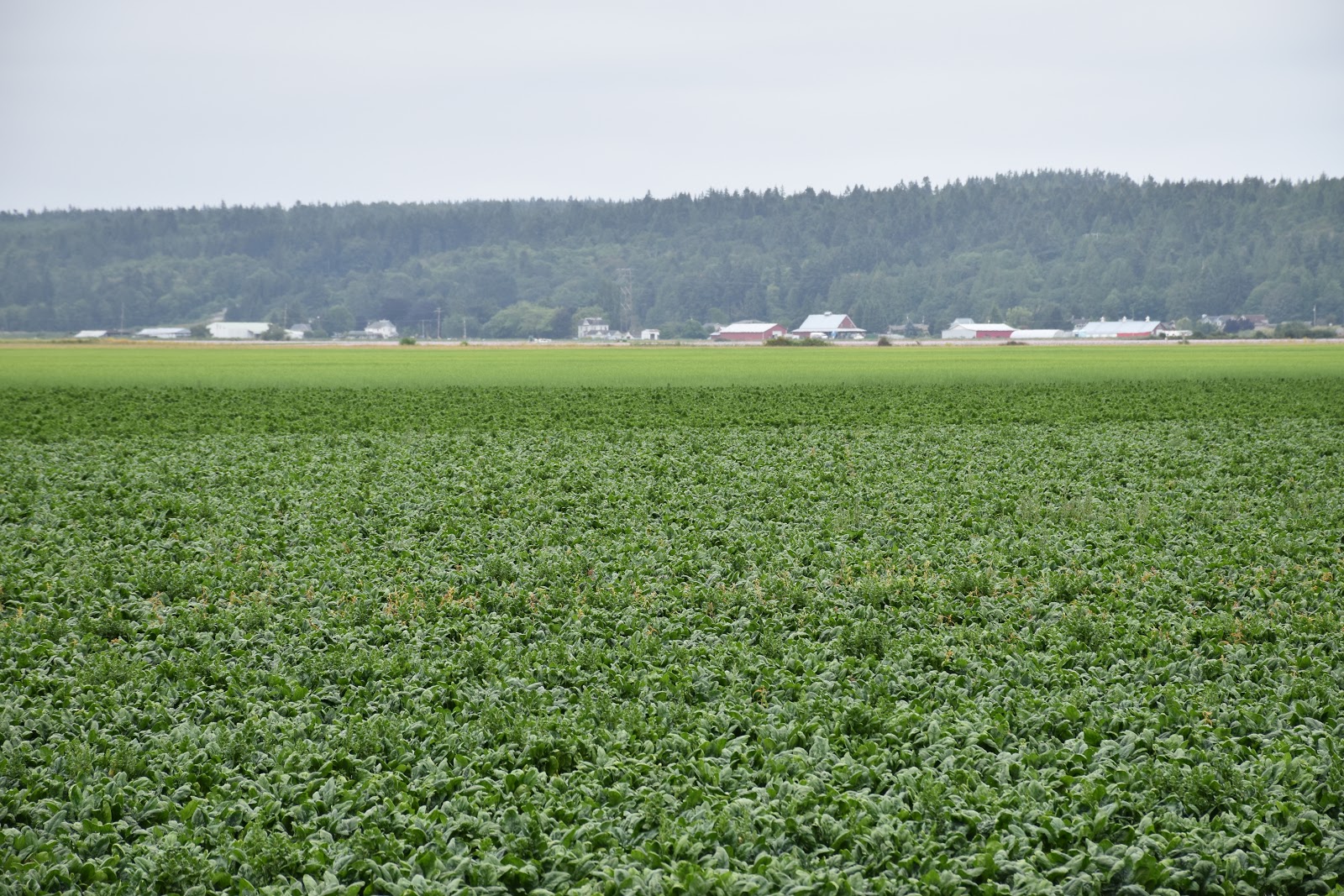
Skagit Valley field of spinach, considered a specialty crop.
A couple years ago, LINC Foods of Spokane teamed up with specialty crop partners in Idaho and Montana to compete for funds available through the U.S. Department of Agriculture’s Specialty Crop Multi-State Program.

As the lead for partners from Washington, Idaho and Montana, LINC Foods received a $300,000 grant focusing on food safety. LINC is a worker and farmer-owned cooperative business that calls itself “a one-stop shop for local, sustainable food.”

The competition was tough. Out of 11 proposals that WSDA reviewed and forwarded on to the USDA, LINC’s was the only one awarded a grant. USDA only awarded funds to four multi-state projects across the U.S.

This year, WSDA is one of some 20 states that will again act as the “administrator” of selected multi-state projects under current USDA Agricultural Marketing Service (AMS) competition for new projects.

States competing for $7 million 

Specialty crop programs are funded through the 2014 Farm Bill. This round, some $7 million in federal funds are available to boost the specialty crop industry.  Specialty crops include fruits, vegetables, tree nuts and nursery crops. Washington ranks second nationally for producing specialty crops.

We hope to have one or more of Washington’s applications be selected in this current round. Projects can address regional or national-level specialty crop issues, and deal with food safety, plant pests and disease, research, or projects addressing common issues specific to specialty crops, such as marketing and promotion.

Sept. 25 proposal deadline to WSDA

Proposals are due by 2 p.m., Sept. 25, and should be emailed to WSDA at SCMP@agr.wa.gov.

We’d be glad to discuss the grant process. Contact me via email or by calling 360-902-2091.

A few details 
  • Review USDA’s 2017 Request for Applications to be aware of requirements.
  • Grant amounts range from $250,000 to $1 million.
  • Proposals must have at least two partners with substantive involvement in the project. Partners must be located in different states.
  • Submit applications to a participating state department of agriculture such as WSDA.
  • Specialty crop producer groups, associations, organizations, tribal governments, universities, nonprofits, and other stakeholder groups are encouraged to apply.
  • Projects can take up to three years for completion, but must start in 2017.