Showing posts with label specialty crops. Show all posts

Tuesday, August 8, 2023

Washington's blueberry bounty: A true taste of northwest delight

Daniel Schafer
Communications

When it comes to blueberries, Washington state can take a bow. That’s because our state is the #1
producer of blueberries in the world. In this blog, we’ll unpack why Washington provides such a favorable growing environment for blueberries, as well as what it means of all Washingtonians. 

Washington is a global blueberry leader

It's no understatement to say that the United States dominates the blueberry market — we grow far more blueberries than any other country — and Washington and Oregon are responsible for the vast majority of them. In 2021, Washington’s farmers produced an astounding 180 million pounds of these plump, juicy fruits, while Oregon pitched in with 150 million pounds. This significant production volume not only satisfies domestic demand but also supplies blueberries to consumers around the world, establishing Washington as a blueberry powerhouse. 

So Washington produces a ton of blueberries (actually, it’s more like 90,000 tons each year, but you know what we mean). What’s that mean for the folks who live in and visit our state? 

U-pick blueberry farms: A family-friendly tradition 

For residents and visitors alike, summertime in Washington means heading to the picturesque U-pick blueberry farms scattered throughout the state. These farms offer a unique and enjoyable experience, allowing families to immerse themselves in the beauty of the countryside while harvesting the freshest blueberries directly from the bush. If you’d like to pick blueberries at a local farm, check out this handy tool from the Washington Blueberry Commission. 

The tradition of U-pick farms fosters a sense of community while giving visitors a chance to appreciate the hard work and dedication of local farmers. What’s more, blueberries are just great. It’s hard to choose between eating them fresh, freezing them to enjoy during the winter (just rinse them off and store them in a plastic bag in your freezer), or baking them into tasty treats like muffins or scones. The good news is you don’t have to choose. Why not try all three? 

A blooming business: Growing blueberries in Washington 

Thanks to Washington's diverse geography, blueberries thrive in both western and eastern regions. Western Washington claims 55% of the state's blueberry production, while the remaining 45% of blueberries flourish in the sun-kissed lands of eastern Washington. 

Blueberries require slightly acidic and damp yet well-drained soil to thrive, which makes many parts of Washington an ideal environment for home gardeners to grow their own. If you have access to a few square feet of garden, you can nurture blueberries too. There’s nothing quite like caring for a blueberry bush that responds by providing fresh berries. 

Blueberry season is now!

Whether you choose to pick your own berries at a U-pick farm, enjoy locally grown blueberries from markets, or cultivate them in your backyard, Washington's blueberries promise an unparalleled taste of northwest delight. 

So, as summer rolls on, embrace the blueberry season, relish in their sweet flavor, and take pride in knowing that each berry you enjoy is a product of the state's dedication to agricultural excellence. Whether they're topping your morning cereal or making their way into luscious pies, Washington's blueberries are a symbol of Washington's agriculture and community.

Correction: A previous version of this blog incorrectly stated that the United States grows the majority of blueberries produced in the world. The U.S. in fact produces more blueberries than any other country, but it is not a majority of the global total.

Tuesday, August 1, 2023

Washington's hidden gem: The bountiful allure of garlic

Daniel Schafer
Communications

When people think about the verdant landscapes of Washington state and the crops that grow across them, they may think first of apples, cherries, or wheat. But Washington is also home to many other crops. Nestled within the fertile fields and farms, an aromatic and flavorful crop thrives, capturing the hearts of chefs, home cooks, and farmers alike — the humble yet extraordinary garlic.

Garlic, an ancient culinary treasure, is a flavorful addition to many dishes and a vital crop that contributes to the diversity and sustainability of agriculture in the Evergreen State. In fact, Washington state is a national leader in this regard as it ranks fourth in the nation in garlic production.

Despite its modest appearance, garlic boasts an impressive history and a broad spectrum of varieties that cater to an array of tastes and culinary preferences. With origins tracing back to Central Asia over 5,000 years ago, garlic's journey took it across continents, enriching the culinary cultures of numerous civilizations along the way. Today, Washington farmers continue this legacy, cultivating different garlic varieties, each with its unique flavor profile and growing requirements.

Bring garlic into your kitchen

In the diverse microclimates of Washington, a variety of garlic cultivars thrive, including softneck and hardneck varieties. The softneck varieties, known for their pliable stems and abundant cloves, dominate the market, while the hardneck types, characterized by their woody central stem and complex flavor, attract gourmands and connoisseurs. Whether it's the pungent and spicy Rocambole, the mild and versatile Silverskin, or the robust and bold Purple Stripe, each garlic cultivar carries its charm to complement an array of culinary delights.

The benefits of garlic extend beyond the farm and into the kitchen, where it adds a delightful punch to countless dishes. From sautéed vegetables and creamy pasta sauces to hearty soups and marinades, garlic's versatility knows no bounds. Chefs and home cooks alike treasure the potent and savory flavor garlic lends to their creations, making it an essential pantry staple.

Health benefits

Beyond being an essential ingredient for many dishes, garlic has a wide variety of positive health effects. Whether it is increasing your body’s immunity or decreasing inflammation, numerous studies have shown the benefits of garlic beyond the palate.

Garlic is typically harvested in Washington during June and July, so now is the perfect time to try a new recipe in your kitchen. 


Thursday, November 12, 2020

Washington receives $4.65 million in Specialty Crop Block Grant funds

Leisa Schumaker 
WSDA SCBG Program Manager 

The Washington State Department of Agriculture (WSDA) has received $4.65 million in federal Specialty Crop Block Grant funds to support projects that increase the competitiveness and demand of the state’s specialty crops.  

Specialty Crops are defined as fruits, vegetables, tree nuts, horticulture, and nursery crops, including floriculture. WSDA will fund 21 projects with the money, with awards ranging from $61,000 to $250,000 going to non-profits, government organizations, universities and community colleges, and agricultural commissions.

WSDA selected projects through a competitive two-phase process with Phase I focusing on the concept behind the project and Phase II expanding on the project with much more detail.  

These projects focus on areas of plant health and pest management, small farm operations, domestic and international marketing, food safety, training and education, as well as new innovative technologies.

You can review the 2020 Specialty Crop Block Grant projects on our website. For more information, visit agr.wa.gov/grants and click on the Specialty Crop Block Grants link. 

For those interested in applying for 2021 SCBG funds, review the 27-page Request for Proposal document for details on the application process and deadlines.

Thursday, August 9, 2018

Capturing a taste of Washington

Chris McGann
Communications

Taiwanese buyers snap photos of the popcorn candy coating
 process at a Seattle-area factory. After sampling the gamut
 of flavors, truffle was a surprise standout!
WSDA is always busy looking for ways to expand markets for Washington producers. Our International Marketing Program helps facilitate buyer-seller connections, delivers resources and continually advocates for global market access.

Recently, the program joined forces with the Western United States Agricultural Trade Association to connect Taiwanese buyers with 17 Northwest suppliers.

After a whirlwind of face-to-face, buyer-seller meetings - more than 80 on the first day - the buyer group struck out on day two to see where the magic happens at three Seattle-area facilities. They visited Seattle Popcorn Company (Uncle Woody’s Popcorn);  AMES International (chocolate-covered fruits and nuts, nuts, and cookies); and SuperValu International (product consolidation/private label brands).

WSDA International Marketing Program Trade Specialist Elisa Daun organized the mission.

“Connecting professional buyers with Washington companies is a great opportunity,” Daun said. “These missions showcase the abundance of quality products available in our state and can be invaluable for producers trying to reach overseas markets.”

In 2017, Taiwan imported more than $264 million worth of Washington's agricultural and food products. The top five products were:

  1. Apples ($72 million)
  2. Frozen French Fries ($53 million)
  3. Sweet Cherries ($41 million)
  4. Frozen/Chilled Beef ($18 million)
  5. White Wheat ($16 million)

The International Marketing Program is working to help position Washington companies to export their products efficiently and profitably, while promoting our state’s consistent high quality, diversity of offerings, and high standard for food safety and handling.

Washington’s major crops and commodities have trade associations for promotion. The WSDA International Marketing Program helps bridge the gap for smaller suppliers, many of whom sell processed or packaged goods. The buyers can meet the operators, tour facilities and get a better sense of the quality of products and companies they will be working with.

For more information about upcoming international marketing events and activities, check out this WSDA calendar.

Monday, June 18, 2018

American Flowers Week promotes cut-flower producers

Katie Lynd
Regional Markets Program

Red, white and blue… blooms? We’ll be seeing these patriotic colors as we celebrate our nation’s independence. Now, for the fourth consecutive year, they take center stage during American Flowers Week (June 28-July 4) – a time to highlight local flowers and the people who grow and design with them.

Close to home, WSDA Regional Markets and the Washington State Farm Bureau are partnering on a project funded by a WSDA Specialty Crop Block Grant to market and promote Washington cut flowers. By promoting American Flowers Week through social media with the hashtag #americanflowersweek, #WAgrown, and #WAflowers, project partners hope to make more flower growers in Washington aware of this marketing opportunity and help consumers get to know where their blooms come from.

Triple Wren Farms with their cut flowers in Ferndale, WA
American Flowers Week, a project of SlowFlowers.com engages the public, policymakers and the media in a conversation about the origins of their flowers. The campaign is timed to coincide with America’s Independence Day on July 4th, providing florists, retailers, wholesalers and flower farmers a patriotic opportunity to promote American-grown flowers.

“Red, white and blue blooms and bouquets are encouraged,” says campaign founder Debra Prinzing of Slow Flowers. "With Washington's status as the nation's second largest state producing cut flowers, flower farmers and florists in the Evergreen State have a unique platform to tell their story through local and seasonal flowers."

How can you get involved? Share your photos of local flowers on social media – Facebook, Twitter, Instagram – and don’t forget to tag your farmer or florist! You can also use the visual resources available at AmericanFlowersWeek.com, including logos and social media badges, a coloring map and downloadable fact sheets and infographics.

We can’t wait to see what creative endeavors our farming community brings to #americanflowersweek. Share your blooms and include #WAgrown and #WAflowers as well. We hope to highlight some farms and flowers on WSDA’s social media channels later this month. Join us for American Flowers Week!


Thursday, July 27, 2017

WSDA accepting proposals for specialty crop grants

Leisa Schumaker
Specialty Crop Block Grant Program


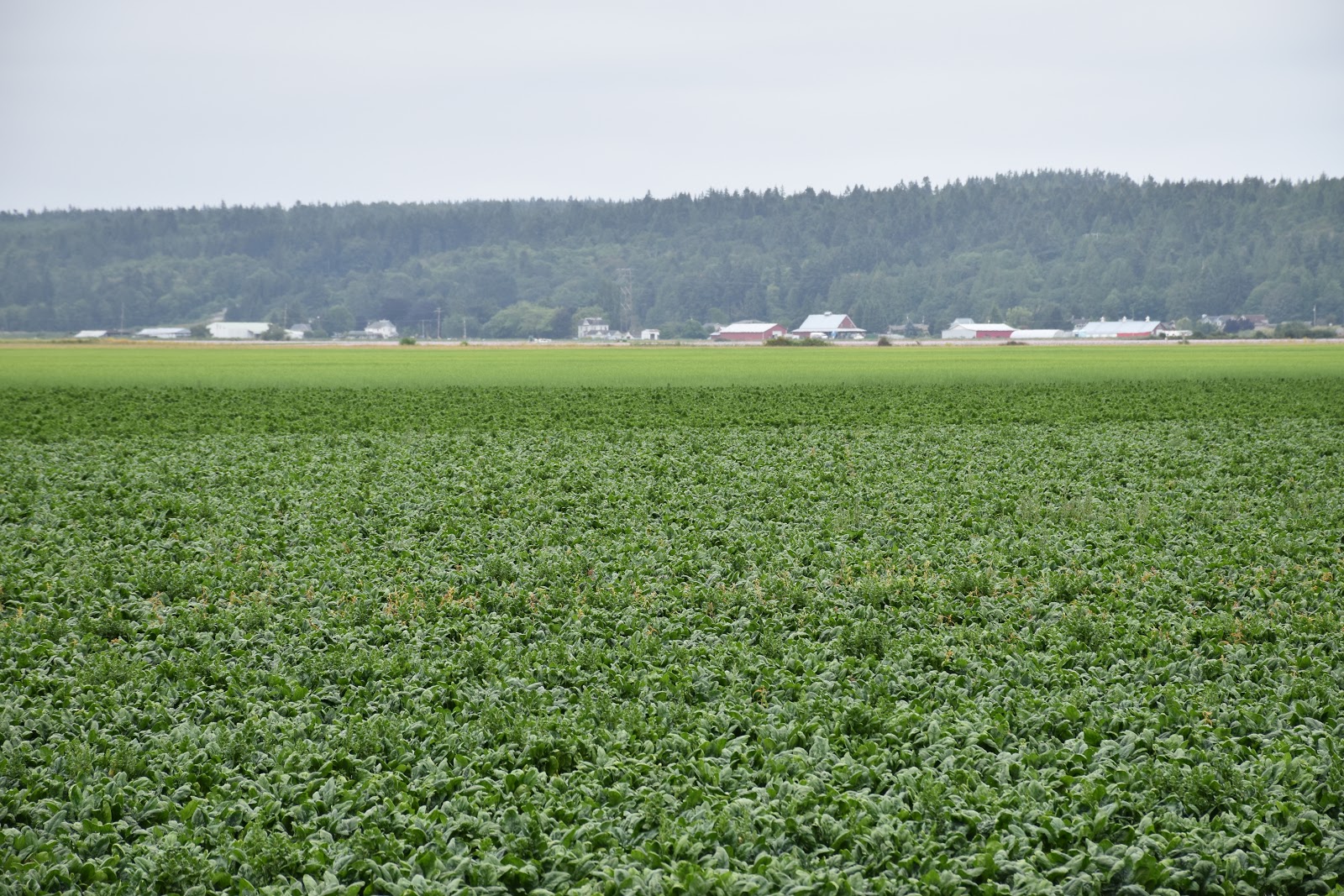
Skagit Valley field of spinach, considered a specialty crop.
A couple years ago, LINC Foods of Spokane teamed up with specialty crop partners in Idaho and Montana to compete for funds available through the U.S. Department of Agriculture’s Specialty Crop Multi-State Program.

As the lead for partners from Washington, Idaho and Montana, LINC Foods received a $300,000 grant focusing on food safety. LINC is a worker and farmer-owned cooperative business that calls itself “a one-stop shop for local, sustainable food.”

The competition was tough. Out of 11 proposals that WSDA reviewed and forwarded on to the USDA, LINC’s was the only one awarded a grant. USDA only awarded funds to four multi-state projects across the U.S.

This year, WSDA is one of some 20 states that will again act as the “administrator” of selected multi-state projects under current USDA Agricultural Marketing Service (AMS) competition for new projects.

States competing for $7 million 

Specialty crop programs are funded through the 2014 Farm Bill. This round, some $7 million in federal funds are available to boost the specialty crop industry.  Specialty crops include fruits, vegetables, tree nuts and nursery crops. Washington ranks second nationally for producing specialty crops.

We hope to have one or more of Washington’s applications be selected in this current round. Projects can address regional or national-level specialty crop issues, and deal with food safety, plant pests and disease, research, or projects addressing common issues specific to specialty crops, such as marketing and promotion.

Sept. 25 proposal deadline to WSDA

Proposals are due by 2 p.m., Sept. 25, and should be emailed to WSDA at SCMP@agr.wa.gov.

We’d be glad to discuss the grant process. Contact me via email or by calling 360-902-2091.

A few details 
  • Review USDA’s 2017 Request for Applications to be aware of requirements.
  • Grant amounts range from $250,000 to $1 million.
  • Proposals must have at least two partners with substantive involvement in the project. Partners must be located in different states.
  • Submit applications to a participating state department of agriculture such as WSDA.
  • Specialty crop producer groups, associations, organizations, tribal governments, universities, nonprofits, and other stakeholder groups are encouraged to apply.
  • Projects can take up to three years for completion, but must start in 2017.


Wednesday, May 17, 2017

WSDA fruit tree certification gets state-of-the-art greenhouse

Karla Salp
Communications

Director Sandison cuts greenhouse ribbon with project partners
WSDA Director Derek Sandison had the rare opportunity to dedicate a new greenhouse for the agency’s Fruit Tree Certification program on May 11.

For decades, WSDA has been renting space from Washington State University at their Prosser research station. There, WSDA conducted tests on new nursery stock to ensure that the plant materials entering our state’s nurseries were free of disease.

However, the increasing demand for disease-free plant materials for Washington’s booming fruit tree industry and the limitations of the existing greenhouse meant that it was time for WSDA to have a greenhouse of its own.

Building the greenhouse has taken several years and was the result of a remarkable partnership between WSDA, WSU, and the tree fruit industry. About 35 people attended the dedication ceremony – an indication both of the strong partnerships involved in building the greenhouse as well as the importance of the certification program to Washington’s fruit tree industry.

Dedication attendees get a greenhouse tour
Attendees at the dedication were treated to a tour, which included the three separate greenhouse bays. The newly dedicated 5,000 square foot state-of-the-art greenhouse is fully automated, featuring improved temperature and irrigation controls. Each growing bay is computer-controlled to maintain temperature ranges at which different fruit tree pathogens thrive.

The increased space and advances in the greenhouse technology enable WSDA fruit tree certification specialists to test trees at a greater rate than they have been able to in the past.

By screening for these fruit tree diseases, WSDA can ensure that Washington fruit tree nursery stock remains disease-free. This promotes not only the health of Washington orchards but ensures that Washington fruit trees can also be exported anywhere in the world.

Wish you could have been there? If you missed the dedication ceremony, you can still watch it on Facebook!


Thursday, December 1, 2016

10 easy steps to setting up a 35-foot tall tree - indoors

Karla Salp
WSDA Communications

Whether you call it a Christmas tree, holiday tree, yule tree, or something else entirely, nothing says it is time for the holidays like beautiful evergreen trees decorating homes, offices, and even the Capitol. Recently, a truck load of holiday cheer arrived at the Capitol in the form of a 35-foot noble fir, destined to be decorated from top to bottom with lights, ornaments, and toys.

If you dream of your own Capitol-sized tree, it’s easy. Check out our 60 video of how it was done at the Capitol and then check out our instructions below.


  1. Find a 35-foot tall tree. This year’s tree was donated by Weyerhaeuser and was grown at its tree farm in Vail near Rainier. It grew in an open area, so it was nice and full all the way around and top to bottom. If you can’t get a tree big enough for your tastes, try planting one and waiting about 25 years, the age of this tree, or perhaps less time if you would like a mere 25-30 foot tree. Once you have the tree, hire a company to cut it down and haul it to your location.
  2. Prepare tree stand and 4 x 4’s. No store-bought tree stands for this tree! You’ll have to custom make a steel tube braced and attached to a wooden platform to protect the floor. You’ll also need to prepare several 12-foot 4x4 boards for carrying the tree.
  3. Gather together 30 – 40 of your closest friends.  How many people does it take to carry a 35-foot tree? A lot. You can load it off the truck with a crane, but you are going to have to carry it into the building.
  4. Carry tree into the building. After slipping the 4x4 boards under the tree at about 4-5 foot intervals, have friends grab the ends of each board. On the count of three, everyone will lift their board (while using proper form, of course) and walk forward, carrying the tree into the building. Make sure the stump-end of the tree leads the way.
  5. Get it through the door(s.) The door will likely be one of your biggest challenges in carrying the tree. The branches are so large they will try to prevent you from getting through. However, with determination, it will go through, foot by foot. As it goes through the door, you’ll have to stop each time you reach a 4x4. Pull the 4x4 out from under the tree and run inside to slip it back under the portion of the tree that has made it through the door. If you have columns inside the building, you’ll get to do this same dance to get between them as well.
  6. Carry the tree to the stand. Next you need to get the tree to the stand. Have your buddies continue to carry it forward until the base of the tree is at the stand. Rest the base of the tree on the top edge of the steel tube. If available, it is helpful to lay the tree half way up some stairs to prepare for the next step.
  7. Prop the top of the tree off the ground. Have your friends heave the top of the tree up as high as they can. Place two 4x4’s suspended on each end by two ladders (acting like a giant sawhorse) about half way up the tree (higher if you don’t have stairs) to hold the tree off the ground.
  8. Decorate the top half of the tree. Before you can fully stand up the tree, you’ll need to decorate the top half. Remember, this is a big tree, so you’ll need BIG ornaments. You might consider a theme, like the “Under the Sea” stuffed animals donated by the Association of Washington Business, which will be delivered to local hospitals for children at the end of the year. You’ll also need a lot of lights – 5,000 or even more.
  9. Stand the tree up. Using four ropes and about 20 of your friends, pull the tree upright until it falls into the base. Three of the ropes will pull the tree up while one on the backside will ensure that it doesn’t topple over the other direction. Once standing, bolt the tree to the base to secure it.
  10. Decorate the bottom half of the tree. Using ladders, decorate the rest of the tree. Hopefully you’ve been testing the lights as you go…
Ah! Now you can step back, enjoy the tree, and start looking for some new friends to replace the ones who will never speak to you again after this project.

Okay, maybe this isn’t so easy after all. To truly appreciate all of this work, you’ll definitely want to visit the Capitol to enjoy this tree. One great time to go would be this Friday, December 2nd, when they will be having a tree lighting at 6 pm.

For a much easier tree but still a bit of adventure, be sure to visit one of the many Washington family Christmas tree farms.

See the final raising of the tree at normal speed in the video below: