
Showing posts with label Farm to school. Show all posts

Thursday, September 7, 2023

Celebrate Taste Washington Day on October 4th

Annette Slonim
WSDA Regional Markets

Taste Washington Day is a day for school districts around the state to celebrate Farm to School and local agriculture. This year, on Wednesday, October 4th nutrition services staff, school gardeners, teachers, administrators, and volunteers all over Washington will serve school meals with local ingredients and do activities to help children learn about the farms that feed us. Cafeterias across the state celebrate how Farm to School looks in their district by featuring local and Washington-grown products, farmers sign up to supply ingredients or speak at a local school, school gardeners host classes or lunchtime in the garden, and teachers do food and agriculture-related lessons in the classroom.

October is National Farm to School Month! If October 4th doesn’t work for your school, you can choose any day in October to join in on the Taste Washington Day fun.

Chief Leschi Schools Taste Washington Day 2022

How to participate

School districts: Food and nutrition services directors and staff can sign up on behalf of their district. Celebrations look different in each district and school, but some options include:

  • Serving special menus with local ingredients. The Washington School Nutrition Association has developed some sample lunch and breakfast menus that use Washington-grown ingredients in each item. Click here to see more menu and recipe ideas.
  • Highlight the Washington-grown foods already on your menu.
  • Buy a product from a local farm to feature on the menu.
  • Spotlight a “Harvest of the Month” crop.
  • Participate in the “Washington Apple Crunch” at noon.
  • Share your activities on social media with the hashtags #TasteWADay and #WAfarmtoschool.

Farmers: Sign up to join the list of participating farms for Taste Washington Day. WSDA will share your contact information and product availability with participating schools.

School gardeners: Let us know what activities you have planned in the garden for Taste Washington Day! Share photos on social media using the hashtags #TasteWADay and #WAfarmtoschool.

Teachers and educators: Feature a lesson on Washington agriculture, food, or nutrition. Let us know what you have planned! Some farmers love to do classroom visits. If you are seeking farmers in your area, contact WSDA Farm to School. 

Principals, superintendents, parents, administrators, and community members: Find out what’s going on for Taste Washington Day in your classrooms, cafeteria, or garden. Support it and let the community know all about it! You may also be able to help organize guest educators, farmer visits, or other activities.

Check out WSDA’s Taste Washington Day webpage for recipes, promotional sign templates, and other free resources to help you get started! 

How Taste WA Day works

School district food services sign up with WSDA Farm to School to participate, and share their local
menus, ingredients, or other Farm to School activities they have planned for the day. Other activities may include farmer guest speakers, taste tests, FFA presentations, or visits to a school garden. WSDA tracks and helps coordinate and promote all of the efforts statewide. Schools have access to free promotional templates and materials from WSDA, and receive information on participating farms to purchase products.

Farmers sign up to be a part of Taste Washington Day to offer to sell their products to schools, participate in school activities and receive information on participating schools. WSDA Farm to School Program helps with local food procurement by matching farms with schools, finding farmers to participate in school events, and other logistics.

This celebration was cooked up by the Washington School Nutrition Association (WSNA) and WSDA with support from Office of Superintendent of Public Instruction Child Nutrition Services (OSPI) to promote locally grown food served in school meals. Taste Washington Day serves as Washington State’s kick-off for the month-long celebration of National Farm to School Month in October.

For more information on Taste Washington Day, or to get help linking to your local school districts or farms, please contact Annette Slonim, WSDA Farm to School Lead, at aslonim@agr.wa.gov or 206-714-2757.


Friday, January 28, 2022

WSDA awards $1.5 million in grants for Farm to School efforts

Annette Slonim
WSDA Farm to School 

Last fall, WSDA announced a new grant program to promote and expand farm to school efforts by supporting local food purchasing in schools, child care centers, and summer meal programs statewide. Thanks to an appropriation from the 2021 Legislative Session, WSDA received $5 million in the 2021-23 state budget to launch the new grant and expand WSDA’s Farm to School program 

This month, the agency notified 52 organizations, spanning 23 counties around the state, that they were awarded funds from of the first round of the new Farm to School Purchasing Grants.  A second round of grants will be available for the 2022-2023 school year.

In all, WSDA awarded $1,503,874 in the first round of grants. The recipients include:

  • 38 school programs
    • including 1 tribal school program
  • 13 child care programs
    • including 2 tribal early learning programs
  • 1 summer meal program

The Farm to School Purchasing Grant is meant to support farm to
school efforts by making it possible for schools, childcares, and summer meal programs to increase their procurement of Washington grown foods. Farm to school purchasing makes nutritious, local foods available to more children and expands market opportunities for local farms.   

The grants range from $1,000 to more than $200,000, based on the number of children served by the program or the size of the nutrition program.  The grant is administered in partnership with Washington’s Office of Superintendent of Public Instruction (OSPI).

You can learn more about the grants at agr.wa.gov/FarmToSchool or by emailing farmtoschool@agr.wa.gov

The grant program contributes to WSDA’s Focus on Food Initiative, which focuses on strengthening Washington’s food system at the regional level and ensuring safe, nutritious food is effectively produced and distributed throughout our state.

Friday, November 5, 2021

Students, get your forks ready – WSDA hosts farm to school institutes

Laura Raymond and Annette Slonim
WSDA Farm to School program

As school districts across the state establish farm to school connections, they are buying more and more Washington-grown foods to incorporate into new and growing farm to school meal programs. Successful farm to school efforts are nurturing relationships with local farms and other food producers, transitioning to scratch-cooked foods, successfully introducing new menu items, and much more. It’s an exciting opportunity for farmers and students in our state. 

Salad prep at a pre-pandemic workshop on
Farm to School food preparation.
But launching a farm to school program isn’t easy. It requires creativity, dedication, and new ways of working for cafeterias and districts to source seasonally, develop new recipes, and work with fresh and whole ingredients. 

Transitioning to more scratch cooking is a key component of success and this can be a challenging shift; many school districts don’t have the equipment, staff, or training they need to clean, peel, and chop freshly harvested vegetables or to handle large quantities of fresh dairy, poultry, and meats. 

Sourcing seasonally and locally can mean working with ingredients that are uncommon in the conventional school lunchroom, like whole grains and dried legumes, that are plentiful in Washington. These districts need resources and support.

USDA grant kick starts farm to school institutes

To help school districts get started or strengthen their existing farm to school and scratch-cooking efforts, WSDA was awarded a grant from the U.S. Department of Agriculture Food and Nutrition Service to develop a series of Farm to School Institutes. 

These institutes offered presentations that covered topics such as developing relationships with producers, procurement options and requirements, delivery and storage, hiring and training kitchen staff, earning student trust, serving culturally relevant foods, menu planning, and planning promotional events. 

During the three virtual events this summer, teams of school nutrition directors, nutritionists, cooks, board members, educators, and others learned from chefs, WSDA staff, and other school nutrition professionals in Washington who run successful farm to school meal programs. 

Feedback from participants was overwhelmingly positive. Members of the teams from the more than 20 districts attending said the presentations provided a goldmine of information, resources, and inspiration.

WSDA held three institutes: one for districts in Western Washington, one for those in Eastern Washington, and one focused on tribal and traditional foods.

A trolley of fresh produce celebrating
Farm to School on Taste Washington Day
.
The institutes, run by a team composed of WSDA Farm to School staff, culinary professionals, and tribal and traditional foods educators, drew on the knowledge and experiences of school food professionals from programs of different sizes and styles: districts deep in our state’s agricultural regions, big-city school districts, districts serving a handful of schools, and tribes serving students in their communities. All left with an action plan to advance their own farm to school goals. Presenters also came from districts in various stages of farm to school implementation.
 
Here are just a few of the insights shared by the presenters:
  • The Muckleshoot Cooks Project emphasized the importance of on-the-job training for busy nutrition workers, serving traditional foods weekly, and striving for food sovereignty over time.
  • West Valley School District in Yakima plans meals using a seasonality guide and emphasizes the importance of having a central kitchen to the success of their project.
  • Coupeville School District Connected Food Program uses food from its on-site farm and local farmers. They offer just one hot meal option each day, made in part from foods they prepared in bulk.
  • Seattle Public Schools procures produce from about five local farms for certain meals since no single local farmer can meet the needs of the whole district.
  • Youth leaders from Food Empowerment Education Sustainability Team (FEEST) emphasized the importance of meals that are culturally relevant for students and the value of engaging students in menu development. 
As energized participants apply the skills and knowledge they gained through the Institutes, WSDA anticipates that even more students—in more regions of Washington—will be eating foods from Washington farms and food producers at school.

If you would like to buy food from local farms for your school food program, you can apply for a WSDA Farm to School purchasing grant. Visit agr.wa.gov/FarmToSchool or email farmtoschool@agr.wa.gov for more information about the purchase grants.

Friday, October 29, 2021

Taste Washington Day 2021 – celebrating the farm to school connection

Amber Betts
WSDA Communications

All across the state this month, students tasted fruit and veggies grown right in their backyards by local farms as part of National Farm to School month. Many also participated in annual Taste Washington Day activities as a way to promote both the farm-to-school movement and Washington agriculture by serving local foods in school meals.

Coupeville schools, along with
many others across the state,
celebrated Farm to School Month
and Taste Washington Da
y. 
The activities to celebrate the month were as diverse as our schools and our farms.

WSDA Farm to School Purchasing Grant Specialist Annette Slonim saw this firsthand on Oct. 6, when she visited the Coupeville School District for Taste Washington Day.

More students there began eating school lunches when the Coupeville School District implemented the Connected Food program, focusing on scratch cooking and fresh, local ingredients. Student participation in the meal program increased from about 30 to 70 percent.

As part of the activities, Coupeville students enjoyed lamb from Bell’s Farm on Whidbey Island.

“It’s an incredible way to show our commitment to expanding economic opportunities for farmers while educating students about the connections between food, farming, health, and the environment,” Slonim said.

But Coupeville wasn’t the only district participating.

The Bellevue School District celebrated Taste Washington Day by adding kiwiberries, grown in Whatcom County, to the day’s selection of fruit. Kiwiberries look like kiwi fruit without the fuzzy hair on the skin and are the size of grapes.

The Dayton School District featured Honeycrisp apples and Bosc pears from Warren Orchards. And, in Bellingham, students were served a vegan chickpea masala, featuring garbanzo beans from Palouse, Washington. Middle and high school students ate salmon chowder featuring wild salmon from Lummi Island.

Schools across the state joined in on
integrating locally grown produce in their
school meals, including foods grown in their
veryown school garden. 
These are just a few of the many locally grown and raised food students enjoyed across the state.

Another feature of the month-long celebration was the Washington Apple Crunch, also held on Oct. 6. The aim is for participants around the state to crunch into their apples at the same moment as a way to highlight local growers and fresh fruit. Grandview School District in south central Washington gave out fresh apples from Magaña Farms to every student and staff member to take a big, crunchy bite! Pullman School District in eastern Washington also participated, crunching into organic Jonagold or Gala apples from Whitestone Mountain Orchard.  

Visit www.agr.wa.gov/FarmToSchool to learn more about how WSDA is incorporating local agriculture in the everyday lives of schoolchildren, one lunch at a time.

Monday, September 27, 2021

Taste Washington Day 2021 – celebrating the farm to school connection

WSDA Farm to School 
Purchasing Grant Specialist

 Each year, soon after students return to school, the annual Taste Washington Day is held as a way to promote both the farm to school movement serving local foods in school meals and Washington agriculture.

Yakima School District, Taste Washington Day 2020.
This year, Taste Washington Day 2021 will be held on Oct. 6. Schools from around the state have been encouraged to share their farm to school efforts, whether those activities are year-round, or once-a-year on this special day. Eighteen school districts and more than 20 farms have signed up to celebrate local foods in Washington. Visit agr.wa.gov/FarmtoSchool to see the growing list of participating schools and farms.

To celebrate Taste Washington Day, schools are planning a range of fun and engaging activities, such as serving a Washington-grown food as part of breakfast or lunch, highlighting farm sources on menus, doing a “Washington Apple Crunch” at noon, sending students home with a “Taste Washington Day Recipe,” teaching lessons in school gardens, hosting a pop-up Farmers Market, and more!

Still time to join

Valley School District, local lettuce and tomatoes, 
Taste Washington Day 2020
School districts and farmers can still sign up online to be part of the event and share their plans with WSDA by the Taste Washington Day page on our website.

Local Washington-grown foods are a part of school meals in many school districts across the state as farmers support schools with products ranging from apples and pears to local cheese and yogurt, Washington-raised beef, seasonal veggies, grains, and legumes.

Washington is a major farming state with farms in every county, so Taste Washington Day is also an opportunity to teach students about agriculture by learning about what is being grown and produced in their own communities. 

Everett School District, 
Taste Washington Day 2020

WSDA partners with the Washington School Nutrition Association to organize Taste Washington Day, with support from Office of Superintendent of Public Instruction Child Nutrition. Local nonprofits, parents, volunteers, and community partners also work to support Taste Washington Day.

Where to learn more

If you are a farmer or work at a school and would like more information about participating in Taste Washington Day, contact WSDA Farm to School Purchasing Grant Specialist, Annette Slonim at aslonim@agr.wa.gov or 206-593-6953. You can also visit agr.wa.gov/FarmtoSchool to learn more about WSDA’s Farm to School program.

Thursday, October 1, 2020

Taste Washington Day 2020 celebrates resilient farm to school connections

 Chris Iberle, Farm to School Lead

Common Threads Farm, Bellingham, school garden harvest.

The tenth annual Taste Washington Day may look a little different this year, but even with challenges associated with remote learning and COVID-19 precautions, it remains true to its mission of celebrating community, connecting students and farmers through school meals, and educating them about where their food comes from.

Across Washington State this year, schools, farms, children, families, school gardeners, agriculture educators, organizations and businesses have come together to support one another, showing strength and resilience in the face of unprecedented challenges.

However school districts adapt their activities for Taste Washington Day, scheduled for Oct. 7, this special day highlights how they provide local food to students in school meals, learn in their schools’ gardens, and educate students about food and agriculture. 

Thirty-six school districts are signed up to participate so far, and working with dozens of Washington farmers and producers to buy food items and ingredients for their meals. School districts and farmers can still sign up online to be a part of the event and share their plans with WSDA.

School nutrition staff have showed heroic, creative, and inspiring efforts to overhaul their school meal programs since the COVID-19 pandemic turned school operations upside down. 

School nutrition programs continue to be a critical food access point providing millions of meals for many children, families and communities statewide, especially during the pandemic. School meals have also provided an opportunity for students to stay connected with their school. 

“Nutrition staff in our districts love greeting the kids when they pick up their meals,” said Janis Campbell-Aikens, Child Nutrition director at Auburn School District and president of the Washington School Nutrition Association. “They have been one constant for the kids, from before COVID-19, and through the spring and summer.”

Coupeville School District boxed pasta lunches with sauce
that includes Washington-raised meat.

New, unique meal needs

The Taste Washington Day theme this year is “What’s in the Bag or Box from Washington?” encouraging schools to feature at least one Washington-grown product in sack lunches or meal boxes distributed to students. 

Local Washington-grown foods have been filling schools’ new, unique needs, as farmers support schools with products that fit grab-and-go meals, such as lunchbox-sized apples or pears, individually wrapped hardboiled eggs, dried cherries, and snacking veggies for sack lunches. 

Schools offering multi-day “grocery box” or recipe kits have added local yogurt, cheese, potatoes, onions, rhubarb, broccoli, and bread to distribution boxes. Districts incorporating scratch cooking into new distribution models, such as prepared meals to heat and eat at home, have featured Washington-grown beef, vegetables, and other cooked ingredients.

Washington Apple Crunch goes virtual!

The Washington Apple Crunch will again be part of Taste Washington Day, albeit virtual this year. Teachers, students and parents are encouraged to participate in the Washington Apple Crunch, and bite into a Washington-grown apple at noon on Oct. 7, and make a statewide crunch to celebrate our state’s agriculture. 

WSDA partners with the Washington School Nutrition Association to organize Taste Washington Day, with support from Office of Superintendent of Public Instruction Child Nutrition. Local nonprofits, parents, volunteers, and community partners also work to support Taste Washington Day. 

Together with schools and local farmers, we celebrate Washington agriculture and promote the nutritious foods being served in our schools.

Thursday, July 2, 2020

Farm to School initiatives awarded over $600,000 in USDA Grants

Farm to School Lead


Common Threads AmeriCorps Food
Educator Grace McElhone harvests
carrots from the Whatcom Middle
School hoophouse for food distribution
during COVID-19 school closures.
Photo source: Common Threads
The U.S. Department of Agriculture (USDA), announced $12.1 million in farm to school grant awards this week, including $633,703 for seven farm to school projects in Washington State.

The grants support activities connecting students with local farmers, school gardens, and agriculture education during the coming school year.

The financial support comes at a critical time for educating and feeding students with locally grown foods. It also highlights farm to school programming that has taken place for many years in classrooms, gardens, and cafeterias at school districts across Washington State.

Efforts connected regionally and statewide

Though the grants are spread across the state, many partners plan to work collaboratively to increase the impact of their individual projects and build broader momentum for farm to school activities.
They also share a common connection to WSDA Farm to School, which has provided guidance, assistance, or encouragement to these programs to support their success.

In addition, some organizations are members of the Washington State Farm to School Network, launched by WSDA Farm to School and dozens of other organizations in 2018 (also thanks to the support of a USDA Farm to School Grant).

WSDA looks forward to the seeing successes and benefits of these projects for students, farmers, and communities in the coming years, and supporting many of the projects through our WSDA Farm to School programming.

Washington’s award recipients include:

Chimacum School District 49, Chimacum

Chimacum School District, in partnership with the nonprofit Community Wellness Project and the local food and farm community, will increase the amount of fresh and local food procured, prepared and served in school cafeterias. The project will increase school meal participation, agricultural education, food and farm career and technical education programs, and develop a school food waste composting program in partnership with a local farm.

Common Threads, Bellingham

The project will enhance existing farm to school partnerships with staff at six rural schools and build new partnerships with four additional high-need rural schools. The project will work with district and school staff to increase understanding of and support for farm to school; and offer support to rural and high poverty communities across Washington state via training, consultation and the recruitment, training and support of food educators in partnership with OSPI, WSDA, the Washington State Farm to School Network, and Whatcom County Health Department.

Coupeville School District, Coupeville

Coupeville School District take-home meals featuring pasta and
Washington grown beef sauce for distribution during COVID-19
 school closures. Photo source: Coupeville School District
The Coupeville School District and Coupeville Farm to School will work to improve students’ knowledge and access to locally grown foods. The project will finish development of the Coupeville School District Farm Site, incorporate experiential activities and participation in farm based activities, hire a part-time school farm manager to coordinate site production and educational activities, develop district-wide plans and policies for local food purchase and use, and participate in the Whidbey Island Grown farmer cooperative food hub to solve distribution bottlenecks of local produce.

Viva Farms, Burlington

The project will increase procurement of local produce and whole grains in schools through training, technical assistance and connecting farmers and school buyers; engage students and teachers in experiential learning and educational activities related to agriculture, food and nutrition; and increase understanding and support for farm to school with regional school district leadership. Partners include WSU Skagit County Extension, Mt. Vernon School District, Skagit/Island Head Start, WSDA and University of Wisconsin.

Northeast Washington Educational Service District 101, Spokane

The Northeast Washington Educational Service District 101 (NEWESD 101) Child Nutrition Cooperative will work with Empire Health Foundation to help plan farm to school activities at rural school districts in Northeastern Washington. The project will establish a supply chain linking regional farmers and ranchers to school districts, introduce seasonal menus that incorporate local food items, and further agricultural education and introducing school garden projects.

Okanogan Conservation District, Okanogan

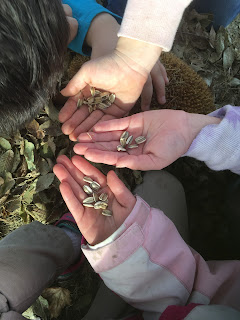
Students Students at a fall garden party at Virginia
Grainger Elementary in Okanogan, compare sunflower
 Photo source: Okanogan Conservation District
Okanogan Conservation District, in partnership with Classroom in Bloom, will collaborate with
school districts, local organizations, and community members to implement and expand school gardens and improve local food procurement and agricultural education efforts in Okanogan County. The project will increase garden educator capacity, develop STEM agricultural curriculum, and expand food procurement from local farms.

Washington State Department of Agriculture, Olympia

Washington State Department of Agriculture (WSDA) and a team of trainers will develop and deliver three "scratch cooking & farm to school institutes" in Washington State for cross-disciplinary district teams, including one training by and for tribal schools and meal programs. The institutes will consist of two-day intensive training and planning sessions for schools to implement scratch cooking programs and local procurement. The project aims to increase the use of minimally processed, locally produced ingredients, traditional and culturally relevant menus, and student participation in meal programs.

For a comprehensive list of the grants awarded nationwide, visit USDA 2020 Farm to School Grantees webpage.

Tuesday, April 7, 2020

WSDA planning meetings connected farmers and school buyers

Chris Iberle, WSDA Farm to School 


Seattle Public Schools nutrition staff meet with farmers and distributors
about supplying fresh fruits and vegetables to the district’s snack program.
Farmers and school nutrition staff have a lot in common. They have some of the busiest jobs, and do a lot of different things depending on the season. They also care about feeding kids nutritious foods, teaching students about agriculture and where food comes from, and supporting local farms in their communities.  

Back in January and February -- before the current pandemic imposed physical distancing restrictions -- WSDA Farm to School organized four meetings where farmers and school buyers could network and plan sales. These meetings in different parts of the state aimed to help farmers and nutrition staff collaborate on using more Washington-grown products in schools’ scratch-cooked meals.

Thirty-four farmers, food hubs, processors, or other local food suppliers met with 16 school districts. They built relationships, learned about school buyer needs, and relayed what products are available from Washington producers. Each school district shared information about products they’d be interested in purchasing, how much and how often, for farmers to use in market and production planning. 

All the meetings had great energy and enthusiasm as attendees worked together to support Washington agriculture and provide nutritious meals to students.

Supportive farm to school approach

This was the first time WSDA hosted farm to school meetings focused on networking and planning to increase schools’ purchases of Washington-grown foods. We worked with city, county, and nonprofit partners to co-host and provide outreach to farmers and schools interested in farm to school. 

Each meeting looked a bit different depending on the local needs and priorities.

  • Seattle Public Schools met with four farms and two food hubs about supplying the district with fresh fruits and vegetables for a snack program. The program was developed with the support of City of Seattle and FEEST. It prioritized bringing in new vendors, particularly small businesses owned by women or people of color.
  • In Walla Walla, the Sustainable Living Center’s Walla Walla Valley Farm to School Program helped farmers and school districts prepare for the meeting by assessing their needs and requirements for effective partnerships. Attendees also discussed the logistics of getting more food grown in Walla Walla Valley into school kitchens.
  • Bethel School District hosted farmers and nutrition staff from nine districts in Puyallup. Producers attended with a wide array of Washington products to offer, including tree fruit, berries, vegetables, seafood, eggs, beef, pork, chicken, yogurt, flour and grains.
  • In Grandview, four school districts met with tree fruit, vegetable, and pork farmers, and discussed topics ranging from food safety standards to planning purchases around the growing season.

School district nutrition staff from around Central Washington meet in
Grandview with farmers, distributors and processors.
From relationships and discussions coming out of the meetings, multiple school districts and producers reported new purchases and sources for Washington-grown products for their school meals.

Value of relationships

Furthermore, the momentum from the meetings has extended into the current COVID-19 response. WSDA helped organize a call on April 2 connecting an agency and non-profit team with farms, suppliers, distributors, and other industry partners. The call included many of the attendees from our February meetings.  

Our goal was to respond to immediate K-12 school and childcare food needs and fill shortages for certain items used in their new and evolving meal distribution models, such as grab-and-go, sack lunches, and weekly food boxes. 

To survey and respond to food-supply need, WSDA is working with the Office of Superintendent of Public Instruction Child Nutrition, United Way King County, Department of Children, Youth and Families, and Childcare Aware.

For resources and tools to support ongoing farm to school efforts with your districts and farms, visit WSDA’s Farm to School Toolkit. Or contact me - Chris Iberle, WSDA Regional Markets’ Farm to School Lead, at ciberle@agr.wa.gov. I’d be happy to support starting, expanding, or growing farm to school in your community, and to find out about future activities.

Thursday, November 7, 2019

Tilth Conference draws ag industry and WSDA staff

Chris McGann
Communications 

WSDA joins a host of agricultural experts participating in the annual Tilth Conference in Yakima this weekend.  Agency specialists from a wide range of disciplines will share their expertise and experience in workshops, meetings and presentations throughout the three-day event that begins Nov. 8.

This year's theme is "Growing a Resilient Future: Production and Beyond," and will provide an opportunity for farmers, food system professionals, researchers and educators to learn from one another, share best practices and network with others in the agriculture industry.

Attendees will have a chance to explore topics such as crop and livestock production, pest and weed management, marketing, certifications, land access, and opportunities and challenges in agriculture.

WSDA staff are among the numerous speakers at the conference, and will cover a variety of topics including:

Market Expansion and Development
  • Hear from our Farm to School team and learn the basics of selling to schools and how to get started.
  • Later, our WSDA staff will be involved in a panel discussion offering practical guides and checklists for hiring and training (including what hires need to know), market day operations, food safety requirements, booth and display set-up, customer service, working with market managers, and vehicle safety. 
Business Planning Toolkit
  • Get an update from the Office of the Washington State Veterinarian, including new outreach materials, animal disease status in the state, personnel changes, new programming, foreign-animal diseases of concern, regulation changes, and the new WSDA website.

Resource Opportunities to Support Farm Success
  • Listen to a panel discussion on the Farm to Food Pantry initiative where participating farmers, food pantry managers, WSDA, and Harvest Against Hunger partners recount their roles within this initiative, share their vision for scaling it up and sustaining it statewide, and how attendees can participate in the effort.
Technology, Regulations and Certifications
  • WSDA conducted their first season of inspections under the Food Safety Modernization Act’s Produce Safety Rule. Hear how farms responded and the results of these initial inspections. WSDA staff will share their inspection approach, the frequency of inspections and the prioritization process used by the WSDA Produce Safety Program.
  • Take part in a Q&A with the WSDA Organic Program staff and get an overview about the program, as well as updates on program activities. The session is intended to answer certification questions, cover the organic system plan, as well as recordkeeping, forms, processes, and other things to know about certification. 

Market Expansion and Development

  • The newest edition of the Handbook for Small and Direct Marketing Farms (popularly known as the “green book”) is now available for free. In this workshop, attendees will hear from the experts behind the handbook, learn what’s new in this updated edition and how to find the information needed for your farm business.

Visit the Tilth event schedule for a full list of the talks, workshops and panel discussions.

Wednesday, October 2, 2019

Taste Washington Day celebrates farm fresh food in schools statewide

Christopher Iberle
Regional Markets


First Lady Trudi Inslee visits with students in the Cordata
 Elementary school garden, supported by Common Threads.
Imagine all the all the good things you could do if people got together to connect school lunchrooms with local farms that grow the food.  You could:
  • Feed thousands of school children with nutritious, local foods. 
  • Teach students about where their food actually comes from. 
  • Connect farmers with a growing local market.
  • Begin to bridge the gap between our urban and rural communities.

First Lady Trudi Inslee visits with students in the Cordata
 Elementary school garden, supported by Common Threads.
Here in Washington, partners and advocates for children’s health and education, agricultural business vitality, farmland preservation, environmental protection, and poverty alleviation have made that vision a reality with farm to school -- and it’s flourishing.

Today’s Taste Washington Day event brought a wide-ranging group of people together – everyone from school lunchroom staff to Washington State First Lady Trudi Inslee - in celebration of the farm to school collaboration.  

Preparing red peppers for Taste
Washington Day lunch at
 Bellingham Public Schools. 
“Taste Washington Day is a great way for students to make the connection between farmers and the healthy food that is critical in helping them to learn, grow and develop,” said First Lady Trudi Inslee. “It’s also is a fantastic opportunity to spotlight the hundreds of crops we have here in our state and to recognize the people who grow them.”

Governor Jay Inslee issued a proclamation for the day recognizing the values of school meal programs and the contributions made to them by Washington state agriculture.

WSDA Regional Markets works with dozens of partners to help connect farmers with school districts. Working with the Office of Superintendent of Public Instruction (OSPI) and the Washington School Nutrition Association, they coordinate the annual Taste Washington Day promotion of farm to school connections. This year more than 40 school districts statewide served a Washington grown meal to help celebrate how Washington farmers provide food for schools year-round.

Farmers statewide participate in Taste Washington Day

The Washington Apple Crunch!
Eighty-seven farmers signed up to take  part in this year’s Taste Washington Day and partnered with a school to provide seasonal, local ingredients for breakfast or lunch, or visit a school for lunch. About 240,000 students at 43 participating schools ate a locally-sourced meal, learned about Washington agriculture, worked in a school garden, or did other farm to school activities.

Many schools also did a “Washington Apple Crunch” to celebrate one of Washington’s top crops, by simultaneously crunching into farm fresh apples all across the state at noon.

"We love the rich impact that community food systems offer our society”, said Eric Abel, owner of Bellewood Farms which sells to multiple districts in Whatcom County. “We believe it's important children learn how food gets to the table. By selling to schools, we hope kids will discover the difference that ‘local’ can have—providing fresh food, great taste, improved nutrition, all while supporting farms in the local community in which they live."

First Lady Trudi Inslee joins the celebration

Students, teachers and staff in Bellingham Public Schools welcomed a few special guests for their Taste Washington Day events. First Lady Trudi Inslee visited Bellingham Public Schools’ (BPS) new Central Kitchen, which is serving locally sourced, scratch-cooked meals across the district.

On the menu: salmon cakes, bean salad, pilaf with
 farro, apples, and milk.
The Central Kitchen is a facility years in the making, with support from BPS administration, school board, food service staff, students and parents, Whatcom Farm to School, WSDA Farm to School, Whatcom Community Foundation, Common Threads, and other local partners. The new scratch cooking kitchen and menu allows BPS to use a wider variety of seasonal ingredients from Washington farms. On the menu for Taste Washington Day were salmon cakes with Lummi Island Wild salmon and Cloud Mountain Farm Center onions, pilaf with farro from Bluebird Grain Farms and beets from Joe’s Garden, farm fresh apples from Bellewood Farms, and a local cabbage and kale on the salad bar.
First Lady Trudi Inslee tours Bellingham Public Schools'
Central Kitchen with Director of Food Services and
Executive Chef Patrick Durgan on Taste Washington Day.

Mrs. Inslee also visited Cordata Elementary to see food and agriculture educators from Common
Threads giving lessons in the garden. Produce from the 19 school gardens supported by Common Threads is also served in cafeteria salad bars during the school year. To top off the visit, Mrs. Inslee visited the new Sehome High School to tour BPS Career and Technical Education (CTE) sites related to food and agriculture education.

School market in Washington State

The USDA Farm to School Census estimates that Washington school districts spend more than $17 million on Washington grown foods each year. But this only makes up about 9% of an average school’s food budget. There’s plenty of opportunity to grow the school market for Washington farms - especially in a state that grows over 300 different products, many available year round.
Keith Carpenter from Lummi Island Wild, Chef Patrick Durgan
 from Bellingham Public Schools Central Kitchen, Eric Abel from
 Bellewood Farms, Chris Iberle, WSDA Farm to School Specialist,
 Mataio Gillis, Bellingham Public Schools Central Kitchen, fisher
 Ellie Kinley from Lummi Nation, and First Lady Trudi Inslee
 visit Sehome High School’s CTE kitchen classroom.
For smaller and direct marketing farms, schools can be a particularly meaningful market that provides a regular, larger volume buyer.  Many farmers find it personally rewarding to know their food is being eaten by people in their local community.  Farmers selling to schools also make an impact by teaching kids about agriculture in urban and rural districts of all sizes, and helping schools put nutritious, fresh meals on the tray for students each day. About half of school districts in the state participate in farm to school in some way each year.

“Local agriculture plays an important role in Child Nutrition Programs in Washington State”, said Leanne Eko, Director of Child Nutrition Services at OSPI. “Learning about where their food comes from and getting to taste local foods in school meals promotes lifelong healthy eating to our children and supports local farmers.”


Thursday, June 14, 2018

WSDA report examines the challenge of getting local produce to schools and other institutions

Chris Iberle
WSDA Regional Markets 

Serving local produce and minimally processed foods is a goal for many school cafeterias and other institutions, but there are challenges to reaching that end. To understand the challenges and potential solutions better, WSDA’s Regional Markets team studied supply chains in Washington state for local, minimally processed food from farm to school for 2016-2017.

The study, “Value Chain Strategies for Source-Identified Minimally Processed Produce for the School Market,” was completed earlier this year.

The study also sought to identify strategies for developing a “value chain” infrastructure and building relationships to help local farms meet the demand for these products from schools, hospitals, and other institutional buyers.

The value chain model 

A value chain model is one that considers how value is added to a product or service at each step along the supply chain to best meet customer needs. The model seeks to maximize the business benefit that comes from engaging interested parties at all steps along the chain, from the initial supplier through the end customer.

Value chains often provide increased transparency so it is clear where the food is coming from and how it is produced. They also foster collaboration between suppliers, distributors, processors, sellers, and buyers.

Many value chains help develop relationships among the various partners built on shared values, reflected in their business operations and the products they make. Below are some of the findings of the report.

Farmers working together 

In Washington state, several different groups of farmers have formed cooperatives and food hubs in order to develop value chain relationships with processors, other food businesses, and their end customers.

WSDA studied some of these food hubs and small farmer co-ops to understand what barriers they encounter when developing source-identified, minimally processed products such as fresh cut fruits and vegetables, dried fruit, or Individually Quick Frozen (IQF) vegetables and berries, for schools and institutional markets. WSDA also identified some strategies that farmers and food hubs are using to overcome those barriers and meet school demand for minimally processed produce.

Access to processing

The availability of appropriate, minimal processing infrastructure, such as space and equipment to cut, freeze or dehydrate food, varies widely depending on the region and the crop. Finding scale-appropriate processing equipment and meeting minimum volume requirements for frozen processors was especially challenging. While fresh cut processing services are available in some regions and for some products, the lack of information about them and the lack of coordination among these services means less access for smaller farms.

Existing and emerging supply chain models

One emerging supply chain model for providing source-identified, minimally processed fruits and vegetables to schools and other higher-volume markets appears to be food hubs, which are currently poised to meet this demand in three main ways, each with their own opportunities and challenges:
  1. Processing capacity: Some food hubs have developed internal infrastructure to process their own members’ produce into specific products. They are still working to refine their operations, marketing, and suppliers to achieve a financially and operationally viable business model. 
  2. Sales of farmer-processed products: Some food hubs do not have their own processing infrastructure, but may have individual farmer members who already produce their own processed product that is sold through the food hub. This may offer a good fit for meeting institutional buyer needs.
  3. New partnerships: Some farms and food hubs already sell to a small or medium sized processor, and could launch or develop source-identified products with a processor to better serve K-12 school buyer needs. 
Learning from businesses building new relationships

Through interviews and surveys, WSDA learned more about traditional supply chain operators, such as conventional processors, and emerging alternatives, like food hubs and farmer cooperatives, and believe both can learn from each other to foster value chain development.

Conventional and traditional agricultural minimal processing infrastructure either no longer exists or has consolidated to serve primarily high-volume, larger-scale farms. This leaves little room for custom runs to serve smaller farms or for purchasing raw product from smaller-scale suppliers. Traditional processors have developed flexible, competitively-priced products that meet some school buyer needs, but face challenges sourcing from local farms and building value chain partnerships, such as co-packing for farmers, food hubs, or schools.

Negotiating values, relationships, and new participants

WSDA tried to understand whether new physical infrastructure are needed to fill the supply chain gap, or whether new relationships and integrating new participants in the value chain could fill this need.

Overall, there is high demand for specialized, mechanized facilities and equipment for processing, product storage, and transportation at small and medium scales, oriented to local regional markets. Until further investment in infrastructure is made, or capacity for new processing is built within current staffing or facilities, food hubs and small to mid-sized farms will have very limited access to the processing services they need within their region.

The full report includes a profile of the five food hubs that participated in the research project, and four case studies on specific products (dried treefruit, sliced carrots, frozen strawberries, and bagged salad mix).

To assist food hubs and small farmer co-ops with these issues, WSDA developed a toolkit for product development and potential supply chain partnerships. This also includes a Salesforce database to help with networking and referral services to support regional links in produce value chains. Simply email farmtoschool@agr.wa.gov to request these resources.

This project was funded and made possible thanks to a USDA Federal-State Marketing Improvement Program grant.

Friday, October 13, 2017

Schools and farms come together on Taste Washington Day

Hannah Street
Communications

Olympia High School teacher Jason “Blue” Peetz lets his students do the talking. After a brief introduction, one student after another stood up to talk about the Freedom Farm’s classes, summer job training program, and the impact of this nontraditional learning opportunity.

Derek Sandison and Trudi Inslee listen to a student at
the Freedom Farm in Olympia.
The farm presentation and tour was part of this year’s Taste Washington Day activities, held across the state during National Farm to School month on Oct. 4. The event raises awareness of Farm to School efforts and promotes the use of locally grown foods in school cafeterias.

This year, 60 school districts, representing 471,208 enrolled students, and 73 farmers participated in the event. At the schools, beyond serving a Washington-grown menu, 50 percent highlighted farmers on their menus and 44 percent bought ingredients directly from a farm.

In addition to Taste Washington Day, WSDA's Farm to School program allows the agency to provide year-round support to farms and schools, ensuring consistent local produce sourcing and agricultural education.

The Washington School Nutrition Association (WSNA) and the Office of the Superintendent of Public Instruction (OSPI) partnered with WSDA to coordinate Taste Washington Day, now in its seventh year.

WSDA Director Derek Sandison and First Lady Trudi Inslee were among those who toured the farm, owned by the Olympia School District.

Freedom Farm is a collaboration between the nonprofit organization Garden-Raised Bounty (GRuB), Olympia High School, and the Olympia School District’s career and technical education department. Their programs are prioritized for low-income and credit deficient students, and seek to alleviate some of the issues that come with having those backgrounds while attending conventional school. During the year, students earn school credit, and in the summer, the farm functions as an opportunity for students to earn money and job experience.
Produce growing at the Freedom Farm.
“Even though we’re in high school most jobs expect you to already have experience,” one student said. “We have amazing people who give us references for jobs.”

Under student management since 2013, the farm has produced over 37,000 pounds of fresh produce. Much of that produce ends up in the kitchen at Olympia High School, where the group headed next for lunch.

Farm to School
At Olympia High School, meals are prepared in the large, stainless steel kitchen. The appliances included one machine that resembles a large juicer. As the tour group watched, a carrot was placed into the top, and even slices shot out the bottom. The tool, provided by a grant, helps kitchen workers prepare farm-fresh produce and meet the large school district's needs faster. After being cut, the carrots can be quickly bagged and sent out to 19 feeding sites.

Derek Sandison and Nik Pitharoulis talk in
the cafeteria at Olympia High School.
Some local farmers attended the Taste Washington Day event at Olympia High, including some from Chrisman Farms, Johnson Berry Farm, and Black River Blues Blueberry Farm. Nik Pitharoulis of Black River Blues said Olympia is the first school district to use his farm.

“It’s a great source of extra income for me,” Pitharoulis said. The school district also buys his frozen berries in the offseason.

The Freedom Farmers were also recognized.

Paul Flock, supervisor of the school district’s Child Nutrition Services, held an uncommonly large tomato aloft. “When I get this kind of produce,” he said, “I get a lot of ‘O-M-G’s. These kids are students, but they really know what they’re doing.”
Students with their lunches on Taste Washington Day at Olympia High School.

Monday, April 17, 2017

Farm to Kids

Ele Watts
WSDA Regional Markets

What if you could improve a person’s health for their lifetime through early education and positive experiences with healthy eating? At WSDA, our Regional Markets Team is promoting Farm to Early Care and Education (ECE) to make that vision a reality.

Attendees making salad with Washington grown produce.
Farm to ECE has three main components:

  • Education
  • Experiential learning
  • Local food procurement

Farm to ECE enhances life-long health and wellness of children, their families and caregivers by exposing them to positive food experiences and improving access to local, healthy foods.

During the last week in March, WSDA hosted a series of workshops for childcare and early education providers across the state. The workshops provided in-depth, hands-on training on Harvest for Healthy Kids, an innovative free curriculum for young children focused on fruits and vegetables which includes:
Harvest to Healthy Kids trainer conducts interactive workshop.

  • lesson plans
  • activities
  • recipes
  • vocabulary lists
  • family newsletters
  • art projects 

Attendees learned songs about berries; learned to prepare a simple cabbage, apple, and carrot salad and discussed age-appropriate food exploration activities for children from birth to five years old. The workshop also included training on how to purchase and use Washington grown fruits and vegetables from local food outlets (i.e. farmers markets and food hubs) in early learning facilities.

The workshops were a collaboration between WSDA, the Washington State Department of Early Learning, and trainers from the Mount Hood Community College Head Start and Early Head Start Programs and was funded through a Specialty Crop Block Grant. For more information about Farm to ECE, contact Ele Watts.