Showing posts with label Washington State Veterinarian. Show all posts

Friday, July 1, 2022

Summer is here, but bird flu hasn’t flown the coop

Karla Salp
Communications

Chickens not confined to a covered shelter are
at greater risk for contracting bird flu
It’s been a bad year for bird flu across the country, even though it was only first detected in Washington in early May. At the time, state veterinarians were hopeful that Washington would scrape by without any cases or, once it arrived, that we would be over the worst of it by the end of June. Unfortunately, neither happened.

Washington’s backyard flocks and wild birds are still contracting highly pathogenic avian influenza, with the first detection in Kitsap County happening only this week. The prolonged period of detections has backyard flock owners asking when they can relax the biosecurity measures they have been taking to protect their flocks.

The short answer is: not yet.

Given the number of detections still occurring, Dr. Amber Itle, Washington State Veterinarian, continues to recommend that owners keep their birds isolated until 30 days after the last detection in the state.

While this may be challenging for owners, what they are doing is working! All of the flocks that have had detections have had contact with wild birds, especially wild waterfowl.

Keeping your birds covered and confined is best, but if you can’t, then here are some steps you can take to reduce your risk:

  • Separate domestic birds from wild birds
  • Separate domestic poultry from domestic waterfowl
  • Discourage wild birds from coming near your flocks
  • Only feed domestic birds indoors and remove feed at night (when wild birds often feed)
  • Lock up your flock’s feed in containers with lids
  • Remove bird feeders that might attract wild waterfowl
  • Fence off the ponds
  • Cover the chicken yard with netting·

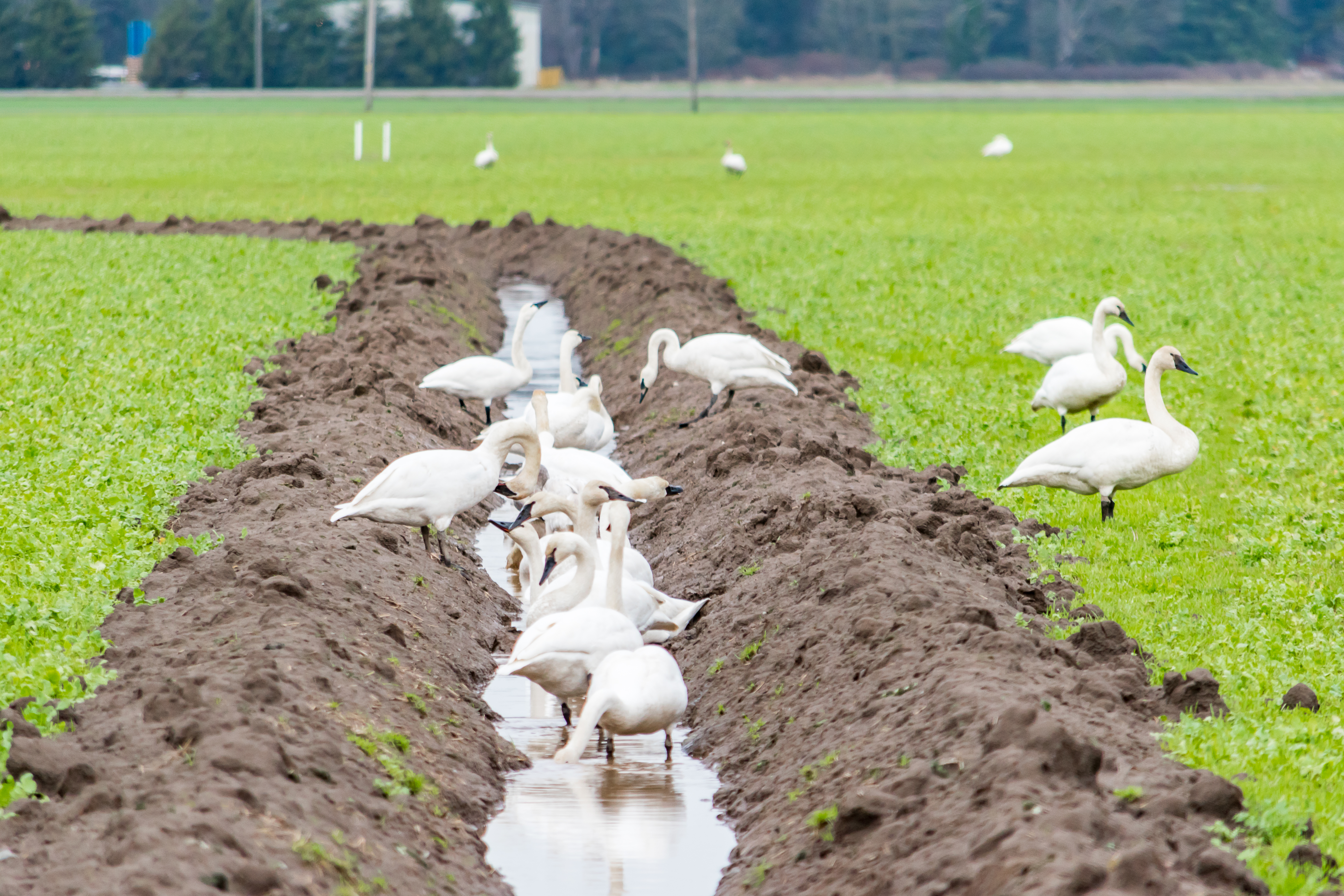
Direct and indirect contact with wild waterfowl
has proven to be one of the greatest risk 
factors for a flock contracting HPAI this year
Most flock owners have been doing a tremendous job protecting their birds. And even though there have been several detections in backyard flocks, efforts by backyard flock owners, commercial flock owners, and state and federal officials have thus far prevented infection in commercial flocks, which would have a significant impact on the food supply and Washington’s poultry industry. (Did you know eggs are frequently one of Washington’s top 10 commodities?)

It may be tempting to just let your birds run loose as the weather warms, but biosecurity is still as important now as it was two months ago when bird flu was first confirmed here. Hopefully, warmer summer weather will help lighten the virus load and cases will begin to decline.

This outbreak has been tough on flock owners, veterinarians, and especially our birds who have been isolated and unable to run free. Hang in there, and reach out to friends and fellow flock owners for support during this difficult time. A BIG thank you to all our flock owners who are doing everything they can to protect their flocks and the surrounding flocks.

  Visit agr.wa.gov/birdflu for more information, including the latest detections in the state. 

Tuesday, March 15, 2022

Biosecurity and protecting your horse from strangles

This week, a Snohomish County horse that recently attended a show in Whatcom County was diagnosed with strangles, Streptococcus equi, an endemic bacterial infection that is rarely fatal, but as the name suggests, can affect a horse’s respiratory system. 

There is no evidence the horse was contagious at the time or that it contracted the disease at the show.  

Since January, there have been reports of six other confirmed, laboratory-diagnosed cases of strangles in Okanagan, Clallam, Kitsap, and Pierce counties.

Private veterinarians usually manage the strangles cases reported to the Washington State Veterinarian’s Office, including imposing self-quarantine, implementing biosecurity measures, and executing testing protocols. WSDA field veterinarians contact those veterinarians to monitor these cases and provide support, including issuing official quarantine orders in some cases. 

When a quarantine is in effect, no horses are allowed to move on or off the premises, attend horse shows, or travel. It is actually against the law to expose other animals to contagious, infectious, or communicable diseases.

How to protect your horse against strangles

Any time you attend a show, WSDA recommends monitoring horse’s body temperatures twice a day and isolating horses for up to three weeks to monitor for disease. Oftentimes, fever will precede illness and early detection can help prevent disease transmission. The incubation period (time of exposure to time of clinical signs) can range from 3-14 days. While strangles is a concern to many horse owners, there have also been several cases of Equine Herpes Myeloencephalopathy reported in California, a potentially fatal viral disease showcasing why biosecurity practices are critical for horses that attend exhibitions or other events.  

Strangles is rarely fatal and the prognosis for recovery is usually very good with proper care. Symptoms include:

  • Fever
  • Abscesses in the mandibular lymph nodes
  • Nasal discharge that can include thick white and yellow mucus
  • Inflammation of the throat
  • Difficulty swallowing
  • Wheezing
  • Coughing
  • In rare cases, bleeding from the capillaries

Good biosecurity practices are the best defense against the disease. The Equine Disease Communication Center’s “What is biosecurity?” offers excellent recommendations. 

The EDCC also recommends the following:

  • When possible, isolate new horses for up to three weeks when they are being introduced to a new facility. 
  • If you have handled an infected animal during an outbreak, avoid coming in contact with susceptible animals. 
  • Wear protective clothing, avoid using the same equipment on multiple animals, and disinfect both your hands and equipment when moving between animals.

This “Strangles Fact Sheet” from the EDCC has more information on this disease, tips and suggestions.

Remember to notify WSDA if you become aware of a reportable disease by visiting our “Reportable Diseases” webpage.

Tuesday, January 18, 2022

WSDA to launch ‘carcass management preparedness’ training

Amber Betts
WSDA Communications 

Animal disease outbreaks, natural disasters, and technological emergencies threaten animal agricultural production in the United States. The potential impact on Washington’s economy from a disease outbreak in animal agriculture operations could be devastating. 

But a recent grant from the U.S. Department of Agriculture could help WSDA be better prepared.

Recently, the USDA Animal and Plant Health Inspection Service (APHIS) National Animal Disease Preparedness and Response Program (NADPRP) awarded WSDA $194,366 to launch the Carcass Management Preparedness Train the Trainer program. 

Preparing for and responding to foreign animal diseases (FADs) are critical actions to safeguard the nation’s animal health, food system, public health, environment, and economy. WSDA is the lead state agency in responding to domestic animal disease emergencies in Washington state. We work with federal, state, and local government agencies, educational institutions, industry organizations and animal producers to ensure adequate preparation.

 If euthanizing is required due to FAD, proper carcass management is a critical tool to contain an outbreak and maintain food security. 

In Washington state alone, thousands of large animals, mostly dairy and beef cows, died in the winter of 2019 due to extreme blizzard conditions, and many died in the summer of 2021 due to extreme heat conditions. While not a FAD outbreak, those two events highlighted several gaps in Washington state’s ability to respond to emergency carcass management needs in the event of a FAD:

  • Lack of comprehensive emergency mortality management plans at livestock operations.
  • There a limited availability of subject matter experts have who understand Washington’s incident command structure ,to provide technical assistance to livestock owners.

WSDA will work in partnership with Washington State University (WSU) to develop the Carcass Management Preparedness Train the Trainer Programs for Animal Agriculture Sector Responders in the Northwest.” 

APHIS provided $7.6 million for 36 projects across the country that are focused on (1) developing vaccination plans for FAD outbreaks, (2) supporting animal movement decisions in an FAD outbreak, or (3) delivering outreach and education on animal disease preparedness and response topics to targeted audiences.

The WSDA and WSU training will include multi-day demonstrations on mortality management, composting, above ground burial, and the use of grinding equipment. The project is developing guidance documents, best management practices, and a training framework. Materials will be available on a centralized mortality management resource public webpage to help all livestock agricultural professionals.

The target audience for the training, educational resources, and mapping tools include state and federal animal health officials, local emergency managers, veterinarians, extension agents, and other ag sector responders. Developing this cadre of subject matter experts will prepare Washington to respond and strengthen outreach and education on animal disease prevention, preparedness, and response. 

Officials are currently in the process of developing a training plan, including the dates, times, and locations of the trainings, expected to roll out this spring. For more information on the program, contact interim state veterinarian Dr. Amber Itle or WSDA’s Emergency Management program manager Erin Coyle. You can also visit our webpages for Animals Services or Emergency Management.