
Showing posts with label livestock. Show all posts

Monday, March 28, 2022

Hold your horses - what horse owners need to know about EHM and EHV-1

Dr. Bruce Hutton
WSDA Field Veterinarian

Spring is just around the corner and horses are going to be coming together under stressful conditions whether for a weekend trail ride, jackpot roping, or a large, nationally-organized event – prime conditions for equine herpes virus (EHV). 

Just this month, a horse in King County tested positive for non-neuropathogenic EHV-1 neurologic strain. Unfortunately, the horse had to be euthanized.

There are multiple strains of EHV-1 in horses. A diagnosis of EHM is made when a horse is infected with EHV-1 and showing neurological signs independent of what strain of the virus the horse is infected with. 

To be clear, the horse in Washington was not infected with the strain of virus currently causing an EHM outbreak in California. 

The outbreak in California is caused by the neuropathogenic strain of EHV-1 which is more highly contagious and more deadly than the non-neuropathogenic strain. 

The horse diagnosed in Washington was infected with the non-neuropathogenic strain which usually causes only mild respiratory diseases. Unfortunately, this horse also developed neurological signs (EHM) and had to be euthanized. 

With this recent case and the recent cases in California, it’s a good time to review your knowledge of EHV-1 and equine herpes meyloencephalopathy (EHM), and make sure you have a robust biosecurity program to prevent the spread of disease associated with commingling of horses.

What to watch for 

Most horses have been exposed to, or infected with, the equine herpes virus by the time they are two years old.

There are several equine herpes viruses, with EHV-1 and 4 posing the greatest risk to the horse community. Symptoms of EHV-1 infection in horses include: 

  • respiratory disease (rhinopneumonitis)
  • abortions
  • neonatal death
  • neurological disease

EHV-4 produces a mild to moderate respiratory disease in foals, occasionally causes abortions, and in extremely rare cases develops into EHM. 

After an initial EHV-1 infection, the virus remains in the body in its latent form, essentially hiding from the immune system, waiting for the opportunity to revert to its active form. Stress, caused by traveling, training, overcrowding, or competition, is often the trigger for the virus to revert.  

Once active, EHV-1 is highly infectious and spreads quickly through direct contact with nasal secretions or aerosol droplets. Direct horse-to-horse contact does not require the horses to have actual physical contact, only direct contact with the nasal discharges of an infected horse. 

People can’t be infected by the virus, but they often facilitate its spread through contamination of hands, clothing, equipment, tack, trailers, stalls, feed buckets, water buckets, and many other items. In addition, aerosol droplets can travel several feet to infect other nearby horses.


Once infected with EHV-1, horses will usually exhibit signs of illness within four to six days.  Clinical signs range from mild respiratory to severe neurological deficits. Typical signs of respiratory disease include fever, discharge from the eyes and nose, slight cough, depression, going off feed, and swollen lymph nodes. Clinical signs of EHM include fever, depression, hind end weakness and incoordination, loss of tail tone, head tilt, urine dribbling, and may present as down and unable to rise. 

EHM cases often have minimal to no respiratory signs. Unlike respiratory disease, from which most horses recover, EHM is a life-threatening disease with no cure. Treatment is limited to supportive care and the prognosis is poor with a fatality rate as high as 30 percent.  

Even though EHV-1 is highly contagious and can quickly spread among horses, it doesn’t typically persist long in the environment and can be neutralized efficiently with good hygiene practices. In fact, EHV-1 is estimated to persist in the environment for less than 7 days and no more than 30 days under ideal conditions.  

Available vaccines can prevent the respiratory and abortion forms of EHV-I, but none are labeled as preventing EHM. Maintaining a vaccination protocol for the respiratory and abortion forms of EHV-1 decreases viral shedding and may decrease the incidence of EHM. 

Strong biosecurity measures, which should be in place even in the absence of an outbreak, are essential for limiting the spread of EHV-1 and EHM.

Protecting your horse

Here are some recommendations to minimize the spread of EHV-1 before, during, and after commingling at a show or event: 

  1. Have a strong biosecurity plan and practice it at all times to prevent the spread of infectious agents.
  2. Keep horses current on all recommended vaccines and have health papers in order.
  3. Prevent horse-to-horse contact and provide each horse with its own equipment including tack, grooming equipment, water bucket, feed bucket and all other items. Do not share the equipment with other horses.
  4. Keep people from touching your horse, especially around the face, nose, and neck. If people do touch your horse (groomers, hair braiders, veterinarians, etc.), insist they first wash their hands with soap and water, or use an alcohol-based hand sanitizer, and again after touching your horse. 
  5. Bring several gallon jugs of your own water to water your horse so you won’t need to use a common hose.
  6. If a common hose is used for watering, make sure the nozzle and any other part which could touch the water bucket is disinfected. After the hose is disinfected, hold it high above the water bucket, do not touch any part of the bucket with the hose. Do not immerse the hose end into your water bucket when filling it. 
  7. Disinfect your shoes or boots right after the show and before returning to your barn.
  8. Wash your clothes immediately after attending a show.
  9. Don’t stable your horse with other horses. If you can, keep your horse in its trailer. If you must stable it, clean, and disinfect the area thoroughly.
  10. Check your horse’s temperature twice daily for at least two weeks after returning home and monitor them for the respiratory or neurological signs mentioned above. If a fever develops or signs appear, contact your veterinarian immediately and let them know you have recently traveled with your horse, and the particulars of the show

Reportable diseases

EHV-1 and EHM are reportable diseases in the state of Washington. Visit our Reportable Diseases webpage to report cases. 

After contacting your veterinarian, it is likely they will take nasal swabs and blood samples to check for EHV-1. It is important to isolate your horse and treat them as if they were infected until laboratory results come in.

Prevention, through good planning and good biosecurity plans, is always better than dealing with an outbreak. The Equine Disease Communication Center (EDCC) at equinediseasecc.org/alerts provides a good online tool for horse owners interested in checking out the current equine disease alerts in the United States and Canada. It’s always a good idea to check before you go.
Tuesday, February 1, 2022

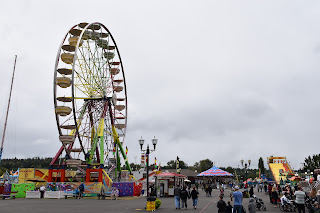
Report shines a light on benefits of state fairs

Megan Finkenbinder
WSDA Fairs Program Administrator 

Everyone loves a fair and a new report suggests they make good business sense, too. 

The report, Washington Agricultural Fairs: Economic and Social Impact, was released at the end of 2021 and found that agricultural fairs generate almost $400 million annually in business revenue. In addition, according to the report, fairs create thousands of jobs and open opportunities for the broader public to connect with Washington agriculture.

WSDA funded the study by Seattle-based Community Attributes Inc. (CAI) at the request of the Washington State Fairs Association. 

WSDA administers the Washington State Fairs Commission, an eight-member advisory committee that reports to the WSDA director and provides evaluations of fairs that help determine the amount of state funding provided to support fairs. 

For the report, researchers with CAI studied economic figures from 2019, just before the COVID-19 pandemic. The data paints a picture of a robust fair scene before the pandemic struck, prompting most fairs to cancel in 2020. However, several were held in 2021. 

The researchers found that fairs across the state play an important role in their communities, providing local jobs, and bringing visitors who spend their dollars at the fair and in the surrounding community. The report also found that fairs are helping create a new generation of farmers, ranchers and food producers through the wide range of ag-related showings and exhibits, often involving youth. 

In 2019, 69 agricultural fairs were held across Washington, including 38 county or area fairs, 19 community fairs, and 12 youth shows. Pierce, Yakima, Snohomish, Stevens, Cowlitz, Whitman, Grant and Spokane counties hosted half of all these fairs. 

The researchers broke down fair activity for 2019 by the numbers:

  • More than 3.3 million people visited fairs.
  • 68,000 exhibitors participated, including many from out of state.
  • 5,600 volunteers helped staff fairs statewide.

In terms of economic impacts, fairs contributed millions to state coffers, and are significant job creators for their communities. In addition, many non-profit and charity-based organizations raise substantial portions of their annual budgets through fundraising booths and activities at fairs.

 In 2019, the contributions of fairs also included: 

  • $397 million in business revenue
  • 3,200 jobs
  • $10 million in tax revenues  
While the report data was primarily from 2019, the researchers noted some 2020 activities undertaken by fairs to demonstrate the community value fairs offer. 

Several fairgrounds, for example, were used to support efforts in addressing the pandemic, serving as temporary or permanent locations for coronavirus testing and vaccination. Other examples included the Lewis County Fairgrounds operating a homeless shelter in April 2020 as part of the pandemic response. The State Fair Park in Yakima County opened its RV park and stables to people and animals fleeing the Evans Canyon Fire in August. 

Annual agriculture fairs create fun experiences and memories for millions in Washington State. They are also economic engines that generate jobs and revenue for the local communities that host them. What’s not to love about a fair?

Visit WSDA’s Agricultural Fairs webpage to view the entire report. 

Thursday, January 27, 2022

Veterinary Shortage Areas Designated in WA

Dr. Amber Itle
Washington Interim State Veterinarian

Are you having trouble finding a veterinarian to work on your livestock?  Is your veterinarian getting ready to retire and unable to find another veterinarian to provide service in your area? In the last year, the Washington State Veterinarian’s Office has been hearing increasing concerns about a shortage of food animal and livestock veterinarians in our state.

In response, the state vet’s office successfully nominated for inclusion four veterinary shortage areas in our state, opening the door for veterinarians to take advantage of both the U.S. Department of Agriculture Veterinary Medicine Loan Repayment Program (VMLRP) and the Veterinary Services Grant Program, also a USDA initiative. 

The shortage areas identified include Clallam, Adams, Franklin, Douglas, Grant, Lincoln, Asotin, Columbia, Garfield, and Walla Walla counties.  

The VMLRP helps qualified veterinarians offset up to $25,000 of student loan debt per year in return for their service in certain high-priority veterinary shortage situations. The shortage area designation also allows veterinary practices to apply for funds to expand service capability and capacity (i.e., obtain new mobile units, purchase ultrasound equipment, etc).  

For veterinarians interested in the loan repayment program, the application period is from February 1, 2022 through April 15, 2022.  

More information about both programs can be found at nifra.usda.gov or by emailing the USDA programs directly at VMLRP@usda.gov or VSGP@usda.gov. 

Tuesday, January 18, 2022

WSDA to launch ‘carcass management preparedness’ training

Amber Betts
WSDA Communications 

Animal disease outbreaks, natural disasters, and technological emergencies threaten animal agricultural production in the United States. The potential impact on Washington’s economy from a disease outbreak in animal agriculture operations could be devastating. 

But a recent grant from the U.S. Department of Agriculture could help WSDA be better prepared.

Recently, the USDA Animal and Plant Health Inspection Service (APHIS) National Animal Disease Preparedness and Response Program (NADPRP) awarded WSDA $194,366 to launch the Carcass Management Preparedness Train the Trainer program. 

Preparing for and responding to foreign animal diseases (FADs) are critical actions to safeguard the nation’s animal health, food system, public health, environment, and economy. WSDA is the lead state agency in responding to domestic animal disease emergencies in Washington state. We work with federal, state, and local government agencies, educational institutions, industry organizations and animal producers to ensure adequate preparation.

 If euthanizing is required due to FAD, proper carcass management is a critical tool to contain an outbreak and maintain food security. 

In Washington state alone, thousands of large animals, mostly dairy and beef cows, died in the winter of 2019 due to extreme blizzard conditions, and many died in the summer of 2021 due to extreme heat conditions. While not a FAD outbreak, those two events highlighted several gaps in Washington state’s ability to respond to emergency carcass management needs in the event of a FAD:

  • Lack of comprehensive emergency mortality management plans at livestock operations.
  • There a limited availability of subject matter experts have who understand Washington’s incident command structure ,to provide technical assistance to livestock owners.

WSDA will work in partnership with Washington State University (WSU) to develop the Carcass Management Preparedness Train the Trainer Programs for Animal Agriculture Sector Responders in the Northwest.” 

APHIS provided $7.6 million for 36 projects across the country that are focused on (1) developing vaccination plans for FAD outbreaks, (2) supporting animal movement decisions in an FAD outbreak, or (3) delivering outreach and education on animal disease preparedness and response topics to targeted audiences.

The WSDA and WSU training will include multi-day demonstrations on mortality management, composting, above ground burial, and the use of grinding equipment. The project is developing guidance documents, best management practices, and a training framework. Materials will be available on a centralized mortality management resource public webpage to help all livestock agricultural professionals.

The target audience for the training, educational resources, and mapping tools include state and federal animal health officials, local emergency managers, veterinarians, extension agents, and other ag sector responders. Developing this cadre of subject matter experts will prepare Washington to respond and strengthen outreach and education on animal disease prevention, preparedness, and response. 

Officials are currently in the process of developing a training plan, including the dates, times, and locations of the trainings, expected to roll out this spring. For more information on the program, contact interim state veterinarian Dr. Amber Itle or WSDA’s Emergency Management program manager Erin Coyle. You can also visit our webpages for Animals Services or Emergency Management. 

Thursday, October 31, 2019

Recognition for a career of service to the Central Washington State Fair

Chris McGann
Communications

WSDA Director Derek Sandison presents retiring Central
Washington State Fair Manager Greg Stewart with the
Director's Citation Award. 
Greg Stewart hired on with the Central Washington State Fair the same year singer songwriter Don McLean topped the music charts with his iconic song “American Pie.”

This year, after almost a half century with the fair, Steward announced his retirement as the fair’s general manager.

With his hit song, McLean evoked and payed tribute to a transformative era in music.

Likewise, it’s only fitting that with Stewart’s retirement, we take time to celebrate the man who helped transform the fair from a small, annual event to a year-round venue for wide-ranging events and continued to encourage kids to get involved and excited about agriculture.

Last week, WSDA Director Derek Sandison presented Stewart with the Director's Citation Award.

A patriotic spread of Washington produce at the fair.
“This award is a small token compared to what Greg has accomplished in his career, he moved the dial bigtime," Sandison said.

And through it all, Stewart never forgot where it all started.

"Greg made sure this fair stayed true to its agricultural roots and promoted agriculture as a core function,” Sandison said.

Stewart’s history and achievements are well known to most anyone who has been a part of the Central Washington State Fair. His impressive record and has resulted in the betterment of fairs not only in Washington, but across the entire fair industry.

Shortly after hiring Stewart in 1972, the Central Washington Fair Association promoted him to general manager of what was then a five-day fair, overseeing a fulltime staff of three people.
A lot has changed over those 48 years.

The Central Washington State Fair and the 120-acre fairgrounds, now known as State Fair Park, have grown considerably. The fair is now a ten-day event recognized as one of the premiere events in the Northwest. Fulltime employment has grown to 22 people who help oversee and accommodate some 222 annual event days.

From the small fair he took on 48 years ago, Stewart has built an entertainment hub for the entire region.

Stewart oversaw management of the Yakima Valley SunDome located at State Fair Park. The 8,000-seat SunDome, is a $20 million multi-purpose facility now home to concerts, rodeos, and numerous other events throughout the year.

He also oversaw the management of Yakima County Stadium which opened at State Fair Park in 1993. In 2014, Yakima County Stadium became the new home to the Yakima Valley Pippins, a West Coast League baseball team.

In 2000, the former Yakima Meadows horse race track located on the grounds was turned into a three-eighths-mile racetrack, now called State Fair Raceway.  The all-clay racetrack is used for sprint car and dirt-track car racing.

Stewart was also director and vice president of the Western Fairs Association 1979-1981 and a Hall of Fame recipient in 1995. He was the first recipient outside of California to be on the Western Fairs Association Board and to receive the Hall of Fame award.

Come one! Come all! Come tall!
In October 2018, Stewart received the Lifetime Achievement Award established in 2014 by the Washington State Fairs Association Board of Directors.  This award is to recognize an individual's accomplishments and contributions to the fair industry.

Stewart has been pivotal in establishing relationships with the Hispanic and Native American communities. In 2018, he helped Yakima create a Sister City partnership with Hadong, South Korea and their Green Tea Festival.

Born and raised in Olympia, Stewart attended Centralia College in 1963 and graduated from Washington State University with a degree in agricultural economics. He served in the U. S. Army 1966-1969, including a tour of duty in Vietnam.

Stewart and his wife, Karen, live in Selah, and in his spare time he enjoys traveling, boating, horses, fishing, and spending time with their daughter Tami and her family.

Tuesday, October 15, 2019

Eggs crack top 10 list and other highlights

Chris McGann
Communications

Eggs cracked this year’s top 10 list last year with
a 70 percent jump in production value.
Washington’s agricultural production top 10 list featured ups, downs and a new listing in the annual U.S. Department of Agriculture (USDA) report released this week.

Our state produced an estimated $9.67 billion of agricultural commodities in 2018, down 2 percent from the previous year.

Notable rankings 

The value of all Washington grape production, second only to California’s, hit a record high with an estimated value of $361 million, a 13 percent increase from 2017.

The value of grape production in Washington hit a record high.
The $2.19 billion estimated production value of apples was a 10 percent drop from the previous year, but apples remained Washington’s top commodity and our state maintained its status as the nation’s number one apple producer.

And eggs cracked this year’s top 10 list with a 70 percent jump in production value estimated at $241 million. Pears fell off the list as the 2018 value declined 15 percent to an estimated $211 million.

The 2018 top 10 list

The rest of the list remained largely unchanged with the following rankings.

 1. Apples              $2.19b
 2. Milk                  $1.13b
 3. Wheat $845m
 4. Potatoes            $788m
 5. Cattle                $652m
 6. Hay                   $519m
 7. Hops                 $428m    (ranked 8th in 2017)
 8. Sweet Cherries $426m  (ranked 7th in 2017)
 9. Grapes              $361m
10. Eggs $241m

Apples remain at the top of the list for production value. At
an estimated valued of $2.19 billion, they make up 23 percent
 of our total agricultural value.
The heavy hitters

The top five commodities for 2018 had a combined value of $5.60 billion, or 58 percent of the year’s value for all commodities.

Other upticks

There were several commodities that did not make it into the top 10 production list, but showed significant increases in value from the previous year.

These include onions, which saw an increased value of 10 percent to $178 million in 2018. Blueberries also increased, by 21 percent from 2017 to reach $139 million in 2018. Barley value of production increased 55 percent to $21.5 million in 2018 and the value of canola, at $20.3 million, increased 23 percent from the previous year.

A few slips

Five of the top 10 commodities declined in value from the previous year, including apples, cattle and calves, hops, and sweet cherries. In addition to pears, other commodities that declined in value in 2018 were raspberries, down 38 percent to $35.9 million; and green peas, down 21 percent to $22.8 million. 


Wednesday, April 10, 2019

Keeping African Swine Fever out of the United States

Chris McGann
Communications

Last month, the U.S. Department of Agriculture (USDA) took to the internet with a nationwide call to arms against a looming threat to the U.S. pork industry: African Swine Fever (ASF).

There is no cure for African Swine Fever, preventing it from infecting pigs in
the United States requires vigilance and strong biosecurity measures. 
“African Swine Fever has never been detected in the United States. However it is a very real threat,” said Secretary of Agriculture Sonny Perdue in a video message. He said the disease is "spreading around the world right now and affects both domestic and feral pigs.”

ASF is a devastating, deadly disease that would have a significant impact on U.S. livestock producers, their communities and the economy if it were found here. There is no treatment or vaccine available for this disease. The only way to stop this disease is to depopulate all affected or exposed swine herds.

Not a health threat to humans

Along with the strong warning, Perdue emphasized that humans are not affected by ASF and it is not a threat to our food supply.

“Within the U.S. we are working with many partners including states, veterinarians, and industry organizations to raise awareness of this deadly disease and how it spreads,” Perdue said.

WSDA’s role

WSDA is joining the effort to raise awareness.

Even though our state is not thought of as a big pork producer, Washington is the home of 3,000 breeding sows on approximately 376 farms, according to NASS.

Interim Washington State Veterinarian Dr. Amber Itle said ASF is highly contagious and it’s incumbent on us to be on the lookout for it, practice effective biosecurity measures, and help prevent the disease from infecting  both commercial and feral swine populations.

“ASF is only a plane ride away,” Itle said. “We are asking for everyone’s help in preventing it from getting here to begin with.”

A global threat

The disease has been a persistent and costly problem for pork producers in other countries. Since 2007, active ASF outbreaks have been reported in multiple countries across Africa, Asia and Europe, in both domestic and wild pigs.

The ease and speed of international travel combined with the potential for this disease to cause animal suffering, economic losses, and food supply interruptions makes ASF a serious concern for both farmers and consumers.

In the video released with the announcement, Secretary Perdue said a U.S. outbreak of ASF could cripple the pork industry.

“We want everyone who comes in contact with pigs, from the large farm owners to the owners of a single teacup pig and even international travelers and petting zoo visitors, to understand how easily this disease can spread and the importance of keeping our U.S. pigs free of this disease," Perdue said.
“The U.S. pork industry supports more than half a million jobs, the majority of those in rural areas,” he said. “We know what’s at stake and we are determined to keep African Swine Fever out of the United States.”

How the virus spreads

• Direct contact with feces, urine, discharges, blood, or tissues from infected pigs
• Carrier swine and their relatives, especially wild boars, warthogs, and feral pigs
• Feeding raw, undercooked or smoked pork products to swine
• Contaminated equipment, footwear, clothing, food, vehicles, and facilities
• Fly, lice, and mosquito bites
• Soft ticks of the genus Ornithodoros (a host for the ASF virus)

Signs of ASF

• Sudden death or chronic illness
• Abortion
• High fever
• Weakness
• Depression
• Poor appetite
• Red or blue-tinged skin
• Skin hemorrhages
• Diarrhea or constipation

Treatment and prevention

ASF cannot be treated. Efforts focus on containing the disease to limit the affected outbreak area, euthanizing all pigs on affected farms, and investigating the outbreak to identify the source. Prevention measures include close monitoring of animal health, effective biosecurity measures, animal movement regulation, proper feeding practices, control of wild hogs, and tick-vector control.

If you raise pigs, monitor all animals daily for signs of illness. Call your veterinarian immediately if you see unusual signs of illness such as high fevers, skin discoloration, or sudden death. Report any high mortality or morbidity event to the State Veterinarian’s Office.

Obtain a Certificate of Veterinary Inspection for interstate movement of livestock. Quarantine herd additions for 30 days or keep a closed herd.  If you travel internationally, take extreme biosecurity precautions when you return.

For more information about ASF, visit WSDA’s Animal Services Division web page.

Monday, October 31, 2016

WSDA hits the rodeo circuit to protect animal health

David Bangart
Livestock/Animal Health Inspector


WSDA Animal Services staff working at the Spokane Rodeo. 
During the busy Washington rodeo season over the last few months, staff from the WSDA Animal Services Division attended several of these events. Officials set up inspection points to assure that both participants and stock contractors were complying with animal health and movement laws.  

Agency investigators and inspectors attended check-in at four of the larger livestock events held in Omak, Ellensburg, Spokane, and Lewiston, Idaho. 

This was the third year WSDA officials were invited to attend the Idaho event and work alongside Idaho authorities to make sure animals in transit between the two states complied with animal health and livestock identification rules and regulations. Unfortunately this year’s event in Idaho was hindered by poor weather conditions, canceling many of the planned activities. 

Later that week in September, roles reversed and Idaho authorities were invited to participate in a compliance effort at the Spokane Rodeo. The Spokane rodeo attracted many contestants from across the western states and was an extremely valuable experience for all involved personnel. 
Brand inspection supervisor, Kris Budde (center) and investigator
Bryant Blake (right) talk to a participant at the Spokane Rodeo. 


Throughout the four events, WSDA officials contacted 121 participants, resulting in opportunities to educate about 39 identified violations -- mostly associated with invalid health or proper ownership paperwork. Those found in violation were issued warnings and required to come into compliance before leaving the event. 

Compliance efforts were sensitive to event operations and timelines and were conducted on the grounds with the permission and support of the organizers. This was yet another example of interstate cooperation to protect the health and wellbeing of our state’s livestock industry.

Monday, August 1, 2016

WSDA names assistant state vet, search for state vet continues

Hector Castro
Communications 

A veterinarian with extensive experience with large animals and agriculture will be joining WSDA as the new assistant state veterinarian.

Dr. Scott Haskell
Dr. Scott Haskell, whose family raised beef cattle, sheep and tree crops, has more than 30 years experience as a veterinarian. He begins his new position with the agency on Aug. 1.

Dr. Haskell is originally from Oregon and studied at the University of California, Davis. He was in large animal veterinary practice for 18 years before entering academia and public service, serving as a professor with Yuba College in California, where he was the director of the Veterinary Technology Program and chair of the school’s Agriculture and Plant Science Program.

Dr. Haskell is experienced in disease outbreak investigations and biosecurity and has a long history of working with the livestock industry, agriculture fairs and is currently a 4H advisor.

Washington’s Office of the State Veterinarian has a wide range of responsibilities which include enforcing state and federal regulations on livestock movement, investigating animal disease outbreaks, maintaining animal health records, and other animal movement records, as well as safeguarding the public by identifying and limiting the exposure to zoonotic diseases through disease surveillance, identification and traceability.

WSDA is continuing its search for a new state veterinarian, a position that is currently vacant.

Tuesday, March 22, 2016

Shipping cattle to another state? Quick rule reviews available online

David Hecimovich
Animal Disease Traceability manager

If you’re shipping dairy or beef cattle across state lines and want quick information on interstate travel requirements, there’s a relatively new website you should check out. 

InterstateLivestock.com, sponsored by the U.S. Animal Health Association (USAHA) and the National Institute for Animal Agriculture, has been operating since October. 

The information posted on the website makes it easier for producers, veterinarians and marketers to understand and meet animal health import requirements before moving cattle. Once online, users enter the state they are shipping from and the destination state. The user then will be asked pertinent questions including species, sex, and age of the livestock; certificate of veterinary inspection status, and other necessary details. 

State animal health officials collaborated on creating the site. Each state, including Washington, updates its import requirements on the website when new or amended livestock rules are adopted. 

The website provides instant access to shipping information without having to call a specific state about requirements. Navigating the website is quick and easy to follow. Check out InterstateLivestock.com today.

Tuesday, October 27, 2015

Brand owners--be on lookout for WSDA letter in November

By Mike Louisell

More than 6,000 brand holders will receive notices starting this week reminding livestock owners it’s time to renew their brands. Current livestock brands expire on Dec. 31.

Every four years WSDA renews brands and updates its popular brand book, a large volume showing brands that often have been in families for decades. The brands, featuring quarter circles, anchors, channel irons and a host of other symbols, show ownership of the animal and deter theft.

It’s been said that a brand is your livestock’s best return address, comparable to the title you carry in your vehicle to prove ownership. That is because brands are unique to specific ranches and other properties and the families that own them.

Brands not renewed can be re-recorded after a one-year holding period. WSDA typically advertises available brand designs in the “Ketch Pen,” published by the Washington Cattlemen’s and Cattlewomen’s Association.

The cost to renew your brand is $120, good for four years. Payment can be made with check, money order or credit card. Go to www.agr.wa.gov/FoodAnimal/Livestock or call (360) 902-1855 for more information on livestock brands.

Pre-order your 2016 Brand Book now

Take advantage and pre-order a copy of the 2016 Brand Book when you renew your brand. The book will be available next summer, but supplies will be limited for those who do not pre-order. Costs are $25 for a printed copy or $10 for the e-book on CD-ROM.

Wednesday, August 19, 2015

Count stands at 10 horses with West Nile virus—all in Eastern Washington

Communications Office

We now have 10 cases of horses struck with the West Nile virus, with those horses spread across seven counties in Eastern Washington.

West Nile virus is a disease carried by mosquitoes which can be fatal to horses. Symptoms include loss of appetite, lethargy and loss of coordination. Horse owners are urged to keep horses indoors at dawn and dusk, when mosquitoes are prevalent, especially if their horses have not been vaccinated against West Nile.

There's still time to vaccinate for this mosquito season. And, for greater comfort for your horses, consider insect repellent sprays or wipes, fly sheets or fly-repellent feed supplements.

The newest West Nile virus cases have been found in Grant, Kittitas and Lincoln counties and include:
  • A 9-year old Quarter horse mare in Moses Lake which became ill but is improving with treatment. That horse was last vaccinated for the virus four years ago.
  • A 5-year old Quarter horse mare in Moses Lake contracted the virus and was euthanized. There was no vaccine history for this horse.
  • A 14-year old Quarter horse gelding in Ellensburg contracted the virus and was euthanized. It appeared the horse had not been vaccinated for at least the past five years. 
  • A 5-year old Appaloosa mare in Almira became ill and was euthanized. It did not appear that the mare had been vaccinated for the virus.
This summer, there have been several cases of horses with West Nile virus in Adams, Benton, Franklin and Yakima counties. So far, no equine cases involving Western Washington horses have been reported. 

West Nile virus is a reportable disease, so veterinarians who learn of potential cases in horses or other animals should inform the State Veterinarian’s Office in Olympia by calling (360) 902-1881.


Monday, August 17, 2015

How dairy producers and livestock sellers can help keep cattle healthy and safe

by Dawn Grummer

Are you a livestock seller or dairy producer selling cattle under the “15-head” livestock inspection exemption?  If you are, there are a few changes you should know about.

The first change is that, beginning  July 1, 2015, WSDA began collecting an Animal Disease Traceability (ADT) fee on all cattle. The 15-head exemption from livestock inspection does not exempt dairy producers or livestock sellers from paying this new ADT fee. In fact, failing to pay the fee can result in a civil penalty of up to $250 per violation or per head.

We were contacted recently by a livestock seller asking for an easy way to track transactions and submit the ADT fee. Working with that seller, WSDA's Animal Disease Traceability Program created an ADT Fee Remittance form  that you can use. This form will make tracking ownership transfers under the “15-head exemption” and the remittance of the ADT fee easy for dairy producers or livestock sellers.

So, how much is this fee? The new rule established an ADT fee of 23 cents per head on all cattle sold or slaughtered in the state or transported out of state. There is a fee of 5 cents per head on all out-of-state cattle that are shipped directly to a federally inspected slaughter facility. 

Normally, a WSDA livestock inspector will collect the fee at the time of inspection. However, right now there is an exemption from the livestock inspection requirements. Commonly known as the “15-head exemption,” it allows individual private sales of unbranded female dairy breed cattle involving 15 head or less to take place without inspection by the WSDA.

The 15-head exemption is going away and will no longer be available as of January 1, 2016. At that time, all cattle will be required to get a livestock inspection or report livestock ownership transfers through an Electronic Cattle Transaction Reporting system (ECTR), once made available by the department.

No one likes to pay a fee. But the ADT fee is about protecting the livestock industry. The money raised through this fee will help support our state's animal disease traceability activities, including maintaining a robust database that can be used in an animal disease outbreak to quickly and accurately locate and quarantine the source of the disease. Having this ability will not only provide assurance to your customers that they are purchasing safe, quality products, but also will provide each of you assurance that in the case of a disease outbreak, the risk of spreading the disease is greatly limited.

Reporting ownership transfers and paying the ADT fee is a vital step in protecting public health and maintaining the economic vitality of our livestock industries. If you want more information on our state's animal disease traceability efforts, email adtwa@agr.wa.gov or call our Animal Disease Traceability Program at (360) 725-5493 or (360) 902-1987.


Wednesday, August 12, 2015

What’s in your trailer or truck?

Communications Office 

WSDA investigators talk with hay haulers.
With summer travel and harvests well under way, WSDA is making an extra effort to ensure drivers transporting agriculture products or livestock meet state requirements meant to safeguard our crops and livestock.

As part of this effort, we teamed up with the Washington State Patrol to conduct emphasis checks along State Route 12 at the end of July. Investigators from WSDA’s Agricultural Investigations and Animal Health programs waved drivers off the road and into the check point set up at White Pass.

There, our staff talked to the drivers - some pulling trailers filled with cattle or horses, and some hauling hay or other agricultural crops. The investigators wanted to make sure drivers transporting this material had proper ownership documents, appropriate licenses, records of necessary inspections or animal health certificates when needed.  

State troopers joined in to ensure trucks and trailers met commercial vehicle regulations. The troopers conducted safety inspections, enforced compliance with weight limits and checked for current licensing and registration.

WSDA investigators spoke with nearly 40 drivers hauling hay, sweet corn, carrots, apples, watermelon and other field crops - most of this bound for farmers markets and private sales. Two horses and 140 cattle made up the livestock being carried over White Pass. 

Corn hauler chats with WSDA investigators.
Five violations were detected involving ag commodity dealers who either were not licensed or had a brand violation involving livestock. Some verbal and written warnings were also issued. Of those found in violation of licensing requirements, two have already begun the process of getting licensed and one has already become licensed. 

For team members, this was a successful effort - they were able to find some violations of state rules and get those people into compliance, but more importantly, they were able to educate a number of people about the rules involving livestock and commodities. 

The team is planning to conduct more of these checks through the summer, including in an area near the Idaho border. If you need info on licensing for commodity dealers, visit the Agricultural Investigations Program. For information on requirements regarding livestock, visit the Animal Health Program.

Wednesday, August 5, 2015

Inspecting livestock in the 21st Century

By:  Lynn Briscoe
Animal Services Division 

Our Livestock Inspection Program working at the Stockland Livestock Auction in Davenport recently hosted a few guests from Idaho's State Brand Department, Department of Agriculture and even the federal Department of Homeland Security.

WSDA's Kyle Schaffer demonstrates the new
system to Ken Wood of the Idaho Brand Board.
Why did they join us? Like many of our counterparts in neighboring states and nearby Canadian provinces, the representatives from Idaho and the federal government were interested in WSDA's new electronic system for tracking data collected during a livestock inspection.  

All this month, our Livestock Inspection Program has been working on this new system, created thanks to funding provided through the support of the Legislature and our partners in Washington's dairy and cattle industries. The application that was developed allows our brand inspectors to collect the same inspection data they always have, but store it electronically on a
computer tablet, rather than jotting it down on a paper form.

WSDA's Kris Budde enters livestock
data into a computer tablet. 
This makes the information easier to store and easier to retrieve. Modernizing this data collection not only creates efficiencies within the program, but also enhances the department’s animal disease traceability efforts. It updates methods and processes by which livestock movement information is collected, stored, and easily made accessible to animal health officials. That would be critical during an animal disease outbreak.  

The representatives and board members from the Idaho's brand and agriculture departments joined us July 26 and 27 to watch the new system in action and take part in its live implementation during the scheduled sale. 

If you are at a public livestock market and see our staff using a computer tablet, feel free to take a look at the process they are following. It is an historic change for the agency and animal disease traceability in our state.