Showing posts with label animal care. Show all posts

Friday, July 1, 2022

Summer is here, but bird flu hasn’t flown the coop

Karla Salp
Communications

Chickens not confined to a covered shelter are
at greater risk for contracting bird flu
It’s been a bad year for bird flu across the country, even though it was only first detected in Washington in early May. At the time, state veterinarians were hopeful that Washington would scrape by without any cases or, once it arrived, that we would be over the worst of it by the end of June. Unfortunately, neither happened.

Washington’s backyard flocks and wild birds are still contracting highly pathogenic avian influenza, with the first detection in Kitsap County happening only this week. The prolonged period of detections has backyard flock owners asking when they can relax the biosecurity measures they have been taking to protect their flocks.

The short answer is: not yet.

Given the number of detections still occurring, Dr. Amber Itle, Washington State Veterinarian, continues to recommend that owners keep their birds isolated until 30 days after the last detection in the state.

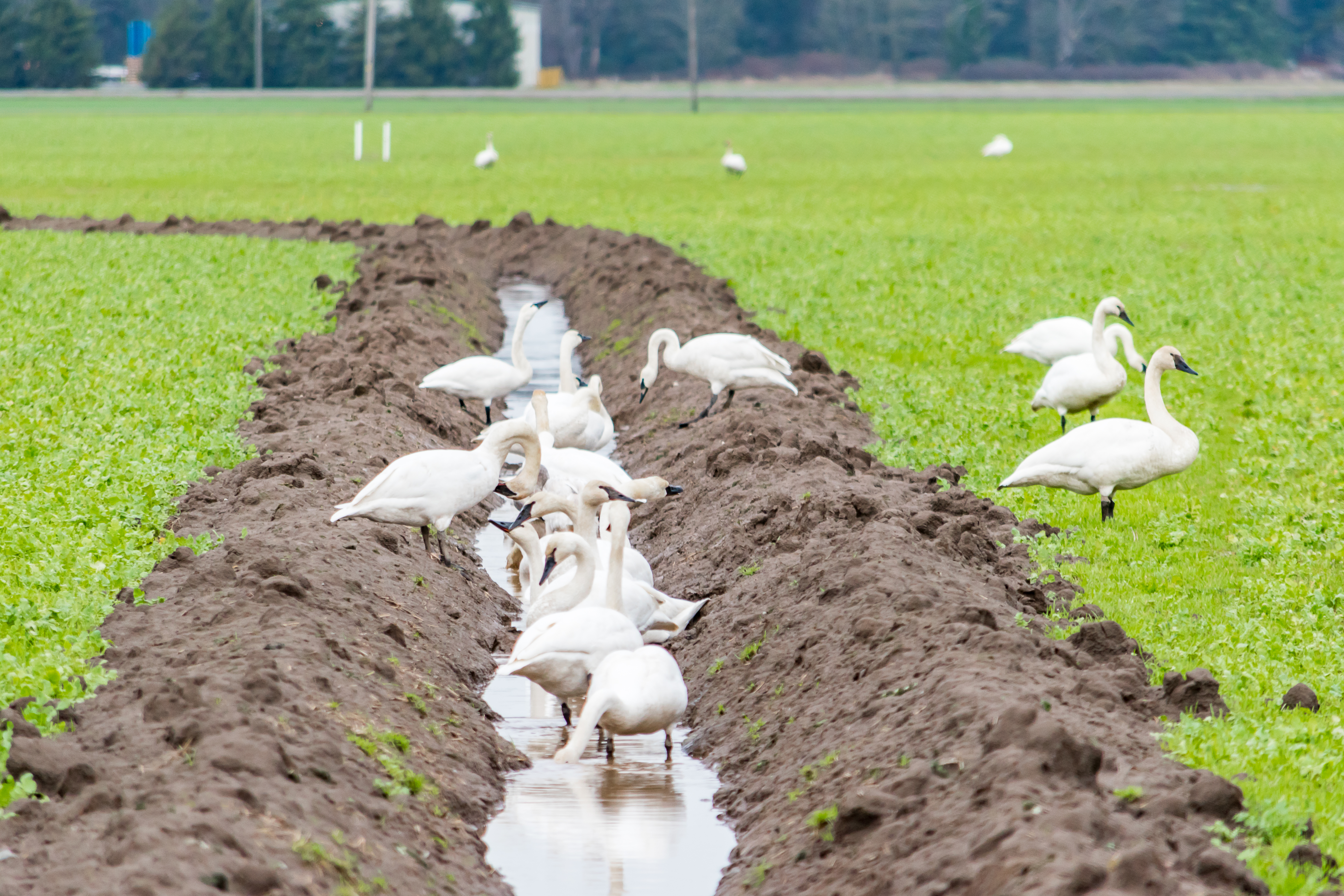
While this may be challenging for owners, what they are doing is working! All of the flocks that have had detections have had contact with wild birds, especially wild waterfowl.

Keeping your birds covered and confined is best, but if you can’t, then here are some steps you can take to reduce your risk:

  • Separate domestic birds from wild birds
  • Separate domestic poultry from domestic waterfowl
  • Discourage wild birds from coming near your flocks
  • Only feed domestic birds indoors and remove feed at night (when wild birds often feed)
  • Lock up your flock’s feed in containers with lids
  • Remove bird feeders that might attract wild waterfowl
  • Fence off the ponds
  • Cover the chicken yard with netting·

Direct and indirect contact with wild waterfowl
has proven to be one of the greatest risk 
factors for a flock contracting HPAI this year
Most flock owners have been doing a tremendous job protecting their birds. And even though there have been several detections in backyard flocks, efforts by backyard flock owners, commercial flock owners, and state and federal officials have thus far prevented infection in commercial flocks, which would have a significant impact on the food supply and Washington’s poultry industry. (Did you know eggs are frequently one of Washington’s top 10 commodities?)

It may be tempting to just let your birds run loose as the weather warms, but biosecurity is still as important now as it was two months ago when bird flu was first confirmed here. Hopefully, warmer summer weather will help lighten the virus load and cases will begin to decline.

This outbreak has been tough on flock owners, veterinarians, and especially our birds who have been isolated and unable to run free. Hang in there, and reach out to friends and fellow flock owners for support during this difficult time. A BIG thank you to all our flock owners who are doing everything they can to protect their flocks and the surrounding flocks.

  Visit agr.wa.gov/birdflu for more information, including the latest detections in the state. 

Thursday, October 10, 2019

Deadly deer virus detected in Western Washington yak

Chris McGann
Communications

The state animal disease lab confirmed a case of EHD in a
 Whatcom County yak this week.
Last week, a Whatcom County veterinarian  euthanized a six-year-old yak cow showing symptoms of Epizootic Hemorrhagic disease (EHD), a potentially deadly virus that primarily effects wild deer populations, but occasionally crosses over to cattle.

A subsequent Washington Animal Disease Diagnostic Laboratory (WADDL) necropsy confirmed the animal had EHD.

Two other yaks from the herd died in recent weeks after displaying similar clinical signs such as stiff gate, drooling and nasal secretions that are consistent with EHD.

According to the owner's report, the euthanized yak began showing signs of illness on Sept. 30.  It appeared to isolate itself from the herd, developed a thick-mucous runny nose, and had difficulty moving. The owner also observed small droplets of blood coming from possible fly bites near its eyes. They called the vet.

The clinical signs of EHD are similar to the much more devastating foot-and-mouth disease, so it is important to report suspected cases to the State Veterinarian.

EHD is not a threat to human health.

The the owners took the euthanized animal to WADDL in Pullman, where lab reports confirmed the EHD diagnosis.

The outbreak in Western Washington comes on the heels of a confirmed EHD diagnosis in four cows from Franklin and Walla Walla counties.

Biting midges or Culicoides gnats, commonly known as “no-see-ums” are the main way the disease is spread. Female biting midges can ingest blood from infected animals and then feed on uninfected animals. These midges typically breed near mud, so EHD outbreaks often occur when cattle and other ruminants congregate in wet areas.

No vaccines are available for EHD, so controlling the midges by eliminating standing water from areas used by cows, applying insecticides around water areas to decrease the swarms, or using bug repellent on the cows is the best defense.
.

For more information visit WSDA’s Animal Services Division webpage.

Monday, September 30, 2019

Deadly deer disease diagnosed in four Eastern Washington cows

Chris McGann
Communications

Controlling midges is the best defense against EHD.
Four cows in Franklin and Walla Walla counties were diagnosed this week with Epizootic Hemorrhagic disease (EHD), a potentially deadly virus that primarily effects wild deer populations but occasionally crosses over to cattle.

Cattle owners should be on the lookout for EHD symptoms such as excessive drooling, lethargy, difficulty walking, or oral and nasal lesions with ulceration, which are similar to the much more devastating foot-and-mouth disease.

Fever and anorexia due to the oral erosions were seen in the recently diagnosed cattle. Supportive care is the only treatment for infected cows.

Differentiating EHD from other animal diseases requires laboratory testing so you should contact your veterinarian if you observe these symptoms.

“Although EHD is seldom prevalent in cattle, we must show an abundance of caution and investigate each case due to the similarity of symptoms this disease has with the highly contagious and economically disastrous foot-and-mouth disease,” said Washington State Veterinarian Dr. Brian Joseph.

EHD is not a threat to human health.

The disease usually occurs in cattle where environmental conditions support large populations of biting midges.

Biting midges or Culicoides gnats, commonly known as “no-see-ums” are the main way the disease is spread. Female biting midges can ingest blood from infected animals and then feed on uninfected animals. These midges typically breed near mud, so EHD outbreaks often occur when cattle congregate in wet areas.

All ruminants can be affected, but generally it is a deer disease.

No vaccines for EHD are available for EHD so controlling the midges by eliminating standing water from areas used by cows, applying insecticides around water areas to decrease the swarms, or using bug repellent on the cows is the best defense.

In the coming weeks, the cool fall weather and frost is expected to limit the gnat population and the spread of the disease.

For more information visit WSDA’s Animal Services Division web page.


Wednesday, August 21, 2019

A paradigm shift for disease traceability

Chris McGann
Communications

Veterinarian Jake Murphy swipes a RFID reader wand past
the ear tag on a cow at Everson Auction Market. The system
quickly and accurately records disease traceability information.
During lunch hour on a warm summer day earlier this month, WSDA Director Derek Sandison walked into the Everson Auction Market café and a scene that harkened back to the small-town America of 60 years ago. He settled onto a vintage swivel stool along a narrow lunch counter -- friendly waitress, handwritten menu on the wall, cash only.

Sandison ordered a burger.

This is probably not the first place most people would look to find cutting-edge software or industry-leading technology.

Through the doors behind him, the tidy auction floor was bright with a fresh layer of sawdust. Early birds talked quietly in the bleachers while they waited for the afternoon sale to start.

The pace matched the setting when the bidding began. A tiny Jersey bull calf was first on the block, then a few other slightly larger calves, and finally some individual heifers nervously stamping around the pen against the cadence of the auctioneer’s call.

WSDA Director Derek Sandison (right) hears about a new RFID
project from veterinarians Amber Itle and Brian Joseph. 
But Sandison hadn’t come to buy cattle, or for the nostalgia.  He was there to see the future of animal disease traceability (ADT).

Behind the scenes at this small sale barn in this little town just south of the Canadian border, a demonstration project initiated by WSDA veterinarian Dr. Amber Itle, in partnership with the U.S. Department of Agriculture, is ushering a new era for ADT.

This first-of-its-kind project in Washington is integrating radio frequency identification (RFID) technology that allows sale-yard veterinarian’s to capture electronic ID with a wand reader. This animal health information is used to generate electronic Certificate of Veterinarian Inspections (CVI), brucellosis test records and brucellosis vaccination records in the market system.

Dr. Itle gave Sandison a tour of the facility’s veterinarians inspection area where animals that will be sold at the market and returned to the country receive an official RFID ear tag the vet enters into the system with a wand reader. With that, CVI and vaccinations administered can be quickly and accurately recorded.

Animals headed for slaughter pass by a “panel reader” for RFID in the cattle chute to record the time an place of the animal prior to going to the harvest facility where they will be read one last time to confirm the animal was actually killed.

Sandison was impressed by what he saw.
A Holstein cow moves past an RFID reader panel in a chute
at Everson Auction Market.  

“This program is much more than a demonstration project,” he said. “It’s a paradigm shift for the industry.”

All ADT market data is transmitted electronically to WSDA’s ADT system, “Animal Tracks,” in real time at the close of each sale. Everson has been successfully using the enhancements for more than a year.

ADT is critical to ensuring a rapid response when animal disease events take place. An efficient and accurate traceability system reduces the number of animals and response time involved in a disease investigation, which also reduces the economic impact on cattle producers.

In the last year, WSDA’s ADT Program has focused on building infrastructure for capturing electronic individual identification at public livestock markets and slaughter facilities. This year, WSDA is working to identify additional opportunities to electronically collect traceability movement information during commerce and comingling locations. These comingled locations pose a higher risk for potential disease spread and are a higher priority areas for ADT.

Currently, all of Washington’s major livestock markets are in the process of implementing upgrades. Once completed, WSDA will have full traceability information for 99 percent of market cattle.

Slaughter facilities 

As of February 2019, four of the largest slaughter facilities in Washington are capturing and sharing official individual RFID information at harvest. Currently, WSDA’s Animal Tracks can capture 98 percent of all animals with electronic official individual RFID tags harvested in our state. WSDA is the first state to implement a tag retirement system in the country.

Long-term phasing in for the ADT Program

USDA plans to phase in mandatory official RFID by 2023. Identifying the majority of cattle with RFID is much more accurate and efficient than a system that requires manual recording of individual identification.

WSDA is currently using local and federal funds to purchase official RFID tags for markets collecting and reporting animal health and movement information electronically to the state veterinarian. In addition, WSDA has been using funds to purchase tags in preparation for a tag promotion for veterinarians that perform brucellosis vaccinations and producers that use the Electronic Cattle Transaction Reporting system later this year. Currently, WSDA provides free tags to all markets that report electronically.

This temporary subsidy will help producers transition to the RFID before USDA phases out metal tags starting in December 2019.

For more information about ADT and RFID, visit the Animal Health section of our web page.

Thursday, May 30, 2019

Practice good biosecurity to protect your horse from strangles

Dr. Amber Itle
Washington Assistant State Veterinarian 

Strangles in horses, or Streptococcus equi infections, is a contagious disease endemic in Washington, but not usually fatal. Still, it is a reportable disease, and several cases have been reported recently to the Washington State Veterinarian’s Office.

Since the end of April, there have been reports of 16 confirmed, laboratory-diagnosed cases of strangles at five locations in King, Snohomish, Chelan, Yakima, and Thurston counties.

All are being managed by private veterinarians who have imposed self-quarantine, implemented biosecurity measures, and executed testing protocols. WSDA has been in contact with those veterinarians to monitor these cases and provide support.

WSDA can write quarantines to stop the movement of horses in cases where barns don’t comply with the instructions of a private veterinarian, but that has not been necessary in any of these recent cases because all are complying with their self-imposed quarantines.

When a quarantine is in effect, no horses are allowed to move on or off the premises, attend horse shows, or travel. It is actually against the law to expose other animals to contagious, infectious, or communicable disease.

Strangles is rarely fatal and the prognosis for recovery is usually very good with proper care. But as the name suggests, strangles can affect a horse’s respiratory system. Symptoms include:
  • Fever.
  • Abscesses in the mandibular lymph nodes.
  • Nasal discharge that can include thick white and yellow mucus.
  • Inflammation of the throat.
  • Difficulty swallowing.
  • Wheezing.
  • Coughing.
  • In rare cases, bleeding from the capillaries.
Good biosecurity practices are the best defense against the disease. The Equine Disease Communication Center’s “What is biosecurity?” offers excellent recommendations. The EDCC also recommends the following:
  • When possible, isolate new horses for up to three weeks when they are being introduced to a new facility. 
  • If you have handled an infected animal during an outbreak, avoid coming in contact with susceptible animals. 
  • Wear protective clothing, avoid using the same equipment on multiple animals, and disinfect both your hands and equipment when moving between animals.
This “Strangles Fact Sheet” from the EDCC has more information on this disease, tips and suggestions.


Thursday, February 7, 2019

State Vet: On a mission to make a difference

Chris McGann
Communications


Dr. Brian Joseph's service with the Army Reserve Veterinarian
 Corps has taken him to places like Central America.  
State Veterinarian Brian Joseph will deploy overseas with the Army Reserve this month, leaving his duties and responsibilities in the capable hands of other WSDA staff until early fall.

But before he ships out, Dr. Joseph shared his path to enlisting in the Army Reserve’s Veterinarian Corps, the war zones he has found himself in over the past 10 years, and his motivations for service.

Trying to join the Army at 56

It began in October 2007 when the flames of a mammoth wildfire were encroaching on San Diego, where Dr. Joseph had gone to attend a veterinarian conference. He remembers a sense of frustration as he watched the fire raging along highway.

“It occurred to me, as a private veterinarian, there was very little I could do in the case of a humanitarian or natural disaster,” he said.

Man’s best friend

Almost as clearly as the black smoke and helpless feelings are burned into his memory, so too is his recollection of a fine military dog, a Belgian Malinois named Ringo.

Dr. Joseph says he can't walk past a do and not talk
to it. Dogs apparently like talking to him, too. 
Ringo was posted at an Army recruiting booth at the conference.

“I met Ringo and stopped,” Dr. Joseph said. “Because I can’t walk past any dog and not talk to it. It’s impossible.”

During that fateful pause to make acquaintance with Ringo, a recruiter introduced himself and made a pitch that would change the course of the next 12 years of Dr. Joseph’s life.

“As I’m talking to the dog, the recruiter starts talking to me about the humanitarian missions that the Army Veterinary Corps does,” Dr. Joseph said.

“This sounds pretty interesting,” he thought, petting Ringo all the while. “I talked to him for two hours!”

Getting to YES

Dr. Joseph quickly secured his wife’s permission to enlist, but Uncle Sam was not as supportive.

Dr. Joseph was 10 years too old when he first applied and the military rejected his application – several times. But Joseph says he’s terrible at, no.

It took two years and the intervention from none other than Ross Perot, to finally get to yes. In 2009, Dr. Joseph entered boot camp as the oldest veterinarian ever admitted to the Army Reserve.

Seeing the world

Since then, Dr. Joseph has traveled the globe on at least six humanitarian missions. Today he claims the title of oldest veterinarian in the Army’s inventory.

Though the Army’s missions have, by definition, military objectives, Dr.  Joseph say’s his motivations fall more in line with the “winning hearts and minds” category.

His teams helps partner nations with public health, animal health, agriculture, engineering, and rebuilding schools and hospitals. He has helped with livestock husbandry in Guatemala, rabies vaccinations in Belize, and agricultural development in Central Africa.

Dr. Joseph considers it an honor to work with the communities he meets on
his Army Reserve missions.
“My goal is helping people with agriculture and helping their life be better,” he said.

Most memorable experience 

One of Dr. Joseph’s deployments sent him to Djibouti, in East Africa. It has a deep water port that provides a base of operations for many countries. In addition to the U.S. base, there are also British, Italian and Chinese military bases.

The people, Dr. Joseph said, are very poor.

“They’ve got no water, no electricity, little food,” he said.

Conditions were so bad that the livestock were eating “recycled paper.”

With the help of locals, including girls as young as 8 years old, who Dr. Joseph calls “the best goat catchers I’ve ever seen,” they immunized and dewormed about 800 goats as well as some camels and donkeys.

“One of them told our interpreter, ‘This is the first time anyone has ever come and demonstrated that they care,’” he said. “Everybody had come and asked them for information, but they’ve never demonstrated that they care. That’s my role on these missions. I want to know the people and I want to make their life a little better.”

WSDA Animal Services adjustments

In the near future, Dr. Joseph will deploy to Southwest Asia for his last mission. His 10-year waiver expires in September and at the age of 68, he has no plans to try to re-up.

“I like being married,” he said.

While he is gone, the State Veterinarian’s office and WSDA’s Animal Services division will maintain normal operations.

Assistant State Veterinarian Dr. Amber Itle will serve as Interim State Veterinarian, assuming responsibility for Animal Disease Traceability and Animal Health.

Jodi Jones will take over as WSDA Interim Animal Division Assistant Director with authority over administration, budget, Legislation, the Livestock Identification Program and compliance.

Wednesday, August 22, 2018

An ounce of prevention

Chris McGann
Communications

In healthcare, a little prevention goes a long way. It can reduce costs, worries and disease. And in the case of rabies vaccination, the old axiom holds true for pets and for people.
A free clinic at the S’Klallum Tribal Center last month
 inoculated 62 dogs and 18 cats against rabies. 

That’s why WSDA veterinarian Dr. Minden Buswell pitched in to staff a free rabies vaccination clinic at the S’Klallum Tribal Center in Port Gamble last month. The program not only improves animal welfare, it also can protect people and save trips to the doctor – for children, in many cases.

When an unvaccinated pet bites someone, that person may be exposed to this incurable and fatal disease. In some circumstances, the bite may lead to a life-saving, but expensive and unpleasant series of shots for the victim. The same is true if the vaccination status of the offending animal is unknown.

But people can safely forego the stress and expense of getting rabies prevention shots after an animal bites, provided they know the animal has been vaccinated.

“By vaccinating a pet for rabies, a veterinarian protects the pet’s life, the human lives this pet enhances on a daily basis, and whole community in which the pet lives,” Buswell said. “One small shot can help prevent and relieve the medical and economic suffering of a community. This is why I became a veterinarian and why I am so honored to taken part in this clinic for the last three years.”

The tribal center’s annual vaccination clinic has reduced the number of people who require the preventative shots because it provides a system by which the community can quickly identify pets that have been immunized.

There’s an app for that

The information about which animals have been vaccinated is now available to the community through an app. After having their animal vaccinated, pet owners receive collars and tags with Quick Response (QR) codes, allowing anyone with a cell phone to take a picture and learn that animal is up-to-date on its rabies vaccinations. Reservation police also get copies of vaccination certification for records purposes.

The Washington State Department of Health hosts the clinic. Intern students organized the event and WSDA and USDA support it. Dr. Buswell is on hand to provide small animal veterinary equipment and perform the vaccinations.
Cats, or any mammal for that matter, can carry rabies. 

In total, 80 animals, 62 dogs and 18 cats, were vaccinated at this year’s clinic.

That can make a big impact for everyone involved, Buswell said.

“Rabies is nearly 100 percent fatal to all that contract the disease, human or animal,” she said. “As a veterinarian, our professional oath  calls on us ’to use [our] scientific knowledge and skills for the benefit of society through the protection of animal health and welfare, the prevention and relief of animal suffering, the conservation of animal resources, the promotion of public health, and the advancement of medical knowledge.’

“The Port Gamble S’Klallam Tribe rabies vaccination clinic is an event that embodies ALL the principles of the veterinary oath,” Buswell said.


For more information about animal health, visit the WSDA Animal Health Program webpage or contact us at 360-902-1878.

Tuesday, August 7, 2018

Hot weather tips for pets and livestock

Dr. Minden Buswell
WSDA Veterinarian


As the summer heat rises, it's important to help
 your livestock stay cool.
Hot weather can reduce animals’ feed intake, growth, production, reproduction, welfare, and overall health. Each year the livestock and poultry industries lose billions due to livestock heat stress.

Here are a few tips and links to help keep your livestock and pets healthy during the summer heat.

Livestock heat stress: recognition, response, and prevention

According to this Washington State University Extension fact sheet, "Livestock Heat Stress: Recognition, Response and Prevention," keeping animals cool with shade, water on the skin, airflow and cool drinking water is important, especially if they show signs of heat stress. These warning signs include:

Crowding around water tanks or shade
Lethargy
Poor appetite
Increased respiratory rate
Elevated heart rate
Immobility or aimless wandering
Drooling or slobbering
Non-responsiveness
Seizures
Death

If you observe signs of heat stress, it's time to take action. To help cool them down, you should

1. Provide shade immediately.
2. Soak the animal's body with lukewarm to cool water.
3. Increase airflow around the animal using fans if possible.
4. Provide cool drinking water.
5. Minimize handling, transportation, and stress.
6. Call veterinarian for consultation.

A word about water

It may seem obvious that water requirements for livestock rise with the temperature, but some folks may not be aware of just how much more water animals need when it gets hot. According to information from University of Nebraska and University of Iowa extensions, water consumption when the temperature reaches 90 F can be almost twice what it is at 70 F.
Here’s a link to a useful fact sheet put out by the Iowa 4H.


Heat index:

 "Be prepared, even if the risk is several index units away. Additional
 solar heat, lack of air movement and heavy fat cover all can lead
 to disastrous effects of heat stress." NDSU Heat Stress Guide 
Many factors come into play when it comes to assessing the level of stress heat puts on animals. Physical workload, body weight, confinement and even hide color can all contribute to heat stress. For example, dark-hided animals are more susceptible to heat stress than their light-hided counter parts. But,  just like it does for people, humidity can really increase the discomfort on a hot day. As this table illustrates, the “feels like” factor should be taken into consideration, too.

Heat stress in cattle

With all that’s at stake, it pays to adopt a three-step plan for hot weather.
  1. Learn how to identify the animals most at risk of heat stress.
  2. Develop an action plan.
  3. Know when to intervene.
North Dakota State University lays out a sensible approach to the problem in their brochure, "Dealing with Heat Stress in Beef Cattle Operations."

Visit WSDA's Animal Health Program webpage for other resources.

Thursday, December 28, 2017

Update on current equine herpes quarantine

Dr. Brian Joseph
Washington State Veterinarian

Interest has been high in a case of EHV-1, neuropathogenic strain, detected earlier this month in King County. This particular strain of equine herpes virus is highly contagious and, while it won’t infect people, it can be fatal to horses.

Since being notified of the infected horse on Dec. 13, WSDA has had a quarantine in place at the stable where it was housed. So far, 32 horses housed at the stable have been tested. The virus has been detected in 9 of these horses. Seven horses have been euthanized, while several others are being monitored.

The virus spreads between horses only at certain stages of the disease, so not all horses have currently been tested. Even though we may not detect the virus when testing, the horse may still be infected. At the same time, even if we detect the presence of the virus in the horse or if the horse develops neurological symptoms, it does not mean the horse will be euthanized. Most horses recover.

Given the highly infectious nature of the virus, we continue to urge horse owners to watch for signs of possible infection, such as:

  • Fever of 102.5F or higher.
  • Discharge from the eyes or nose.
  • Respiratory symptoms.
  • Swelling of the limbs.
  • Spontaneous abortions.
  • Neurological signs such as unsteady gait, weakness, urine dripping, lack of tail tone and recumbency.

We recommend that horse owners:

  • Check your horse’s temperature twice daily, ideally first thing in the morning, and last thing at night. Also, check before administering medications as some can lower body temperature.
  • Notify your veterinarian immediately if you detect any of the symptoms above.

In addition to working with the horses, WSDA and local veterinarians have been working closely with the local community to ensure excellent biosecurity is practiced whenever someone must leave the stable. For more tips on keeping your own horses safe through good biosecurity practices, please see our previous blog post on this incident.

The time between exposure and illness from EHV-1 varies from two to 14 days. By self-quarantining animals with possible symptoms, practicing good biosecurity and contacting your veterinarian as soon as you suspect possible symptoms, you can help prevent the spread of this virus.

Tuesday, December 19, 2017

Tips for horse owners – protecting your horse from equine herpes virus

Dr. Brian Joseph
Washington State Veterinarian 

Last week, WSDA was notified of a laboratory-verified case of equine herpes virus myeloencephalopathy or EHV-1, neuropathogenic strain, in King County.  EHV-1, in its neurotropic form, is a highly contagious virus that can be fatal to horses but will not infect people.
  
WSDA immediately put a quarantine in place and has been testing horses that were housed near the first infected horse and horses showing clinical signs of infection. Work has also begun to trace animals that may have come into contact with the first infected horse. So far, five additional horses at the stable have been found to be infected and are being closely monitored.

Given the highly infectious nature of the virus, WSDA is urging horse owners to follow these recommendations:
  • Watch your horse for signs of possible infection, such as:
    • Fever of 102.5F or higher
    • Discharge from the eyes or nose
    • Respiratory symptoms
    • Swelling of the limbs
    • Spontaneous abortions
    • Neurological signs such as unsteady gait, weakness, urine dripping, lack of tail tone and recumbency.
  • Check your horse’s temperature twice daily, ideally first thing in the morning, and last thing at night. Also, check before administering medications as some can lower body temperature.
  • Notify your veterinarian immediately if you detect any of the symptoms above. Your veterinarian may want to take nasal swabs for virus detection or blood samples for evidence of exposure to EHV-1.

Testing and vaccines

Suspected cases should be checked for EHV-1 by a veterinarian. The Washington Animal Disease Diagnostic Laboratory in Pullman provides EHV-1 testing, including differentiating the EHV-1 neuropathogenic strain. Veterinarians can contact WADDL at (509) 335-9696 to submit a red top (serum) blood tube, and a lavender top (whole blood) tube and nasal swabs.

Although there are several EHV-1 vaccines available that control respiratory disease or abortion in horses, none of the vaccines provide immunity against EHV-1, neurotropic form.

Keep it clean and protect your horse

The disease is spread from horse to horse through direct contact, on feed, tack and equipment. While people cannot be infected by the virus, they can carry it on their clothes or hands. Here are some biosecurity steps horse owners should follow to protect their animals from becoming infected or spreading this virus:
  1. Wash hands, clothing and equipment and avoid using the same equipment on different horses.
  2. Monitor all horses on your premises for symptoms.
  3. Limit direct horse-to-horse contact.
  4. Limit stress to horses.
  5. Clean barn areas, stables, trailers or other equine contact surfaces thoroughly, removing all organic matter (dirt, nasal secretions, uneaten feed, manure, etc.), then apply a disinfectant. Organic material decreases the effectiveness of disinfectants. Be sure to follow the manufacturer’s recommendations when mixing disinfectants and for contact time.
  6. Use footwear disinfectant and hand sanitizer when moving between areas.
  7. If you have a potentially exposed horse, restrict human, pet and vehicle traffic from the area where the exposed horse is stabled.
  8. Clean all shared equipment and shared areas, again removing dirt and manure before application of a disinfectant.
  9. Self-quarantine any horses with possible symptoms away from other horses and contact your veterinarian immediately.
The time between exposure and illness from EHV-1 varies from two to 14 days. By self-quarantining animals with possible symptoms, practicing good biosecurity on your property and during travel, and contacting your veterinarian as soon as you suspect possible symptoms, horse owners can do a lot to prevent further spread of the virus.

Wednesday, August 26, 2015

Don't overlook value of West Nile virus shots for your horses

Washington State Veterinarian

One week ago the count of horses confirmed with West Nile virus in our state totaled 10 cases. As of Wednesday, it has climbed to 18 cases.

The first case was reported in late July in Benton County, and since then there have been cases reported in six more counties, including Adams, Franklin, Grant, Kittitas, Lincoln and Yakima counties. The south-central portion of our state has historically been where most of the West Nile virus infections are documented each year. After experiencing a significant number of cases in the region in 2008 and 2009, there had been relatively few cases in horses reported in 2010-2014. Five cases were reported in 2014.
Photo: Erin Danzer

Unfortunately, none of the horses reported this year had current booster shots for West Nile, and many of them had never received any vaccination for the disease. After several consecutive years with few or no cases, horse owners may have been lulled into thinking that vaccinations for West Nile virus did not have to be included in their horse’s annual shots. In one case the owner had reportedly been advised by their trainer that vaccinations in horses were a waste of time.

About half of the virus-infected horses reported this year in our state have either succumbed to the disease or have been euthanized. Statistically, 40 percent of those horses that recover will be likely to have long-lasting if not permanent neurological deficits. 

I would like to make a personal plea to all horse owners in Washington to include a West Nile virus shot as a core vaccine in your horse’s vaccination schedule.  The American Association of Equine Practitioners considers the core vaccinations for horses to be eastern/western equine encephalitis, tetanus, rabies and West Nile virus.

The American Veterinary Medical Association defines core vaccinations as those “that protect from diseases that are endemic to a region, those with potential public health significance, required by law, virulent/highly infectious, and/or those posing a risk of severe disease. Core vaccines have clearly demonstrated efficacy and safety, and thus exhibit a high enough level of patient benefit and low enough level of risk to justify their use in the majority of patients.”

Typically Washington’s mosquito season lasts until freezing temperatures return in the fall. If you have a horse that has been given West Nile virus vaccine in the past, it is not too late to give it a booster. Boostering a previously vaccinated horse usually induces a rapid rise in immune levels. If you have never vaccinated your horse in the past, it will take two shots about a month apart to establish immunity.  So you could still manage to protect your horse for the last few weeks of this year’s mosquito season if you start now!