Friday, July 10, 2020

Why don't we import Asian honey bees?

Chris Looney
WSDA Entomology Lab

Photo credit: Flickr user budak
While Eastern honey bees do have a defense against Asian giant hornets, importing them into the United States would do more harm than good. 

The Eastern honey bee, Apis cerana, is one of about 12 different cavity and open-nesting honey bee species that occur in Asia. Apis cerana is widely kept by beekeepers in Asia, but in commercial operations it has been mostly replaced throughout its range by the western honey bee, Apis mellifera

The western honey bee, which is native to Europe, Africa, and western and central Asia, has been widely adopted because of its ability to produce higher honey yields than A. cerana. Other factors that make A. cerana difficult to manage for large-scale commercial pollination and honey production include seasonal migration, and a tendency to “abscond” (abandon their hive) when disturbed.

There are other reasons to be wary of importing Apis cerana. Although Apis cerana has effective behavioral defenses against the Asian giant hornet, it is also host to multiple parasitic mites that can destroy colonies of A. mellifera. One of these, Tropilaelaps clareae, has not yet reached Europe or the Americas. Many entomologists believe that Tropilaelaps could be more devastating to U.S. honey bees than the Varroa mite, and annual nationwide monitoring of U.S. honey bee populations to prevent the establishment of this parasite is a high priority of USDA-APHIS.

Importing A. cerana might also provide a pathway for bee viruses to enter the U.S., creating a high risk to both managed Apis mellifera populations and native bee species. Finally, Apis cerana itself could be problematic. After being introduced to Australia and Papua New Guinea, it became highly invasive and displaced native bee species. All efforts to suppress it have so far failed.

Intentionally introducing A. cerana would pose a huge risk to U.S. agriculture and native bees, and is not currently a viable solution to managing Asian giant hornets even if they become established. It is also illegal under federal law.

As a final note, remember that beekeepers still raise western honey bees in places where Asian giant hornet is native. It takes more resources, but the industry is viable.

Contributed by Katie Buckley, Steve Sheppard, Brandon Hopkins, and Chris Looney

Wednesday, July 8, 2020

Can praying mantis control or kill Asian giant hornets?

Chris Looney
WSDA Entomology Lab

A popular and gruesome video on the internet shows a large praying mantis attacking and quickly consuming an Asian giant hornet. This video, plus the predatory reputation of mantises in general, has many people wondering why we can’t just use this natural control to deal with Asian giant hornets. 

There are a few reasons why this is not likely to be a useful strategy. First, the hornet in the video was anesthetized before filming. While it is certainly possible that a mantis could kill an Asian giant hornet in the field, it is also likely that the hornet would kill the mantis. In fact, praying mantises are a well-documented food source for Asian giant hornets in their native range.

Even if mantises were more effective predators of Asian giant hornets, it is very difficult to maintain high enough populations of general predators to control pest insects. Consider that each hornet nest might have a few hundred active workers at maximum colony size, and that there may be multiple colonies active in the same area at the same time. A praying mantis can only eat so many insects, and they would have to be in the right place at the right time to catch one. There is no evidence that they would preferentially seek hornets or hornet nests. 

Other aspects of their biology that make them unlikely to control Asian giant hornet if it becomes established include a slow reproductive rate for the mantises and the fact that they will eat any insect they happen upon - in fact, they seem to prefer grasshoppers and related insects. If that rare hornet-praying mantis encounter even happens, they might already be satiated from eating other insects - including honey bees. The presence of praying mantises also changes honey bee behavior; honey bees will avoid foraging when they see praying mantises. Saturating the landscape with praying mantises (which would require an industrial insect-rearing facility) would likely have negative impacts on managed pollinators and many native insect species.

The two large praying mantises in Washington State are introduced species, and while they are an interesting and acceptable presence in our gardens, they aren’t effective or specialized enough to control any species of insect – including Asian giant hornets – at a large scale. Consider learning about our native mantis, which is uncommon and difficult to find. 

Contributed by Katie Buckley, Steve Sheppard, Brandon Hopkins, and Chris Looney

Thursday, July 2, 2020

Farm to School initiatives awarded over $600,000 in USDA Grants

Farm to School Lead


Common Threads AmeriCorps Food
Educator Grace McElhone harvests
carrots from the Whatcom Middle
School hoophouse for food distribution
during COVID-19 school closures.
Photo source: Common Threads
The U.S. Department of Agriculture (USDA), announced $12.1 million in farm to school grant awards this week, including $633,703 for seven farm to school projects in Washington State.

The grants support activities connecting students with local farmers, school gardens, and agriculture education during the coming school year.

The financial support comes at a critical time for educating and feeding students with locally grown foods. It also highlights farm to school programming that has taken place for many years in classrooms, gardens, and cafeterias at school districts across Washington State.

Efforts connected regionally and statewide

Though the grants are spread across the state, many partners plan to work collaboratively to increase the impact of their individual projects and build broader momentum for farm to school activities.
They also share a common connection to WSDA Farm to School, which has provided guidance, assistance, or encouragement to these programs to support their success.

In addition, some organizations are members of the Washington State Farm to School Network, launched by WSDA Farm to School and dozens of other organizations in 2018 (also thanks to the support of a USDA Farm to School Grant).

WSDA looks forward to the seeing successes and benefits of these projects for students, farmers, and communities in the coming years, and supporting many of the projects through our WSDA Farm to School programming.

Washington’s award recipients include:

Chimacum School District 49, Chimacum

Chimacum School District, in partnership with the nonprofit Community Wellness Project and the local food and farm community, will increase the amount of fresh and local food procured, prepared and served in school cafeterias. The project will increase school meal participation, agricultural education, food and farm career and technical education programs, and develop a school food waste composting program in partnership with a local farm.

Common Threads, Bellingham

The project will enhance existing farm to school partnerships with staff at six rural schools and build new partnerships with four additional high-need rural schools. The project will work with district and school staff to increase understanding of and support for farm to school; and offer support to rural and high poverty communities across Washington state via training, consultation and the recruitment, training and support of food educators in partnership with OSPI, WSDA, the Washington State Farm to School Network, and Whatcom County Health Department.

Coupeville School District, Coupeville
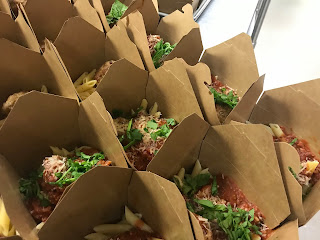
Coupeville School District take-home meals featuring pasta and
Washington grown beef sauce for distribution during COVID-19
 school closures. Photo source: Coupeville School District
The Coupeville School District and Coupeville Farm to School will work to improve students’ knowledge and access to locally grown foods. The project will finish development of the Coupeville School District Farm Site, incorporate experiential activities and participation in farm based activities, hire a part-time school farm manager to coordinate site production and educational activities, develop district-wide plans and policies for local food purchase and use, and participate in the Whidbey Island Grown farmer cooperative food hub to solve distribution bottlenecks of local produce.

Viva Farms, Burlington

The project will increase procurement of local produce and whole grains in schools through training, technical assistance and connecting farmers and school buyers; engage students and teachers in experiential learning and educational activities related to agriculture, food and nutrition; and increase understanding and support for farm to school with regional school district leadership. Partners include WSU Skagit County Extension, Mt. Vernon School District, Skagit/Island Head Start, WSDA and University of Wisconsin.

Northeast Washington Educational Service District 101, Spokane

The Northeast Washington Educational Service District 101 (NEWESD 101) Child Nutrition Cooperative will work with Empire Health Foundation to help plan farm to school activities at rural school districts in Northeastern Washington. The project will establish a supply chain linking regional farmers and ranchers to school districts, introduce seasonal menus that incorporate local food items, and further agricultural education and introducing school garden projects.

Okanogan Conservation District, Okanogan

Students Students at a fall garden party at Virginia
Grainger Elementary in Okanogan, compare sunflower
 Photo source: Okanogan Conservation District
Okanogan Conservation District, in partnership with Classroom in Bloom, will collaborate with
school districts, local organizations, and community members to implement and expand school gardens and improve local food procurement and agricultural education efforts in Okanogan County. The project will increase garden educator capacity, develop STEM agricultural curriculum, and expand food procurement from local farms.

Washington State Department of Agriculture, Olympia

Washington State Department of Agriculture (WSDA) and a team of trainers will develop and deliver three "scratch cooking & farm to school institutes" in Washington State for cross-disciplinary district teams, including one training by and for tribal schools and meal programs. The institutes will consist of two-day intensive training and planning sessions for schools to implement scratch cooking programs and local procurement. The project aims to increase the use of minimally processed, locally produced ingredients, traditional and culturally relevant menus, and student participation in meal programs.

For a comprehensive list of the grants awarded nationwide, visit USDA 2020 Farm to School Grantees webpage.

Monday, June 15, 2020

Don't squish me! Local insects, Asian giant hornets, and the case of mistaken identities

Quin Baine and Chris Looney
WSDA Entomology Lab

With the worldwide attention that Vespa mandarinia (Asian giant hornets) have received over the last few weeks, our entomology lab has been busy reviewing hundreds of reports of suspected Asian giant hornets. Despite the deluge of reports, only two so far have been confirmed as an Asian giant hornet. 

Unfortunately, while their intentions are good, many people have killed and submitted many insects that are NOT Asian giant hornets. Not only are most of these insects not harmful, they play an important role in the environment. We want to compare some of these insects with Asian giant hornet so you can become better a citizen scientist and let insects that are not Asian giant hornets buzz along their way.

Not sure where a thorax is on an insect? How about an abdomen? See the Asian giant hornet diagram at the end of this blog. It will help you identify different body parts of the insects discussed below. 

Bumble bees   


Bumble bees are covered with dense hair
Photo credit: Mary Asche

Asian giant hornets have very few hairs
Photo credit: I, KENPEI / CC BY-SA (http://creativecommons.org/licenses/by-sa/3.0/)


These native pollinators can be colored black, yellow, and orange, and are most easily distinguished from the Asian giant hornet by their round, stout bodies and very fuzzy appearance. A queen bumble bee can be large, almost an inch in length, and they make a noticeably loud buzzing when they fly. However, there is little reason for alarm! Bumble bees are non-aggressive regardless of size. Bumble bees are important pollinators in Washington’s farms and wild ecosystems. You can often see the bumble bee’s collected pollen carried in yellow and orange lumps on its back legs.

Sawflies


Cimbex sawfly antennae are distinctly clubbed
Photo credit: Stu Adams 

Giant hornet antennae remain narrow through the entire length
Alpsdake / CC BY-SA (https://creativecommons.org/licenses/by-sa/3.0)


Sawflies can have a very bee-like or wasp-like appearance, but there’s good news – they are all are non-venomous and can’t sting! The Cimbex sawflies are some of the largest sawflies in the state and can be up to 1.25 inches in length. The elm sawfly (Cimbex americana) and the Pacific sawfly (Cimbex pacifica) can be black and yellow, or black, yellow, and reddish-orange, with darkened wings. Their stripes can seem very similar to Asian giant hornets. The easy way to tell these sawflies from wasps is their clubbed bright orange or yellow antennae. Clubbed means they are expanded at the ends, kind of like a Q-tip. Sawflies are plant-eaters – the young feed on leaves, while the adults can sometimes be found chewing on wood or feeding on the sap of trees.

Yellowjackets and paper wasps


Our native yellowjackets and paper wasps are smaller and distinctly patterned with white or yellow markings, not orange!
Photo credit: Megan Asche


Asian giant hornets have orange markings


Most of Washington’s yellowjackets are native species that are common during much of the year. Unlike Asian giant hornet, Washington’s Vespula and Dolichovespula are clearly yellow (or white) and black, but not orange. They have distinctive patterning across the head and thorax, while Asian giant hornet is completely orange on the head (except for its black eyes) and almost completely black on the thorax. Yellowjackets can sting, especially when swatted or stepped on. However, these insects are beneficial to the ecosystem as pest control– they feed on many common agricultural plant pests.

Cicada Killer Wasp


Western cicada killer species lack extensive black markings, and have a rusty orange thorax.
Photo credit: Jason R Eckberg via Bugguide - Attribution-NoDerivs-NonCommercial 1.0 Generic (CC BY-ND-NC 1.0)

Asian giant hornets have obvious black markings and a black thorax.


This common, native wasp can be very large, sometimes reaching over an inch and a half in length. The western cicada killer (Sphecius grandis) and the Pacific cicada killer (Sphecius convallis) are both mostly rusty-orange in color with yellow and black markings on the face and abdomen. They are more orange, more slender, and have longer antennae than Asian giant hornets. Though “killer” is in the name, this wasp feeds on other insects, like the cicada, and is typically non-aggressive towards humans. Predatory insects, like the cicada killer, help maintain a balanced ecosystem.

Great Golden Digger Wasp


Golden digger wasps have an apparent thin waist. The abdomen is not striped but is distinctly orange in the front and black towards the end. 
Photo credit: Megan Asche

The abdomen of the Asian giant hornet has alternating black and orange striping. 


The digger wasps can also be large, with the largest in Washington about 1.25 inches long. A solitary wasp that feeds on insects, they are generally non-aggressive and it is very uncommon for them to sting humans. Sphex ichneumoneus can be most easily recognized by the long constriction at the base of the abdomen, forming a thin, thread-like “waist”. At rest, the long antennae are slightly curled. Instead of striped, like Asian giant hornets, the abdomen of the great golden digger wasp is bi-colored, with orange on the first part and black towards the end. Other Sphex species are often completely black. These wasps are another example of predatory insects that play an important role in our natural and agricultural ecosystems as pest control.

Learning more


The above images are of insects alive and in nature. A similar comparison of preserved specimens can be found on the USDA APHIS Asian giant hornet webpage

Getting to know the insects around you can be fascinating. If you’d like to learn more about local insects, some great resources include the Washington State Master Gardener program, iNaturalist, and Bugguide.com. And of course, if you do suspect you have seen an Asian giant hornet, get a photo if you can safely do so, collect the specimen if it is dead, and report it at agr.wa.gov/hornets.

Asian giant hornet diagram


Asian giant hornet diagram


Wednesday, May 20, 2020

Food assistance for pets

Chris McGann
Communications

Pets provide companionship and stress relief. It's important for
their owners to have access to pet food during the COVID-19
crisis. 
Times are tough enough when people don’t have enough to eat. But the hardship can cut even deeper when struggling households also have pets to feed.

As the economic fallout of the COVID-19 pandemic continues to increase the ranks of people in need of food assistance, the animals so many rely on for companionship, affection, and stress reduction need support too.

WSDA is working with a collaboration of animal services in King County and a national animal-welfare organization to support a statewide pet food distribution hub and help make sure people have access to pet food. It’s an initiative that not only supports animal health, but also the hunger relief efforts aimed at humans.

Increasing need

With the layoffs and business closures caused by the coronavirus shutdown, hunger relief organizations predict the number of people seeking food assistance in Washington State will soon exceed 2 million.

That means the corresponding population of pets at risk could exceed 1 million. This is based on our region’s estimated 59 percent pets-to-people ratio for those visiting food pantries and other hunger relief services.

Preventing a cascade of other problems

Pet owners unable to meet their own nutritional needs often face a wrenching dilemma, pitting support of their own health against caring for their pets. In some situations, they opt to use emergency food from hunger relief efforts to feed their animals.

WSDA veterinarian Dr. Minden Buswell has helped organize requests for and distribution of the pet food through her work with the state emergency management operations. She warned that the situation leads to concerning outcomes from both people and pets and adds additional strain on food banks already facing an uphill battle to procure enough food to meet the demand.

“My concern is that if we do not continue to fill this void or the void gets larger, people will utilize that human food for pet food,” Buswell said. “That is an issue because people, especially our vulnerable populations, need that food to stay healthy. Human food is not healthy for pets and using it to feed pets is unnecessary if we can help meet their need appropriately. There is no pet food supply-chain issue at this time.”

In some cases, surrendering the pet to a shelter becomes the only option, a choice both traumatic for the owner and costly for the system.

Providing pet food support alleviates higher costs for local government and privately run animal shelters face caring for surrendered pets.

Shelters already had to implement major operational changes because of the COVID-19 pandemic. They now operate with decreased staffing and donations, and without volunteer programs. In some cases, the shelters also serve as the designated quarantine place for animals of COVID patients.

Source of support

The effort to provide pet food for cash-strapped people during this crisis results from a collaboration of King County Regional Animal Services (RASKC), Seattle Humane Society, and several other King County and local organizations.

Greatergood.org, a national nonprofit organization for people and animals, provided the majority of the pet food. Additional support comes from a Petsmart Charities grant received by King County Regional Animal Services.

The Mobile Pet Food Bank team during COVID-19 operations.  
Buswell is working with Seattle Humane Society, RASKC, the Seattle Animal Shelter, Auburn Valley Humane Society, and Pasado’s Safe Haven to help coordinate the effort.

King County leased a warehouse to store pallets of pet food and supplies, which will be distributed across the state. The team created an interactive map to help pet owners find distribution sites around the region.

Animal shelters and rescues outside King County in need of assistance are encouraged to e-mail the Seattle Humane.

Buswell said the pet food issue is something she has and will “continue to keep a pulse on to ensure that all the hard work that has gone into supplying humans with human food is not derailed into pet food and to ensure we are taking care of the whole family in Washington.”

For help finding a pet food bank in your area, visit RASKC's pet assistance program.