Monday, October 17, 2022

Don’t “fall” victim to avian influenza as seasonal rains return

Amber Betts
WSDA Communications

It’s true, 30 days have passed since the latest detection of highly pathogenic avian influenza (HPAI) in a domestic flock in our state this year. The first case in 2022 was announced in May, since then, we’ve had a steady string of positive cases, until about 30 days ago.

Hold for applause.

That is incredible news, considering we’ve seen a steady climb in HPAI detection rates across the country. Our State Veterinarian says a big factor is the diligence and next-level biosecurity of our flock owners. Take a moment and pat yourself on the back.

Dr. Amber Itle, Washington State Veterinarian, says that another contributing factor to the decline in detections is that standing water has dried up, eliminating reservoirs for wild birds to congregate. 

However, the virus is still very prevalent in our environment; as we continue to see positive cases in wild birds right here in Washington.

The takeaway? You are doing great! Keep it up. Although this is an important milestone, flock owners should be cautious about relaxing biosecurity efforts. We are seeing surges across the Nation and even closer to home; including Idaho, Oregon, and California as the fall migration continues.

We must remain vigilant. Above all, avoid contact between your domestic flocks and wild waterfowl. If you do that, your flocks are less likely to contract the disease. 

Two important ways you can protect your flock from wild waterfowl is to protect their water supply and make sure spilled feed is picked up.

Wild birds are always looking for a free lunch. Our vets recommend to clean up spilled or uneaten feed right away, and make sure feed storage units are secure and free of holes.

Protect your flock’s water supply by keeping in clean, and in an area that wild birds cannot access it.

For additional information on the state’s bird flu status, visit agr.wa.gov/birdflu.


Thursday, September 29, 2022

More than $53 million invested in feeding hungry Washingtonians

Amber Betts
WSDA Communications


During the peak of the COVID-19 pandemic crisis in 2020, as many as 1 in 3 Washingtonians experienced food insecurity. Chances are you may know someone affected, or have been part of this statistic yourself. Since July of last year, WSDA stepped in and launched a program that has issued more than $82 million in contracts to provide emergency food resources to those people and their families.

In Washington, a federal program benefited many families, farms, and food businesses until it abruptly ended in early 2021. In response, WSDA launched the We Feed WA Pilot Food Program in July 2021 to bring emergency food from Washington-based farms and food businesses to socially disadvantaged people experiencing hunger.

The We Feed WA pilot is the state alternative to the USDA Farmers to Families Food Box Program that expired in May of 2021. This federally funded pilot program is part of the state’s coordinated response to decrease food insecurity resulting from the COVID-19 crisis and recovery period.

WSDA awarded more than $53 million this year to 21 hunger relief organizations that provide emergency food for the people in our state that need it most. We Feed WA helps hunger relief organizations that serve socially disadvantaged communities continue their work through partnerships with local and regional food producers, farmers and ranchers, processors and distributors.

Award recipients are providing goods and services across the state ranging from providing food directly to hungry Washingtonians, to procurement and unique distribution expertise, and technical assistance. There are five (5) award types;

  • -      Fresh Boxes ($22,124,850)
  • -      Emergency Boxes ($20,113,500)
  • -      Equity-Centered Household & Local Distribution ($2,681,800)
  • -      Supplemental Emergency Food Procurement, Logistics & Distribution ($8,045,400)
  • -      Technical Assistance ($670,450)

Each business and organization have contracted and committed to working alongside WSDA, learning from this pilot program and continuously assessing the needs and barriers that food insecure Washingtonians and food enterprises face.

Purpose

This program aims to facilitate the procurement and distribution of emergency food across Washington state to hunger relief organizations, including organizations that serve black, indigenous, people of color (BIPOC), and other socially disadvantaged communities as directed by the Washington State Legislature while increasing the vitality of regional farms and food businesses.

Current contract awards range from $150,000 to more than $9 million. A diverse pool of Community Reviewers determined awards based on application scores.

For more information, visit agr.wa.gov/about-wsda/we-feed-wa or email wefeedwa@agr.wa.gov. The pilot program is part of WSDA’s Focus on Food Initiative, ensuring safe, nutritious, local food is effectively produced and available throughout our state.


Thursday, August 25, 2022

Pest alert: Everett area residents asked to report sightings of oversized, striped-eyed grasshopper

Cassie Cichorz and Karla Salp
Pest Program and Communications

Close up of the head of an Egyptian grasshopper showing the striped eye
Egyptian grasshoppers have striped eyes
Photo credit: Hectonichus, CC BY-SA 4.0,
via Wikimedia Commons
It is grasshopper season and, if you live near Everett, it is a good time to keep your eyes peeled for an unusually large grasshopper with unusual eyes.

An Everett resident reported one Egyptian grasshopper (Anacridium aegyptium) to Washington State entomologists earlier this year and USDA entomologists recently confirmed it as the first detection of the insect in Washington State. The Washington State Department of Agriculture will conduct visual surveys in the area but is asking the public to also be on the lookout for this large grasshopper with striped eyes.

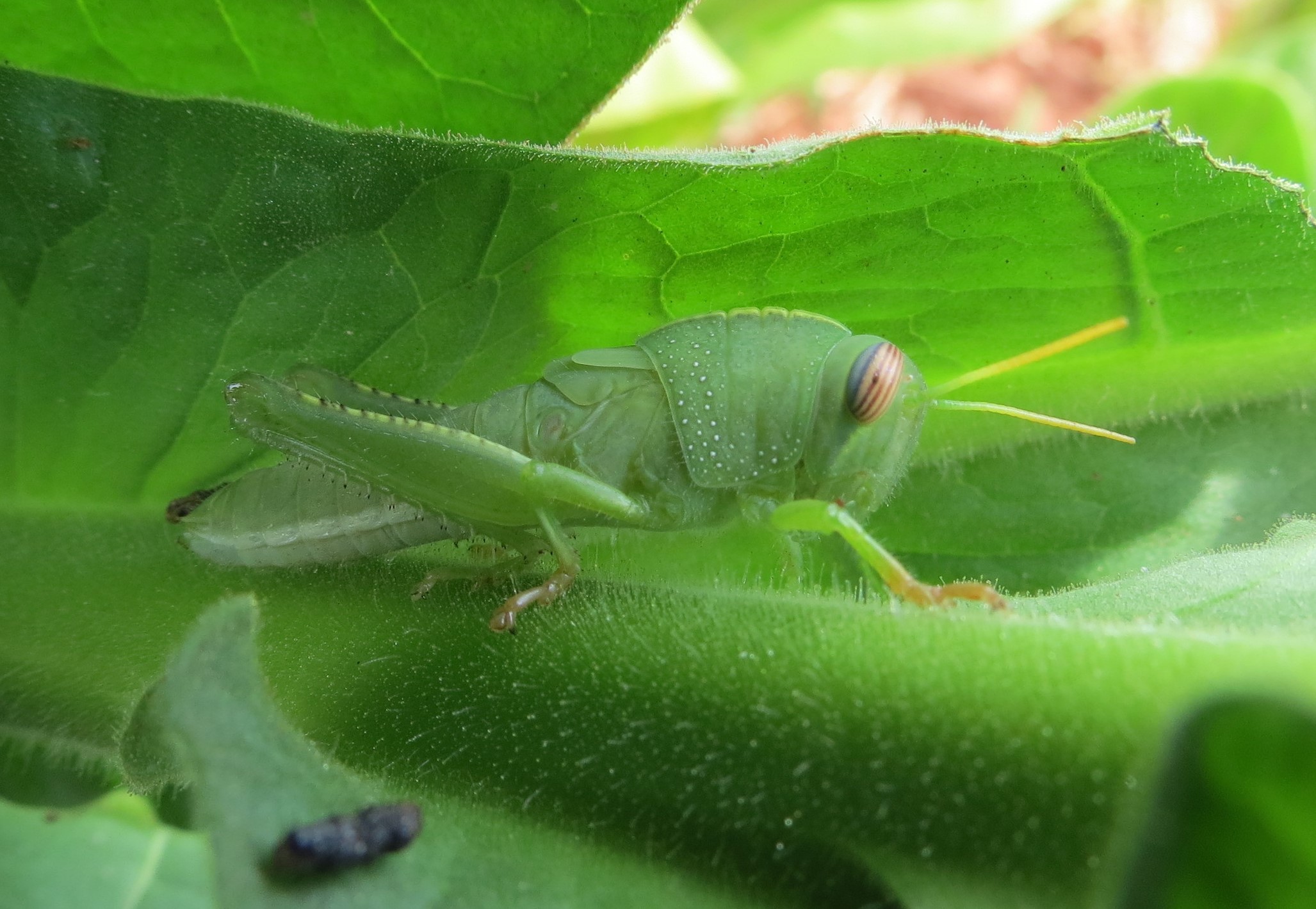
The grasshoppers typically feed on plant leaves. Adults are usually olive, gray, or brown in color and are most likely to be seen toward the end of summer. Young grasshoppers can be green and may blend in with vegetation. Males can grow to over two inches

Green grasshopper with striped eyes on a green leaf
While young Egyptian grasshoppers are green, 
they still have striped eyes.
Photo credit: Metin Gulesci

long and females can be almost three inches long. The key to identifying these insects is their eyes - they have distinct black striping on their eyes that sets them apart from other grasshoppers.

“An overwintering grasshopper could easily hitchhike, so this is another case where we are asking the public to help us figure out if this is just a single specimen,” Sven Spichiger, WSDA managing entomologist, said. Only one living, but sluggish, grasshopper has been confirmed. There is currently no evidence of an established population.

Residents near Everett who believe they have seen this insect should send a photo to pestprogram@agr.wa.gov for identification and include the location where it was spotted. If you believe you have seen one outside of Washington State, please take a picture of it, note the location, and report it to your State Plant Regulatory Official or State Plant Health Director.

Adult Egyptian grasshopper on a green leaf
Adult Egyptian grasshopper
Photo credit: Metin Gulesci
Egyptian grasshoppers are generally regarded as a minor pest of concern in their native habitat but could be an occasional pest to crops, orchards, and vineyards. USDA is gathering available scientific information to help determine the potential risk of this insect.

Wednesday, August 24, 2022

At the fair, make sure show animals get “the blue, not the flu”

Karla Salp
Communications
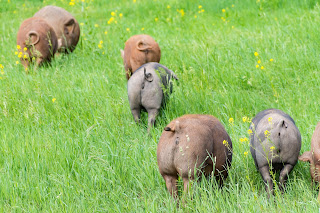
pigs in a pasture with only the rear end with curly tails visible
Pigs with their curly tails in a pasture
As wild and domestic bird flu cases continue to expand to additional counties across Washington, another influenza (flu) strain is also picking up in the U.S. Last week, the Centers for Disease Control and Prevention (CDC) confirmed the fourth case of swine flu in a human – this time in Oregon.

Influenza viruses can be passed between humans, birds, and pigs. Because of this, it is important to practice good biosecurity whenever interacting with either birds or pigs on your farm and when attending fairs and livestock shows.

Swine flu viruses are different from seasonal flu viruses that infect people. Flu vaccines don’t generally protect against swine flu; they protect people against seasonal flu, which can also spread to pigs.

No swine flu vaccine is available for animals yet in the United States, but work is being done to get an approved vaccine to use for control in the face of an outbreak, with promising vaccines demonstrating 100% efficacy in swine.

Swine flu can spread among pigs throughout the year, though rates increase significantly when infected pigs spend more than three days at a fair or livestock show. Reducing the time pigs spend at fairs to three days or less is one way to reduce the risk of spreading swine flu. The Swine Exhibitions Zoonotic Working Group has also produced a checklist for exhibition organizers and youth organization leaders to minimize the spread of influenza, which includes recommended actions to take before, during, and after exhibitions.
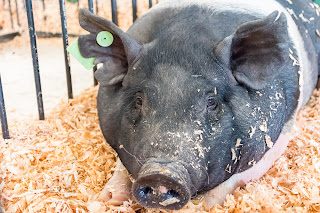
Pig in a pen at a fair
For exhibitors as well as visitors to pig exhibits, these recommendations help prevent the spread of flu between pigs and humans:

  • Avoid close contact with pigs that look or act ill. For exhibition organizers, pigs should be observed daily for flu-like symptoms. 
  • Wash your hands with soap and running water before and after contact with pigs or visiting a swine barn or exhibit. Use an alcohol-based hand rub if soap and water are not available.
  • People that are 65 or older, children under the age of 5, people who are pregnant, and people with certain long-term health conditions have higher risk of serious flu complications and should consider avoiding pigs and swine barns.
  • Keep food, drinks, and baby items, such as toys, pacifiers, bottles, and strollers, out of areas where there are pigs.

“After the fair, don’t bring home more than that blue ribbon,” Dr. Amber Itle, Washington State Veterinarian, said. “When showing animals – especially pigs and birds – take extra precautions to prevent the spread of swine flu and other diseases.”

But don’t think it is just the pigs that can infect humans. Humans can also infect pigs, so if you are not feeling well, take precautions to prevent spreading disease to your animals or have someone else care for your animals until you feel better.

interspecies influenza transmission graphic showing how flu strains can spread between species

If you own both birds and pigs, they should always be kept separate to reduce the risk of infection and mutating viruses. Prior to COVID-19, the last global pandemic was swine flu in 2009 – infecting an estimated 60 million people and resulting in over 12,000 deaths in the United States alone. That strain had signs of combined human, bird, and swine origins.

Given the high numbers of detection of bird flu throughout the country this year, adding swine flu to the mix is an unwelcome prospect – increasing the risk of another infectious and potentially deadly influenza strain. Keeping pigs and birds separated and practicing good biosecurity could prevent the next pandemic.

Additional resources

Video: What is swine flu?

Take Action to Prevent the Spread of Flu Between Pigs and People | CDC

Key Facts about Human Infections with Variant Viruses | CDC

What People Who Raise Pigs Need To Know About Influenza (Flu)

Monday, August 22, 2022

Cicada killer frequently mistaken as northern giant hornet

Cassie Cichorz
Pest Program

cicada killer side-by-side with a northern giant hornet
With summer here, people are outside enjoying nature and noticing insects! Citizens are on the lookout and reporting suspect giant hornets. WSDA’s team has been hard at work reviewing hundreds of reports of suspect northern giant hornets. Most of the insects reported are not harmful and play an important role in the environment. One insect, the western cicada killer (Sphecius grandis) seems to be trending as the most common native bug mistaken for a northern giant hornet (Vespa mandarina).

If you can familiarize yourself with some features of the look-alike insect in the spotlight, you’ll be able to identify differences. The western cicada killer is a very common native wasp that can be almost as large as a northern giant hornet. Cicada killers can be seen from late spring and throughout the summer.

Cicada killers can be up to two inches long, just like the northern giant hornet. Differences in their head, thorax, or abdomen will help you distinguish between the two species. The heads of cicada killers are narrower than their thorax, while the northern giant hornet has a head as wide as its thorax. The cicada killer has round eyes, unlike the angular eyes of giant hornets.

cicada killer

The thorax on a cicada killer is reddish in color, while the northern giant hornet’s is black. The cicada killer’s thorax and head are about the same color, unlike the contrasting head and thorax of the northern giant hornet. Both wasps have translucent, amber-colored wings.

You can also check the banding on the abdomen for differences. The northern giant hornet has horizontal lateral bands or striping on its abdomen. The cicada killer’s bands will drop down like teardrops, or have dots between the bands.


Female cicada killers are solitary and dig their nests in the ground. You will often find their nests around areas with lots of sunlight, and sometimes you will see a mound of dirt near the entrance. Cicada killers do not actively defend their nests normally. Males can be territorial, but they do not have a stinger.

Northern giant hornet nests can be underground or in tree cavities. Unlike cicada killers, hornets are social and live in large colonies – which they will vigorously defend. Away from the nest, hornets are typically non-aggressive unless provoked.

WSDA has other information on look-alike insects, including a poster guide available for use and download. Click here to learn more about identification. Cicada killers do not need to be reported, but if you suspect you’ve seen a giant hornet in Washington State or are not sure if what you have seen is one or not, get a photo and report it at agr.wa.gov/hornets.