Showing posts with label hornets. Show all posts

Wednesday, July 5, 2023

Summer is here - time to put your Hornet Hunter hat back on

Karla Salp
Communications

man wearing sunglasses putting on a tan hat with a hornet on it
Gov. Inslee dons a hornet hunter hat while 
touring the hornet detection area in 2022. Gov.
Inslee and the Washington Legislature have been
very supportive of the hornet eradication efforts.
July is finally here and you know what that means around WSDA: time to start trapping for hornets! Our hornet trappers are already out in the field setting hornet traps in Whatcom County.

Since the first confirmed detection of the northern giant hornet (Vespa mandarina, also known as the Asian giant hornet) in 2019, there has been overwhelming interest from the public to help eradicate this invasive pest.

WSDA has welcomed this community support, leading to a hybrid government-public response that has been revolutionary – and effective. More than half of the confirmed hornet detections in the state have come from public reports. Three of the four nests eradicated in the state were found as the direct result of public reports.

The community has played a game-changing role in WSDA’s efforts to eradicate the hornets from our state. Although we had no detections last year, we’re not out of the woods yet.

We still need you.

northern giant hornet on paper plates
Hornet sighting reported
to WSDA via social media
in 2020.
Your eyes, ears, and traps are still needed to detect any hornets that might still be lurking in the state. Here are three ways that you can help.

  1. Trapping. WSDA has established a Public Hornet Trapping project, which provides community members with information on how to build and check hornet traps and report any hornets that are caught. The traps are placed in July and are left up through November.
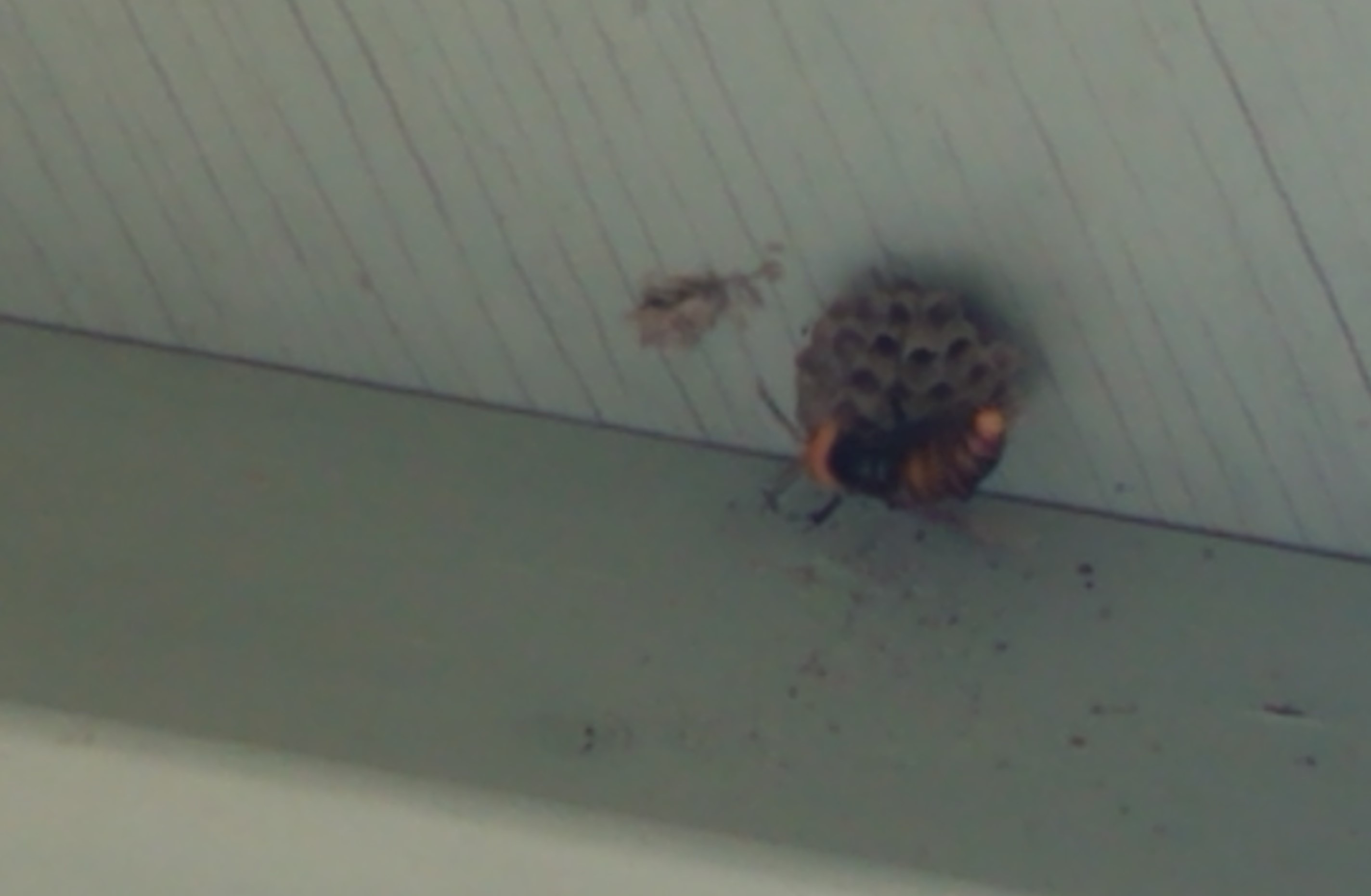
  2. Watch a Wasp Nest. The public and WSDA staff have witnessed northern giant hornets repeatedly attacking paper wasp nests. These nests can easily be found under the eaves of many buildings. By joining the “Watch a Wasp Nest” program, you commit to spending five minutes a week observing paper wasp nests on your property and logging activity, including whether you notice hornets at the nest.
  3. Report sightings. Helping detect northern giant hornets can be as simple as being aware of your surroundings. If you think you spot one, get a photo if you safely can. Report suspected sightings with as much detail as possible, including where the insect was spotted, what it was doing, and if it flew off, the direction in which it headed.

EVERY hornet report matters. Whether found while trapping, watching paper wasp nests, or just being observant when you are out and about, it is critical to report each and every suspect hornet sighting. We get hundreds – if not thousands – of false reports each year, but we gladly accept them because it means you are on the lookout and that means we receive the few but critical confirmed detections we need to eradicate the hornets for good. 

Wednesday, May 31, 2023

Watch a wasp nest to help detect northern giant hornets

Cassie Cichorz
Pest Program

Paper wasp on a nest in Washington State

Did you know you can help protect Washington from invasive species just by taking a walk around your house or barn once a week? 

Over the last few years, residents of Whatcom County and WSDA staff have noticed hornets attacking paper wasp nests. In 2021, WSDA tracked a hornet and observed it repeatedly visiting the same paper wasp nest. Each visit lasted five to ten minutes and the hornet removed paper wasp larvae.  

WSDA invites you to help watch for northern giant hornets (Vespa mandarinia). Join our community science project to locate active paper wasp nests, watch the nests weekly, and record your observations from June through October. WSDA will continue to invite residents to participate in public scientist trapping too.

Northern giant hornet attacking a 
paper wasp nest on a house in Whatcom County

Paper wasps (Polistes dominula) can grow to about three-quarters of an inch long and have a well-defined “wasp waist” that makes them easy to identify. Paper wasps are typically not aggressive and do not readily attack people, but they can sting if threatened. They form small colonies and build hanging, open-comb nests on building eaves, frames, abandoned cars, or branches of trees and shrubs. Paper wasp nests vary in size and are usually gray to brown in color. They are made up of many exposed cells that are less than an inch deep. Nests typically range from the size of a quarter to a coffee can lid, but can be larger.

Although we invite anyone in Washington to participate in adopting a paper wasp nest, we are particularly interested in observations from Whatcom, Skagit, Island, San Juan, Snohomish, King, Jefferson, and Clallam counties.

Paper wasps tending their nest
LOCATE

Starting in June, locate active paper wasp nests that you have access to and can monitor through October. Log the nest locations using the Watch a Wasp Nest Registration Form. After submission, you’ll receive an email confirmation which will include a unique Nest ID assigned to your nest location. You will need to save this Nest ID to use during weekly check-ins. Access the registration form.

MONITOR

Each week visit the nests. Watch for any hornet or wasp activity happening at the nest. WSDA asks you to monitor the nests for at least five minutes during the day once per week, but you can check the nests as long and often as you would like.

REPORT

After monitoring you will need to report each of your observations on the Watch a Wasp Check-in form. You will also need your Nest ID which was received in a confirmation email. Click here to access the check-in form.

However, if you think you spot a northern giant hornet (it will be significantly larger than the paper wasps), safely take a photo and report it at agr.wa.gov/hornets or by emailing hornets@agr.wa.gov.

Stay Connected

WSDA is dedicated to working with the public and to providing information on northern giant hornets.

Thursday, December 19, 2019

Pest Alert: Asian giant hornet

Chris McGann
Communications

The Asian giant hornet found near the Canadian border earlier this month.
 Its enormous size and yellow head are unique to this invasive species. 
This month, WSDA entomologists identified a large hornet found near the Canadian border as an
Asian giant hornet (Vespa mandarinia), an invasive species not previously found in Washington State.

Although it is not typically aggressive toward humans, this unwelcome pest can inflict a powerful sting and also represents a threat to honeybees, for which they have a voracious appetite.

On Dec. 8, a resident in Blaine near the Canadian border reported an unusually large hornet they found on their property. Two days later, WSDA visited the site, collected the specimen, which was dead, and confirmed its identity a short time later.

The resident also reported seeing a live giant hornet at a hummingbird feeder before it retreated into a nearby forest.

WSDA and Washington State Department of Health (DOH) officials ask people in the area to be on the lookout for and take precautions to avoid contact with these large bugs.

Adults can be nearly two inches long, have a distinctly light-orange head with
prominent black eyes, a black thorax and a black/yellow striped abdomen. 
The invasive hornets are typically almost an inch and a half long and are distinguished by their large yellow heads.

Asian giant hornets nest in the ground. Though they are typically not interested in humans, pets or large animals, they can inflict a nasty sting if threatened or their nest is disturbed.

Asian giant hornets are typically dormant over the winter, and are most often seen from July through October.

Health advice 

DOH advises individuals to take preventative measures in the outdoors by keeping food and drink covered or under screens, and cleaning up by disposing food and garbage properly. People should avoid swatting at the hornets, which may cause these insects to sting.

If you are stung, DOH recommends washing the site thoroughly with soap and water and applying ice or a cold compress to reduce swelling. The agency also recommends an antihistamine or use of an anti-itch cream to reduce itching if necessary. If you are stung multiple times or have symptoms of a severe reaction following a sting, call 911 or seek medical care immediately.
Asian giant hornets are not usually aggressive, but because
of their size and stinger, it's best to avoid them.  

Additional information about bee and wasp stings and prevention measures can be found on the DOH website.

A threat to bees

Asian giant hornets feed on insects and are of particular concern to beekeepers because they are capable of quickly destroying honeybee hives.

This is the first time this invasive species has been detected in Washington State. In August, a large colony of Asian giant hornets was discovered and subsequently destroyed in British Columbia. The BC Ministry of Agriculture issued a pest alert about the detection in September.

Responding to the Asian giant hornet 

In 2020, WSDA will conduct outreach to generate public assistance in looking out for the Asian giant hornet and reporting any detections to the WSDA Pest Program.

Additionally, WSDA is preparing plans to set traps in the Blaine area to monitor for Asian giant hornets.

If you think you may have spotted an Asian giant hornet, report it to WSDA’s Pest Program and, if possible, include a photo.