Tuesday, August 7, 2018

Hot weather tips for pets and livestock

Dr. Minden Buswell
WSDA Veterinarian


As the summer heat rises, it's important to help
 your livestock stay cool.
Hot weather can reduce animals’ feed intake, growth, production, reproduction, welfare, and overall health. Each year the livestock and poultry industries lose billions due to livestock heat stress.

Here are a few tips and links to help keep your livestock and pets healthy during the summer heat.

Livestock heat stress: recognition, response, and prevention

According to this Washington State University Extension fact sheet, "Livestock Heat Stress: Recognition, Response and Prevention," keeping animals cool with shade, water on the skin, airflow and cool drinking water is important, especially if they show signs of heat stress. These warning signs include:

Crowding around water tanks or shade
Lethargy
Poor appetite
Increased respiratory rate
Elevated heart rate
Immobility or aimless wandering
Drooling or slobbering
Non-responsiveness
Seizures
Death

If you observe signs of heat stress, it's time to take action. To help cool them down, you should

1. Provide shade immediately.
2. Soak the animal's body with lukewarm to cool water.
3. Increase airflow around the animal using fans if possible.
4. Provide cool drinking water.
5. Minimize handling, transportation, and stress.
6. Call veterinarian for consultation.

A word about water

It may seem obvious that water requirements for livestock rise with the temperature, but some folks may not be aware of just how much more water animals need when it gets hot. According to information from University of Nebraska and University of Iowa extensions, water consumption when the temperature reaches 90 F can be almost twice what it is at 70 F.
Here’s a link to a useful fact sheet put out by the Iowa 4H.


Heat index:

 "Be prepared, even if the risk is several index units away. Additional
 solar heat, lack of air movement and heavy fat cover all can lead
 to disastrous effects of heat stress." NDSU Heat Stress Guide 
Many factors come into play when it comes to assessing the level of stress heat puts on animals. Physical workload, body weight, confinement and even hide color can all contribute to heat stress. For example, dark-hided animals are more susceptible to heat stress than their light-hided counter parts. But,  just like it does for people, humidity can really increase the discomfort on a hot day. As this table illustrates, the “feels like” factor should be taken into consideration, too.

Heat stress in cattle

With all that’s at stake, it pays to adopt a three-step plan for hot weather.
  1. Learn how to identify the animals most at risk of heat stress.
  2. Develop an action plan.
  3. Know when to intervene.
North Dakota State University lays out a sensible approach to the problem in their brochure, "Dealing with Heat Stress in Beef Cattle Operations."

Visit WSDA's Animal Health Program webpage for other resources.

Monday, August 6, 2018

Keeping Washington on the Congressional radar

Chris McGann
Communications

In the world of national politics, corn is king and Iowa often takes center stage. But here in Washington, where the agricultural economy is driven by tree fruit, dairy, potatoes and hay to name just a few major products, it’s easy to feel overlooked.

Director Derek Sandison and a delegation of leaders from the
 agriculture community met with elected officials in Washington DC
 this summer to help keep our issues in the mix.
That’s why WSDA Director Derek Sandison recently joined a delegation of WSU leadership and our state’s agricultural community in Washington D.C. to help make sure our issues and products aren’t forgotten as the debate over international trade policies continues.

Sandison and the group met with Washington’s elected officials, key lawmakers and administration representatives. While many of the meetings touched on topics related to the 2018 Farm Bill, including the importance of research, the group also discussed the possible impacts of recent trade disputes with China, Canada, and Mexico.

“Our representatives seemed engaged and genuinely concerned,” said Sandison, who has been in regular communication with the administration and Congress on these topics.
This recent meeting was particularly important.

“With so many highly important policies and issues on the table right now, these meetings could not have come at a better time,” Sandison said. “Our elected leaders heard what we had to say and were very supportive of the work we are doing to advance agricultural practices and promote trade.”

WSDA Director Sandison discusses trade issues with Senate Agriculture
 Committee Chairman Pat Roberts. AndrĂ©-Denis Girard Wright, the newly
named dean of the WSU College of Agricultural, Human and Natural
Resource Science sits at Sandison’s right. 
The group, which included representatives from the wheat, tree fruit, dairy, potato, and wine industries, spent time with U.S. Senate Agriculture Committee Chairman Pat Roberts, R-Kan., who commented that Sen. Maria Cantwell doesn’t ever let him forget about Washington.  He said Cantwell is always “whispering in his ear” about the implications policies have on tree fruit, wheat and other Washington products.

Washington State University took part in the mission to promote research and education. University President Kirk Schulz discussed issues and opportunities to collaborate with administration officials responsible for the U.S. Department of Agriculture research portfolio.

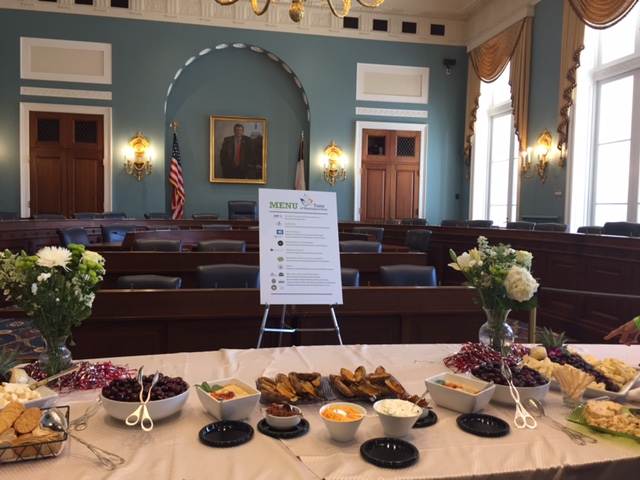
A Taste of Washington reception showcasing our state’s fruit,
 wine, cheese and other signature products. Nearly 200 people
 attended, including lawmakers Rep. Dave Reichert,
 Rep. Dan Newhouse and Rep. Rick Larsen. 
Sandison said the research goes hand-in-hand with trade, another major focus of the visit. An estimated $900 million in agricultural and food products could potentially be affected by retaliatory tariffs. Tariffs on Washington apples have gone up to 75 percent in India, 50 percent in China and 20 percent in Mexico.

Shortly after the group’s visit, the Trump administration announced a $12 billion aid package to reduce the harm associated with retaliatory tariffs, though it is unclear how it will assist Washington ag sectors affected by the trade disputes.


Thursday, August 2, 2018

Pest Alert! Lily leaf beetle is on the move

Karla Salp
Communications

The lily leaf beetle is a new pest threatening Washington’s gardens, nurseries, and native plants. It is a voracious feeder that can decimate lilies, fritillaries, and giant lilies overnight where it becomes established. 

Now, it is on the move and we are asking your help to monitor this pest and stop its movement. 

Here is what to look for:
  • Adults – Bright red adult beetles are about 1 cm long.
  • Larvae – Larvae look like blackish brown blobs because they cover themselves with their own excrement to protect themselves from predators.
  • Eggs – 1 mm long orange eggs are laid on the underside of leaves.
If you suspect you have found lily leaf beetle, you can quickly and easily report it online.

While the lily leaf beetle has been found around the Bellevue and greater Seattle area for a few years, the pest was first found in Olympia in June 2018 – a sign that it is significantly more widespread than expected. The pest was transported to Olympia on infested lilies, and it could have spread rapidly throughout the region on lilies or fritillaries moved from the greater Seattle area to other locations.

Learn more about the lily leaf beetle by reading our previous blog posts from 2018 and 2017. You can also contact entomologist Maggie Freeman in the WSDA Pest Program at 360-902-2084.

Adult lily leaf beetles are about 1 cm long

Lily leaf beetle larvae cover themselves with excrement
Photo credit: Richard A. Casagrande, University of RI

Lily leaf beetle eggs 

Thursday, July 19, 2018

A call for vigilance: keep deadly poultry disease out of our backyard

Dr. Brian Joseph
Washington State Veterinarian

An outbreak of a deadly poultry disease in southern California is cause for local poultry growers and those with backyard flocks to keep their guard up.


If you have poultry, we ask that you be on the lookout for signs of Virulent Newcastle Disease (vND) and report any cases to the WSDA Sick Bird Hotline at 1-800-606-3056. 

The warning comes on the heels of an outbreak that began this May in Southern California, where the virus appeared and spread through backyard poultry flocks in Los Angeles, Riverside and San Bernardino counties. The disease has not been detected in any domestic poultry in Washington – we would like to keep it that way.

Watch for unusually large numbers of poultry deaths or symptoms such as swelling around the eyes and neck, dripping of fluid from the beak and nasal area, coughing, sneezing, twisting of the head and neck, greenish diarrhea, decreased appetite, or decreased egg production.

Commonly known as exotic Newcastle disease, vND spreads quickly with high rates of illness and mortality for domestic poultry. 

The vND virus can infect many bird species including chickens, turkeys, ducks, geese, and game birds. Infected birds shed large amounts of virus in respiratory fluids and feces.

Backyard chickens are at greater risk and are highly susceptible because they can be “silently” infected by other birds, such as parrots, that show few or no signs of illness.

No commercial poultry operations have been affected so far and properly cooked poultry poses no risk to humans when consumed. For poultry, the virus can be transferred between facilities on clothing, feed, equipment or by moving birds, which may appear unaffected. 

Prevention through biosecurity 

The key to preventing vND infection is to practice consistent biosecurity. Recommendations from CDFA include:

  • Use dedicated clothing and footwear or wear disposable coveralls and booties when visiting birds
  • If exposed to poultry waste, change clothes and footwear, disinfect any items used and wash your car
  • Use footbaths for the bottoms of shoes or plastic botties at entry/exit of poultry enclosures
  • Practice good hygiene for your hands and disinfect equipment
  • Prevent wild birds from entering poultry enclosures
  • Carcasses of dead birds should be double bagged in plastic garbage bags
  • DO NOT dump bird carcasses on the roadside or other exposed locations
  • Avoid gatherings where poultry are present
  • Avoid sharing or borrowing equipment from other poultry owners
  • Avoid moving your birds or purchasing new additions unless they are from an NPIP certified seller.

Visit our avian health webpage if you have questions about exotic Newcastle disease, or how to keep your birds safe and healthy. 

Tuesday, July 17, 2018

Six questions to ask before getting an exotic pet

Dr. Brian Joseph
Washington State Veterinarian 

You have seen the pictures – the cute little button face with big eyes that makes you say to yourself, “I want one, where can I get one?” Next thing you know, you are the proud owner of a Capuchin monkey, a chimpanzee, or some other exotic animal.

The bad news is that once someone turns you in-- and that is very likely-- authorities can confiscate the animal you paid hard cash for. Don’t expect to get your animal back. Furthermore, it could even be euthanized, because many wild and exotic animals are illegal to own in Washington State.

So before you purchase or otherwise acquire a wild or exotic animal as a pet, ask yourself these six questions:

1. How will I keep my friends, family and neighbors safe from this animal?
2. How will I meet all of its health requirements?
3. Am I prepared to care for this animal as a pet for 30 years or even longer?
4. Am I prepared for the liability that accompanies keeping a wild animal?
5. Where will I obtain veterinary care?
6. Most importantly, is it legal?

From wild to domestic

Dogs are thought to be the first animal domesticated as a companion, rather than as a source of food for humans, over a process that took thousands of years. Most modern breeds developed only over the last 200 years.

Domestication requires controlled breeding, many generations of investment, and starting with an appropriate species. Most wild or exotic animals, such as foxes, wolves, non-human primates, venomous snakes, crocodiles and alligators, have not been subject to long-term domestication.

Wild and many exotic animals can pose risks to public safety, carry diseases that can infect humans, and require specialized diets and care.

Check the law

Most exotic animals are illegal to own under state law. In addition, many local ordinances governing owning exotic or potentially dangerous wild animals have rules even stricter than state regulations. Among the many reasons these regulations exist are to protect against the public safety and health risks, as well as concerns about the animals’ welfare.

So, before you take on the responsibility of owning an exotic pet, research the state law (RCW 16-30) and your own city or county ordinances.

Every year throughout the world, wild animals kept as exotic pets injure people. Animal companionship is wonderful, and many of us crave it, but domestic animals are a safer bet as pets.

Email us at ahealth@agr.wa.gov if you have questions about acquiring an exotic animal.